Title Vii Rights With Child Protective Services In Michigan
Description




Get your form ready online
Our built-in tools help you complete, sign, share, and store your documents in one place.
Make edits, fill in missing information, and update formatting in US Legal Forms—just like you would in MS Word.
Download a copy, print it, send it by email, or mail it via USPS—whatever works best for your next step.
Sign and collect signatures with our SignNow integration. Send to multiple recipients, set reminders, and more. Go Premium to unlock E-Sign.
If this form requires notarization, complete it online through a secure video call—no need to meet a notary in person or wait for an appointment.
We protect your documents and personal data by following strict security and privacy standards.
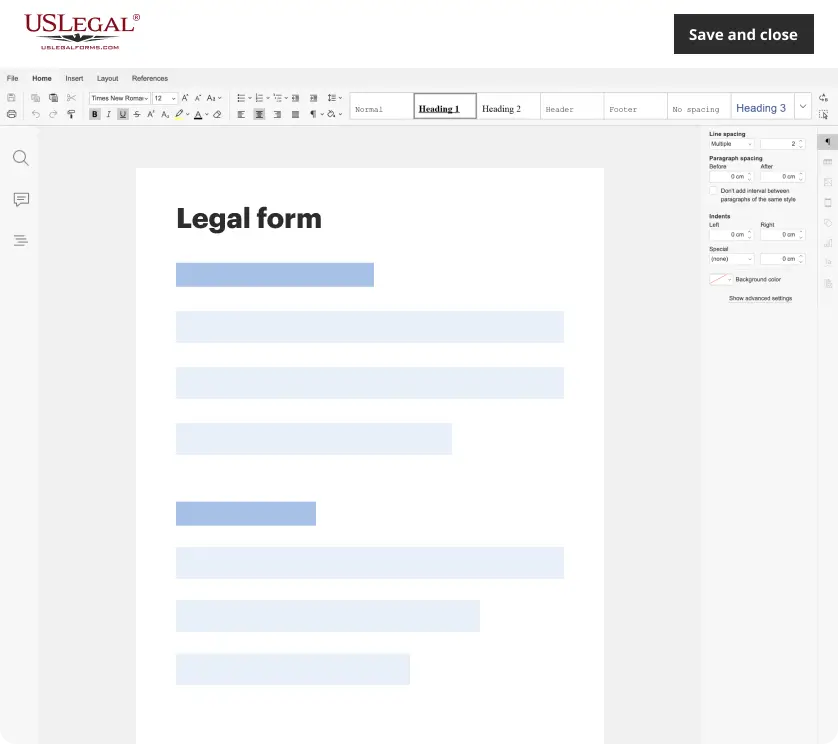
Make edits, fill in missing information, and update formatting in US Legal Forms—just like you would in MS Word.
Download a copy, print it, send it by email, or mail it via USPS—whatever works best for your next step.
Sign and collect signatures with our SignNow integration. Send to multiple recipients, set reminders, and more. Go Premium to unlock E-Sign.
If this form requires notarization, complete it online through a secure video call—no need to meet a notary in person or wait for an appointment.
We protect your documents and personal data by following strict security and privacy standards.
Looking for another form?

Form popularity
FAQ
Five Criteria CPS Needs to Register a Report: IDENTITY AND LOCATION. Is there enough information known about the identity and location of the potentially abused child to permit an investigation? ... AGE OF THE CHILD. Is the child under 18 years of age? ... JURISDICTION. PERSONS LEGALLY. ALLEGATION OF ABUSE.
Both parents have a right to see the CPS reports from the investigation. The parent who was accused of abuse or neglect is called the Respondent. The Respondent has the right to a lawyer during the court process. If the Respondent can't afford to hire a lawyer, the court will provide one.
Both parents have the right to see everything in a CPS file except the name of the person who made the complaint about abuse and neglect.
A CPS officer may try to convince you to let him or her into your home. It's important to remember that you are in no way obligated to let the social worker enter unless he or she has a warrant. Even if you know you are completely innocent, it's best to keep the CPS agent at a distance.
A: In California, individuals have the right to bring lawsuits against government agencies, including Child Protective Services (CPS). If you believe CPS has acted wrongfully towards you or your child, you may consider filing a claim for violations of your civil rights or for emotional distress.
Yes, you or your child can refuse to talk to CPS unless they have a warrant or a cout order. However, the difficulty with refusing to talk to CPS is that they are a powerful agency with a well-earned reputation for stepping all over the rights of the folks that they are investigation.
Your attorney will document the caseworker violating state regulations and put together the necessary documents to obtain justice. You can also write a Declaration of Facts that outlines the ways CPS is acting unjustly and present it to the judge at your next hearing.
Show your willingness to work with CPS while firmly asserting your innocence. Consider Civil Action for False Allegations: If the allegations against you are proven to be knowingly false, you may have grounds for a civil lawsuit against the accuser for defamation, malicious prosecution, or emotional distress.
A: In California, individuals have the right to bring lawsuits against government agencies, including Child Protective Services (CPS).