Title Vii Rights Within The Workplace In Minnesota
Description




Get your form ready online
Our built-in tools help you complete, sign, share, and store your documents in one place.
Make edits, fill in missing information, and update formatting in US Legal Forms—just like you would in MS Word.
Download a copy, print it, send it by email, or mail it via USPS—whatever works best for your next step.
Sign and collect signatures with our SignNow integration. Send to multiple recipients, set reminders, and more. Go Premium to unlock E-Sign.
If this form requires notarization, complete it online through a secure video call—no need to meet a notary in person or wait for an appointment.
We protect your documents and personal data by following strict security and privacy standards.
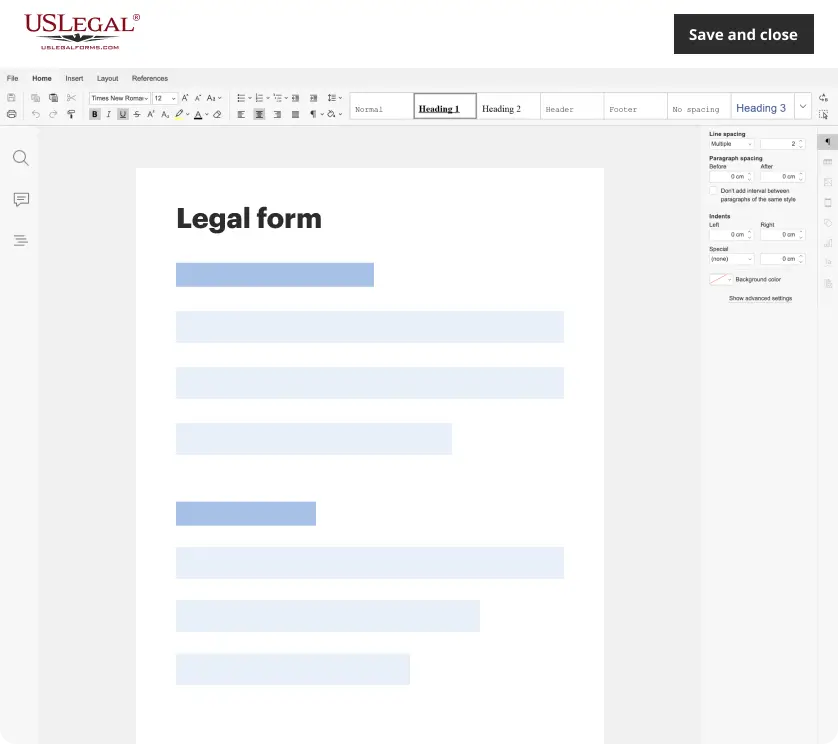
Make edits, fill in missing information, and update formatting in US Legal Forms—just like you would in MS Word.
Download a copy, print it, send it by email, or mail it via USPS—whatever works best for your next step.
Sign and collect signatures with our SignNow integration. Send to multiple recipients, set reminders, and more. Go Premium to unlock E-Sign.
If this form requires notarization, complete it online through a secure video call—no need to meet a notary in person or wait for an appointment.
We protect your documents and personal data by following strict security and privacy standards.
Looking for another form?
Form popularity
FAQ
Under the Minnesota Human Rights Act, discrimination is illegal in business, credit, education, employment, housing, public accommodations and public services. These are called “protected areas.” Employment: where you work, or a job you are applying for. Housing: renting an apartment, or buying a house.
Yes, in Minnesota, you can sue for emotional distress.
A complaint needs to be filed with MNOSHA Compliance within 30 days of the adverse employment action. For more information, contact MNOSHA Compliance, Discrimination, at discrimination.dli@state.mn, 651-284-5051 or 877-470-6742.
But workers in Minnesota may be surprised to learn that there are not many situations in which you can sue an employer for negligence at the workplace that results in an injury. Instead, workplace negligence most frequently results in a workers' compensation claim.
While hostile environments may be perpetuated by individual actors, toxicity often reflects deeper-rooted cultural norms and business-wide dysfunction.
Hostile Work Environment: Under the MHRA, a hostile work environment occurs when unwelcome conduct based on a protected characteristic becomes severe or pervasive enough to interfere with an individual's work performance or create an intimidating, hostile, or offensive working environment.
Legal Standards for a Hostile Work Environment Claim To establish a valid claim under Minnesota law, the following criteria must generally be met: Protected Class. The harassment or discrimination must be based on a characteristic protected under federal or state law, such as race, gender or disability.
