Workplace Discrimination In The Philippines In North Carolina
Description




Get your form ready online
Our built-in tools help you complete, sign, share, and store your documents in one place.
Make edits, fill in missing information, and update formatting in US Legal Forms—just like you would in MS Word.
Download a copy, print it, send it by email, or mail it via USPS—whatever works best for your next step.
Sign and collect signatures with our SignNow integration. Send to multiple recipients, set reminders, and more. Go Premium to unlock E-Sign.
If this form requires notarization, complete it online through a secure video call—no need to meet a notary in person or wait for an appointment.
We protect your documents and personal data by following strict security and privacy standards.
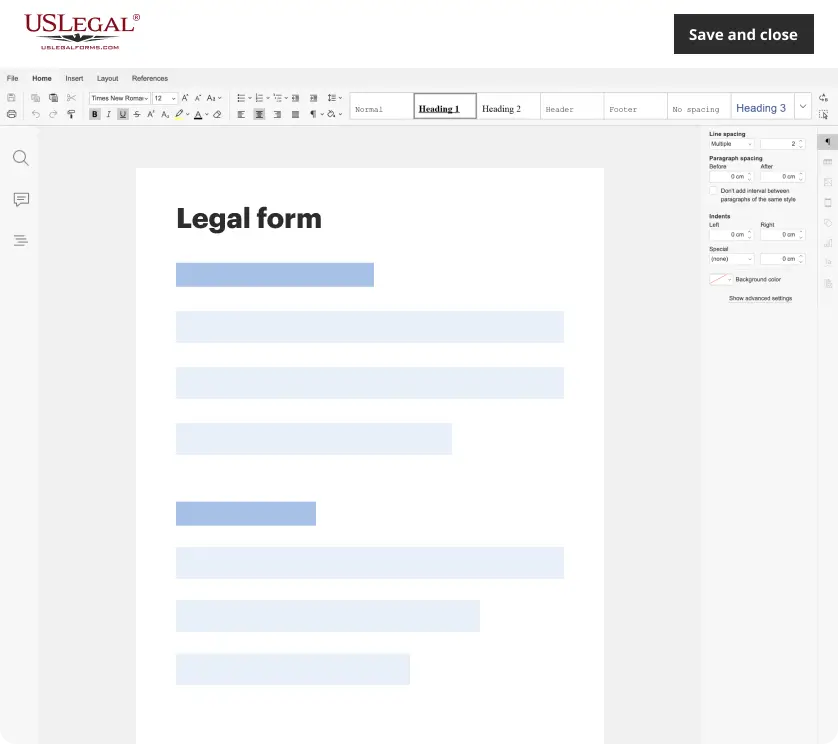
Make edits, fill in missing information, and update formatting in US Legal Forms—just like you would in MS Word.
Download a copy, print it, send it by email, or mail it via USPS—whatever works best for your next step.
Sign and collect signatures with our SignNow integration. Send to multiple recipients, set reminders, and more. Go Premium to unlock E-Sign.
If this form requires notarization, complete it online through a secure video call—no need to meet a notary in person or wait for an appointment.
We protect your documents and personal data by following strict security and privacy standards.
Looking for another form?



Form popularity
FAQ
To prove discrimination, plaintiffs must provide evidence that they: (a) are a member of a protected class, (b) are qualified for the position at issue, (c) suffered an adverse employment action, and (d) the employer treated similarly situated employees outside of the protected class more favorably (or some other ...
Racial discrimination examples include not hiring a qualified candidate, giving someone an undesirable job or task that they're overqualified for, passing someone over for a promotion, or otherwise making the workplace a hostile environment based solely on the employee's race.
Examples of Employment Discrimination Failure to hire. Harassment. Quid pro quo: Conditioning employment or promotion on sexual favors. Hostile Work Environment: Continuous actions and comments based on protected characteristics that create an uncomfortable and hostile workplace. Job assignment. Compensation.
The Commission on Human Rights (CHR) welcomes the consolidated Senate Bill (SB) No. 2766, also known as the “Comprehensive Anti-Discrimination Act,” as it extensively defines all forms of discrimination and protects vulnerable and marginalized groups from being victims of these acts.
Evidence takes several forms. It includes your testimony, which is the very first evidence gathered by EEOC. It also includes written materials such as evaluations, notes by your employer, letters, memos, and the like. You will be asked to provide any documents you may have that relate to your case.
The following would be considered illegal discrimination if there is evidence that the decision was made based on a protected characteristic: Sexual Harassment. Refusal to Provide Services. Unfair Lending Practices. Misrepresenting the Availability of Housing. Refusal to Allow “Reasonable Modifications” Refusing Rental.
Age. Age discrimination involves treating someone (an applicant or employee) less favorably because of age. Disability. Genetic Information. Unlawful Workplace Harassment (Harassment) ... National Origin. Pregnancy. Race/Color. Religion.
In general, you cannot be fired for filing a complaint with HR about workplace issues, especially if you are reporting concerns related to harassment, discrimination, or other illegal activities.
Labour Code and the Magna Carta for Women (Republic Act No. 9710): Employers are legally prohibited from engaging in any form of discrimination against female employees based solely on their gender concerning employment terms and conditions. (Labour Code of the Philippines, Art. 135).
However, discrimination is a state of mind and, therefore, notoriously hard to prove. Sophisticated employers are well aware that discrimination is illegal. Thus, most cases are established through circumstantial evidence.