Discrimination Title Vii Rights With Child Protective Services In Queens
Description




Get your form ready online
Our built-in tools help you complete, sign, share, and store your documents in one place.
Make edits, fill in missing information, and update formatting in US Legal Forms—just like you would in MS Word.
Download a copy, print it, send it by email, or mail it via USPS—whatever works best for your next step.
Sign and collect signatures with our SignNow integration. Send to multiple recipients, set reminders, and more. Go Premium to unlock E-Sign.
If this form requires notarization, complete it online through a secure video call—no need to meet a notary in person or wait for an appointment.
We protect your documents and personal data by following strict security and privacy standards.
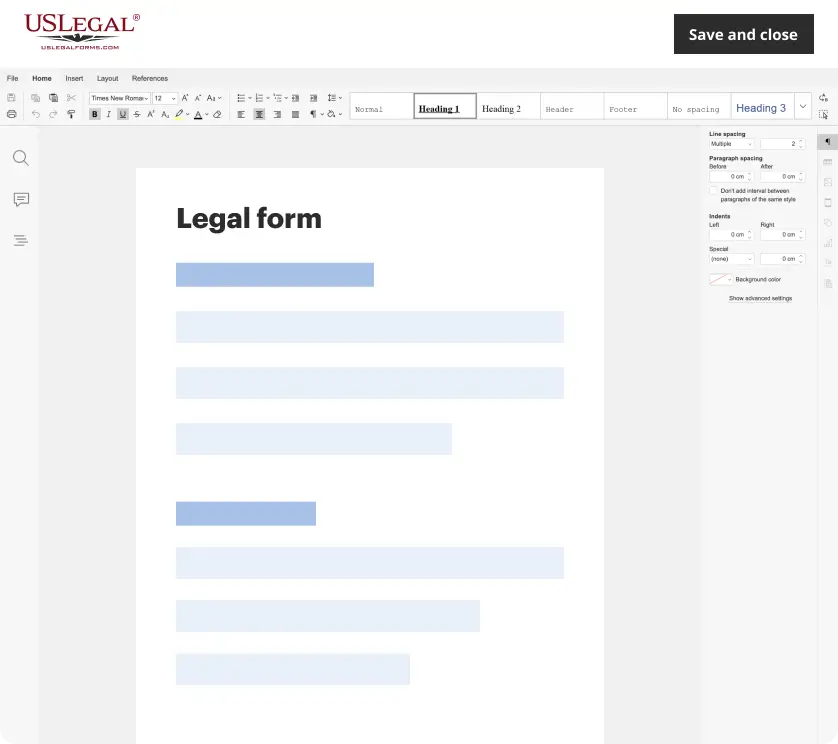
Make edits, fill in missing information, and update formatting in US Legal Forms—just like you would in MS Word.
Download a copy, print it, send it by email, or mail it via USPS—whatever works best for your next step.
Sign and collect signatures with our SignNow integration. Send to multiple recipients, set reminders, and more. Go Premium to unlock E-Sign.
If this form requires notarization, complete it online through a secure video call—no need to meet a notary in person or wait for an appointment.
We protect your documents and personal data by following strict security and privacy standards.
Looking for another form?

Form popularity
FAQ
The employee must first present evidence that he is a member of a protected class, he was qualified for the position he held, he suffered an adverse employment action such as being fired, and that he was replaced with another worker who is not a member of that protected class.
Include the following in your complaint letter: Your name, address and telephone number. The name, address, and telephone number of your attorney or authorized representative, if you are represented. The basis of your complaint. The date(s) that the incident(s) you are reporting as discrimination occurred.
Examples of Employment Discrimination Failure to hire. Harassment. Quid pro quo: Conditioning employment or promotion on sexual favors. Hostile Work Environment: Continuous actions and comments based on protected characteristics that create an uncomfortable and hostile workplace.
What remedies/damages are available in a Title VII lawsuit? Plaintiffs have a right to jury trials under Title VII, and successful plaintiffs can be awarded lost wages (both past and future), mental/emotional distress (compensatory) damages, punitive damages, and attorneys' fees.
The State Human Rights Law also makes it illegal for an employer to discharge, expel, or otherwise discriminate against a person for opposing discriminatory practices, filing a complaint, testifying, or assisting in any proceeding related to enforcement of the State Human Rights Law.
The short answer is no. CPS cases and Juvenile dependency cases are not open to the public in California. This is because of the confidential nature of the proceedings.
The reporting individual's identity will be confidential unless they choose to tell you.
CPS has 60 days after receiving the report to determine whether the report is "indicated" or "unfounded". The law requires CPS to provide written notice to the parents or other subjects of the report concerning the rights ed to them by the New York State Social Services Law.
While CPS cannot provide you with the reporter's identifying information upon your initial request (unless there is a rare situation where the person making the report waives confidentiality as to their identity in writing), the law provides a more formal way to obtain that information, but only if certain conditions ...
Our laws require CPS to work under very strict confidentiality rules, for the protection of everybody involved. The workers cannot share information about the report. You can be assured that if the hotline took your report, CPS is responding to the situation.