Second Amended Print Without Newline In Phoenix
Description


Get your form ready online
Our built-in tools help you complete, sign, share, and store your documents in one place.
Make edits, fill in missing information, and update formatting in US Legal Forms—just like you would in MS Word.
Download a copy, print it, send it by email, or mail it via USPS—whatever works best for your next step.
Sign and collect signatures with our SignNow integration. Send to multiple recipients, set reminders, and more. Go Premium to unlock E-Sign.
If this form requires notarization, complete it online through a secure video call—no need to meet a notary in person or wait for an appointment.
We protect your documents and personal data by following strict security and privacy standards.
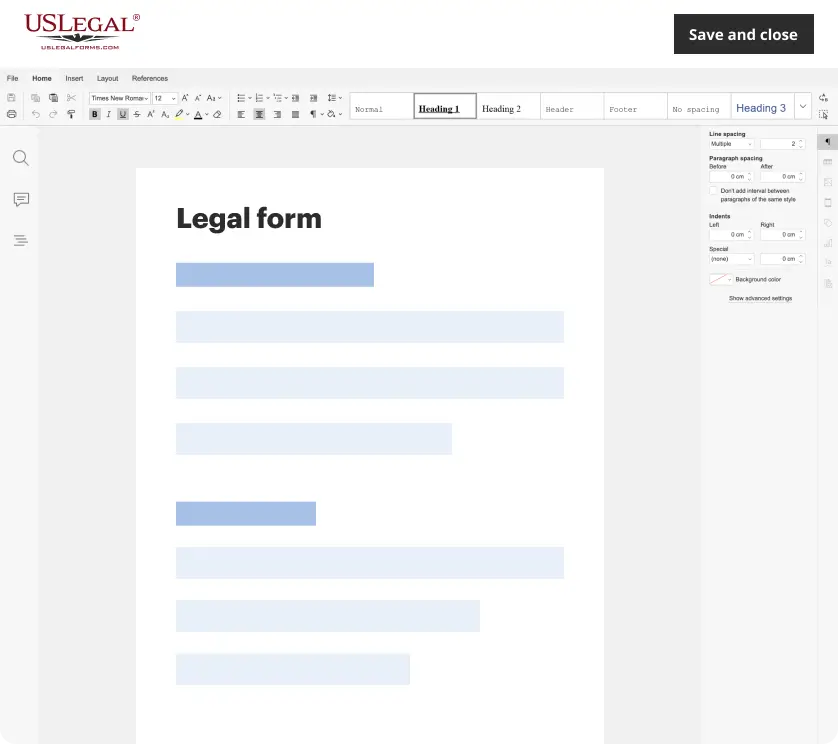
Make edits, fill in missing information, and update formatting in US Legal Forms—just like you would in MS Word.
Download a copy, print it, send it by email, or mail it via USPS—whatever works best for your next step.
Sign and collect signatures with our SignNow integration. Send to multiple recipients, set reminders, and more. Go Premium to unlock E-Sign.

If this form requires notarization, complete it online through a secure video call—no need to meet a notary in person or wait for an appointment.
We protect your documents and personal data by following strict security and privacy standards.
Looking for another form?
Form popularity
FAQ
If you were to use println followed by print , the print statement will appear on the next line, but if the print statement comes before the println , the statement will stay on the same line.
When using the System class, there are two different ways that we can print output: println and print . The big difference between these two is that println will display the message on a new line, while the print statement will print the message on the same line.
This can be useful for formatting text in your Python programs or creating multi-line strings. Example 2: Use multiple \n escape sequences to print multiple newlines: >>> print ( "Hello Pythonista!\ n\nWelcome to LearnPython!" ")
In Python 2. x, a comma is placed after the print statement to print without a new line. When we add a comma to the end of a print statement, it signifies that the next print statement will begin on the same line. It also automatically puts a space between the printed values or messages for clarity.
Ajay, You can use System. out. print() with a \r which does a carriage return without a line feed. NOTE, this was tested on W2K.
By using the inline property we can avoid the new line.
How to Print Without a New Line in Python. To print without adding a new line in Python, you can use the end parameter in the print() function. If you set the end parameter to an empty string, the output continues in the same line. Notice that we use two print() functions here.
Gsub() function in R Language is used to replace all the matches of a pattern from a string. If the pattern is not found the string will be returned as it is. Example: R program to remove the newline from character string using gsub() function. string is the input string of characters.
Solution. Using printf it's easy—just leave off the ending \n in your format string. With echo, use the -n option.
