Temporary Injunction Form With 2 Points In Clark
Description
















Get your form ready online
Our built-in tools help you complete, sign, share, and store your documents in one place.
Make edits, fill in missing information, and update formatting in US Legal Forms—just like you would in MS Word.
Download a copy, print it, send it by email, or mail it via USPS—whatever works best for your next step.
Sign and collect signatures with our SignNow integration. Send to multiple recipients, set reminders, and more. Go Premium to unlock E-Sign.
If this form requires notarization, complete it online through a secure video call—no need to meet a notary in person or wait for an appointment.
We protect your documents and personal data by following strict security and privacy standards.
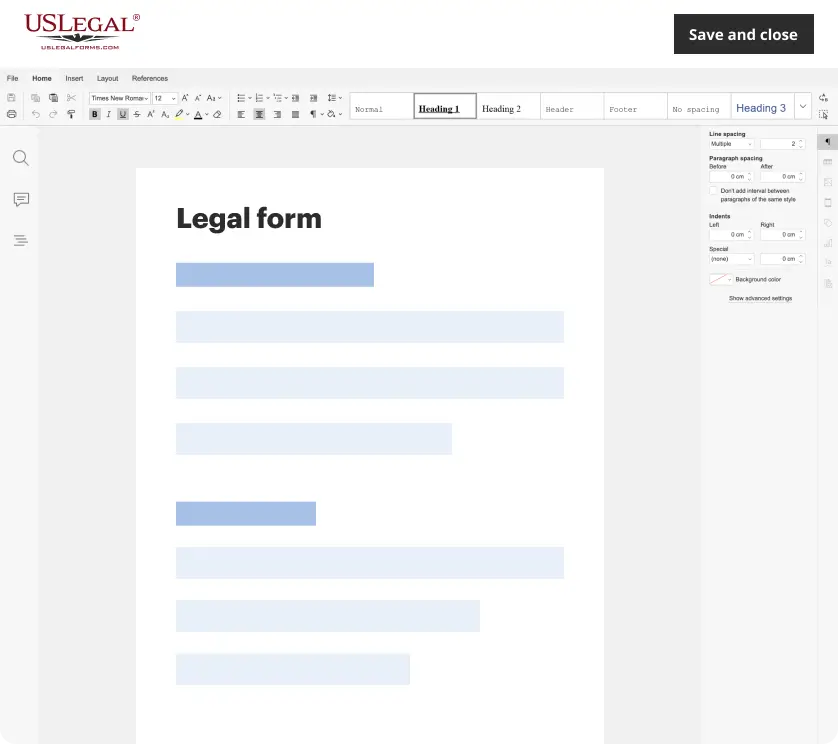
Make edits, fill in missing information, and update formatting in US Legal Forms—just like you would in MS Word.
Download a copy, print it, send it by email, or mail it via USPS—whatever works best for your next step.
Sign and collect signatures with our SignNow integration. Send to multiple recipients, set reminders, and more. Go Premium to unlock E-Sign.

If this form requires notarization, complete it online through a secure video call—no need to meet a notary in person or wait for an appointment.

We protect your documents and personal data by following strict security and privacy standards.
Looking for another form?

Form popularity
FAQ
The purpose of a motion to dissolve an injunction is “to provide a means to show changed circumstances or changes in the law that require modification or dissolution of the injunction; the purpose is not to give an unsuccessful party an opportunity to relitigate the propriety of the original grant.”
The order will expire on the set date, by Order of the Court, by agreement of all parties, or until your case has a final order issued.
As such, an injunctive relief will be overturned if the appellate court finds that the trial court issued the relief based on an misapplication of the law or an erroneous factual finding. Injunctive relief is generally only granted in extreme circumstances.
Temporary injunction. n. a court order prohibiting an action by a party to a lawsuit until there has been a trial or other court action.
(a) The defendant may seek dissolution of an issued writ of sequestration by filing a written motion with the court. (b) The right to seek dissolution is cumulative of the right of replevy. (c) The filing of a motion to dissolve stays proceedings under the writ until the issue is determined.
An injunction or temporary restraining order is an order from the court prohibiting a party from performing or ordering a specified act, either temporarily or permanently.
A preliminary injunction is temporary relief that preserves the status quo until the courts decide on the merits of the case. The relief sought often involves asking a court to prevent an opposing party from taking specific action or continuing a current course of action.
The party asking for an injunctive relief must prove three things: 1) that there is a cause of action against the defendant; 2) that the party seeking the injunction has a right to the property in question; and 3) that the objects in question are in danger of “probable, imminent, and irreparable injury.” In the Strube ...
(1) that it has suffered an irreparable injury; (2) that remedies available at law, such as monetary damages, are inadequate to compensate for that injury; (3) that, considering the balance of hardships between the parties, a remedy in equity is warranted; and (4) that the public interest would not be disserved by ...
Examples: “I am asking the court to grant me a _____ month/year injunction.” “I want no contact in person, at home, by phone, at work, by mail or through third parties.” “I would consider any contact in the future to be a violation.” Tell the court why you would like the temporary restraining order injunction.
