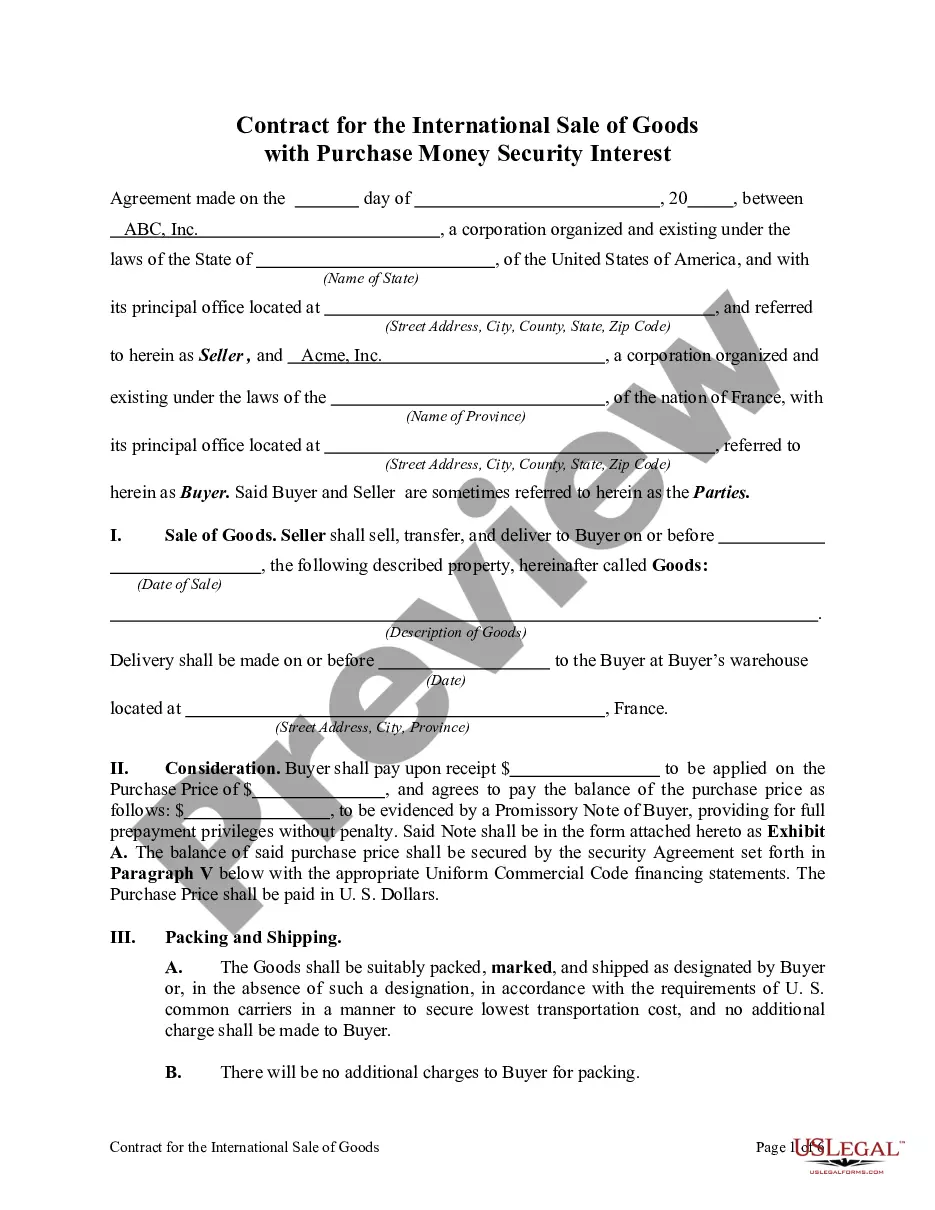
Contract For International Sale Of Goods With Foreign Currency In Dallas
Description




Form popularity
FAQ
International contracts govern business transactions across borders, mitigating legal and financial risks. Common types of international contracts include distribution agreements, franchise agreements, joint ventures, and intellectual property licenses.
To exchange or sell your foreign currency, visit a U.S. Bank branch and we'll help you through the process.
An offer can be made to an individual, a group of persons, or even the whole world (all law students have to learn the 1893 case of Carlill v Carbolic Smoke Ball Co in which a gazette advertisement was deemed to constitute a contract offer).
Contents Identifying the Parties Involved. Identify all relevant governments, organizations, and businesses involved in the agreement. Determine the roles and responsibilities of all parties involved. Establishing Objectives. Establish the overall goal of the agreement. Identify the objectives of each party involved.
In an international business contract, it's essential to define the jurisdiction that will govern the contract and the laws that will apply in the event of a dispute. Your dispute resolution section should also detail the agreed-upon dispute resolution mechanism.
Top ten tips in drafting and negotiating an international contract Avoiding retaliation claims. The language of the contract. Clear contract prose. Common law versus civil law. Jurisdictional issues. Terms of art. Personnel. In negotiations, expect the unexpected.
Any company that was not formed in Texas is considered a foreign entity that must file an application for registration with the Texas Secretary of State (SOS) in order to do business in the state.
Right to transact business in Texas indicates an entity's franchise tax account status. If Right to Transact Business is... Then... Active. The entity's right to transact business in Texas is intact.
