Injunctive Relief Agreement For Breach In Kings

State:
Multi-State
County:
Kings
Control #:
US-000302
Format:
Word; 
Rich Text
Instant download

Description

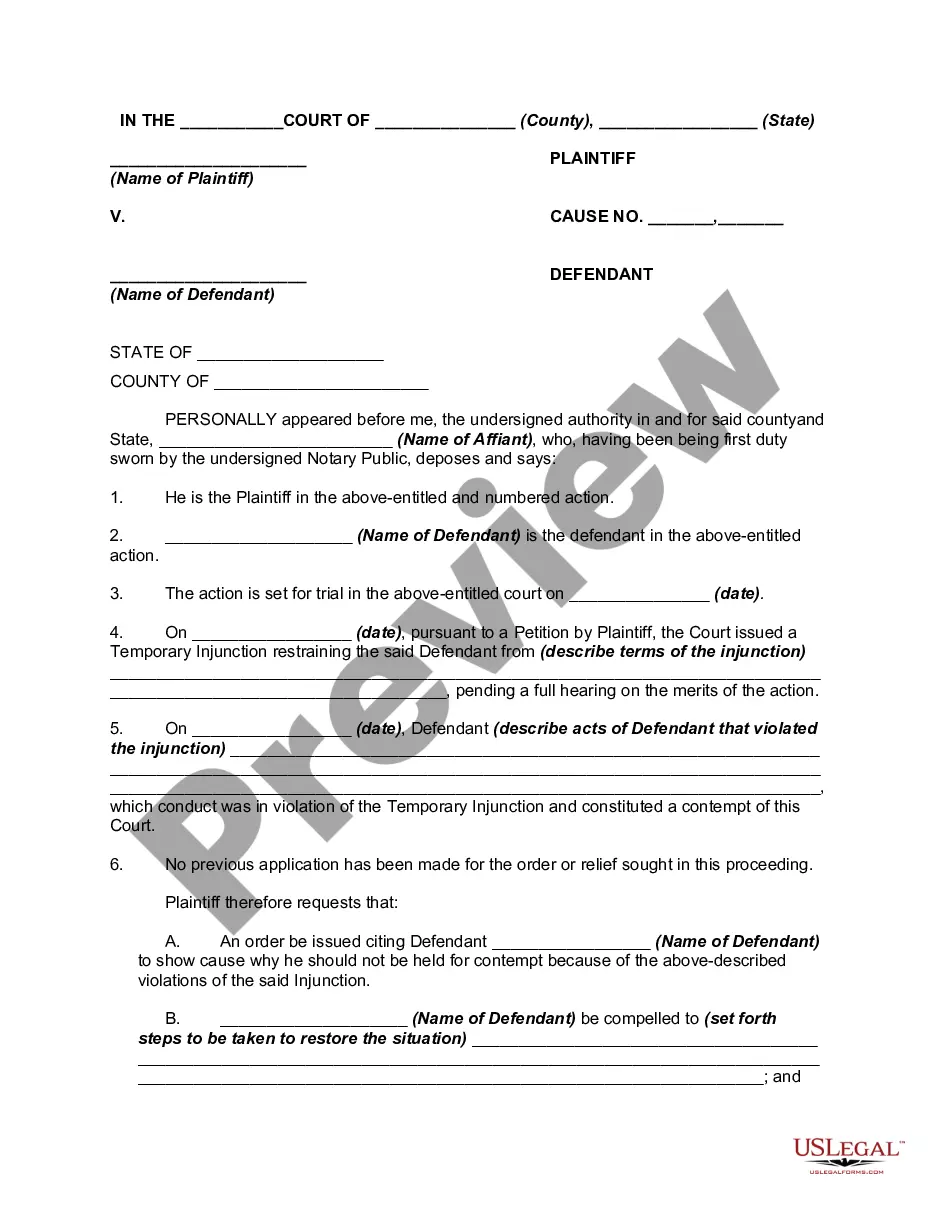
The Injunctive Relief Agreement for Breach in Kings is a legal document designed to address situations where an individual breaches a non-competition agreement. This form is particularly important for businesses seeking to protect their interests from unauthorized competition by former employees. The document outlines the specific restrictions placed on the employee, detailing the duration and geographical scope of the non-competition clause. Additionally, it provides a mechanism for securing injunctive relief, affirming that monetary damages may not suffice for breaches, and emphasizes the importance of maintaining trade secrets. The form is user-friendly, allowing legal professionals to fill in essential details such as parties involved and the nature of the breach. Target audiences, including attorneys, partners, and paralegals, will find this form useful for drafting legal complaints, filing motions for injunctive relief, and serving as a basis for litigation against former employees who violate their agreements. Overall, the Injunctive Relief Agreement for Breach in Kings serves as a vital tool for businesses to safeguard their competitive edge and enforce compliance with contractual obligations.
Free preview
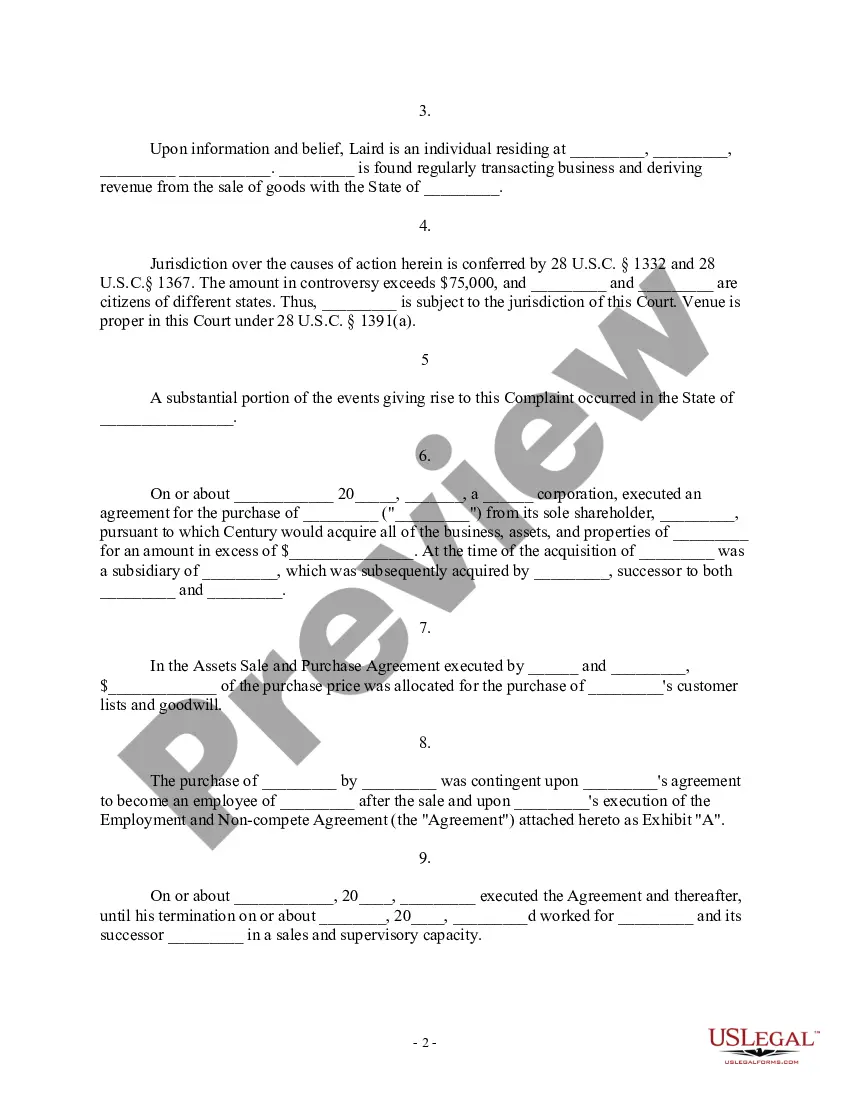
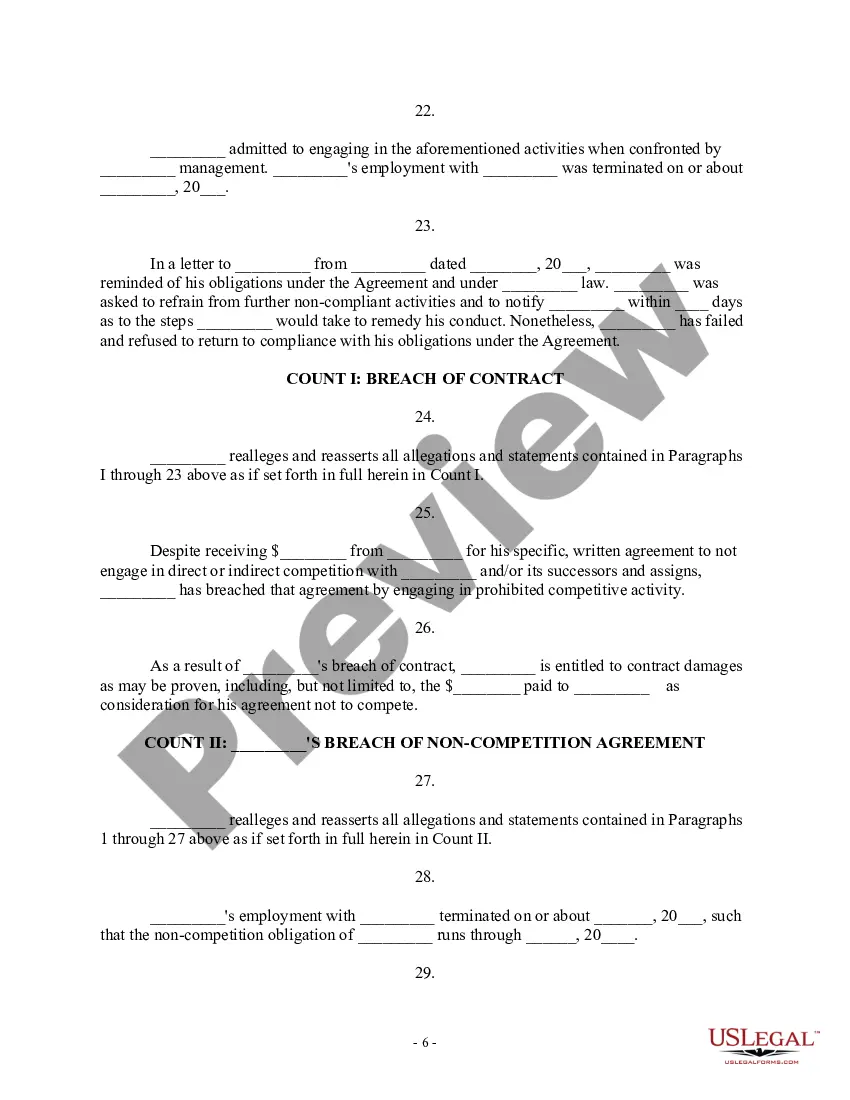
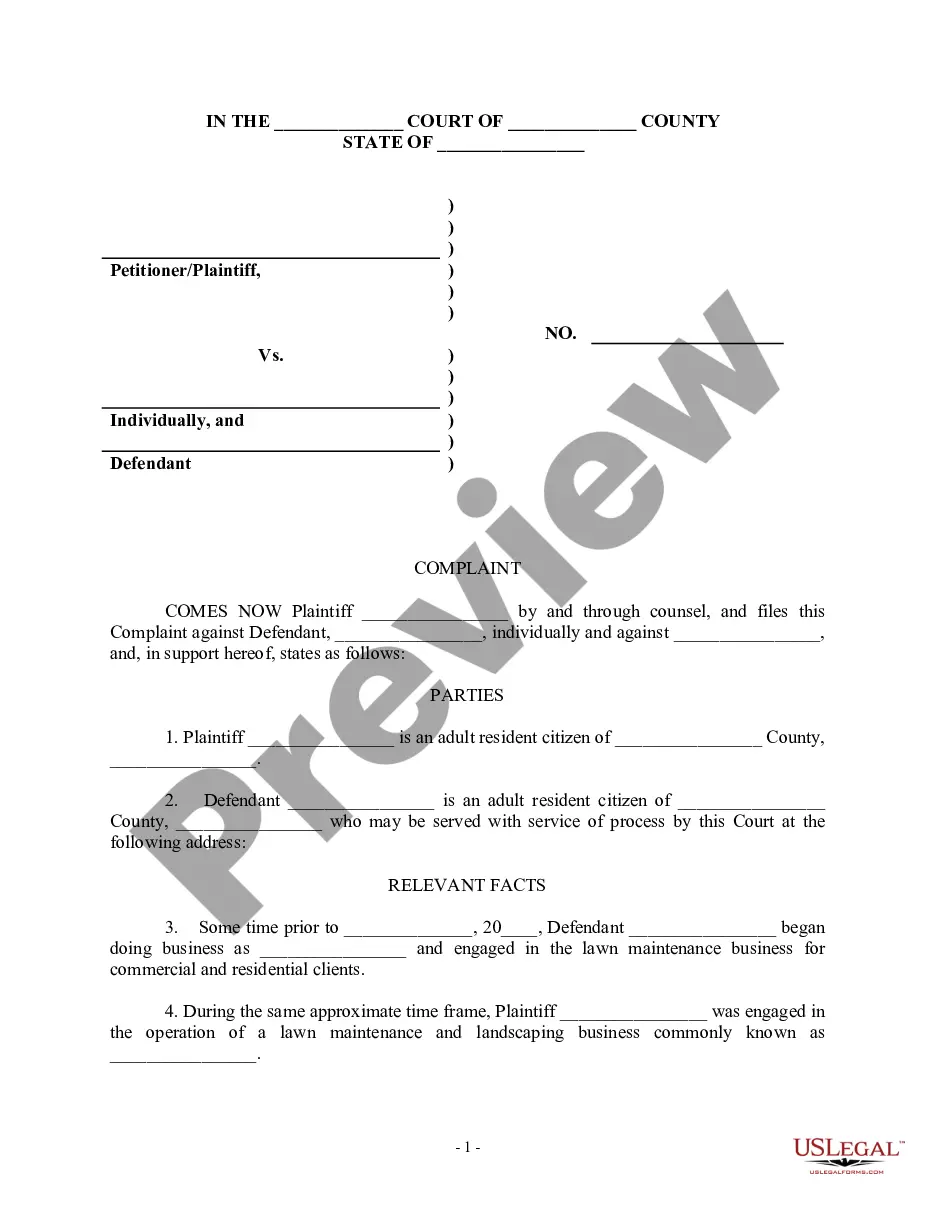
  • Preview Complaint for Injunctive Relief and Damages for Breach of Noncompetition Agreement - Breach of Contract - Violation of Trade Secrets Act
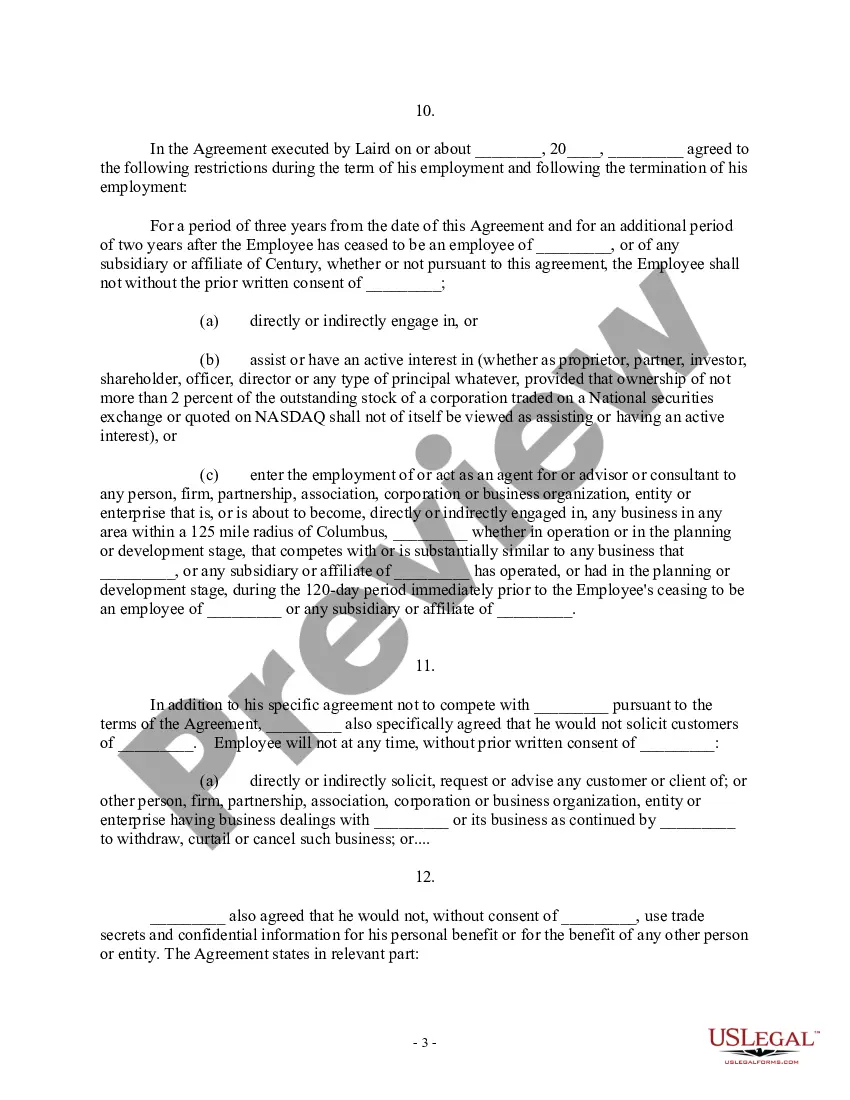
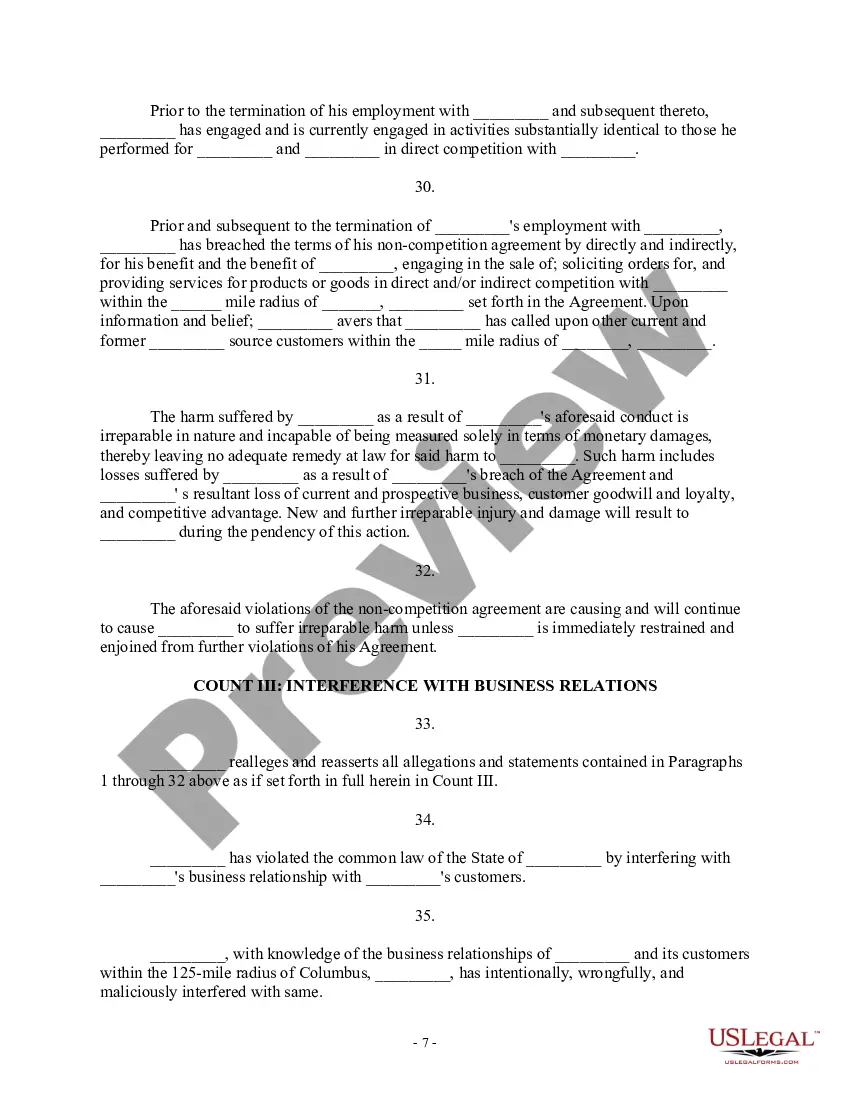
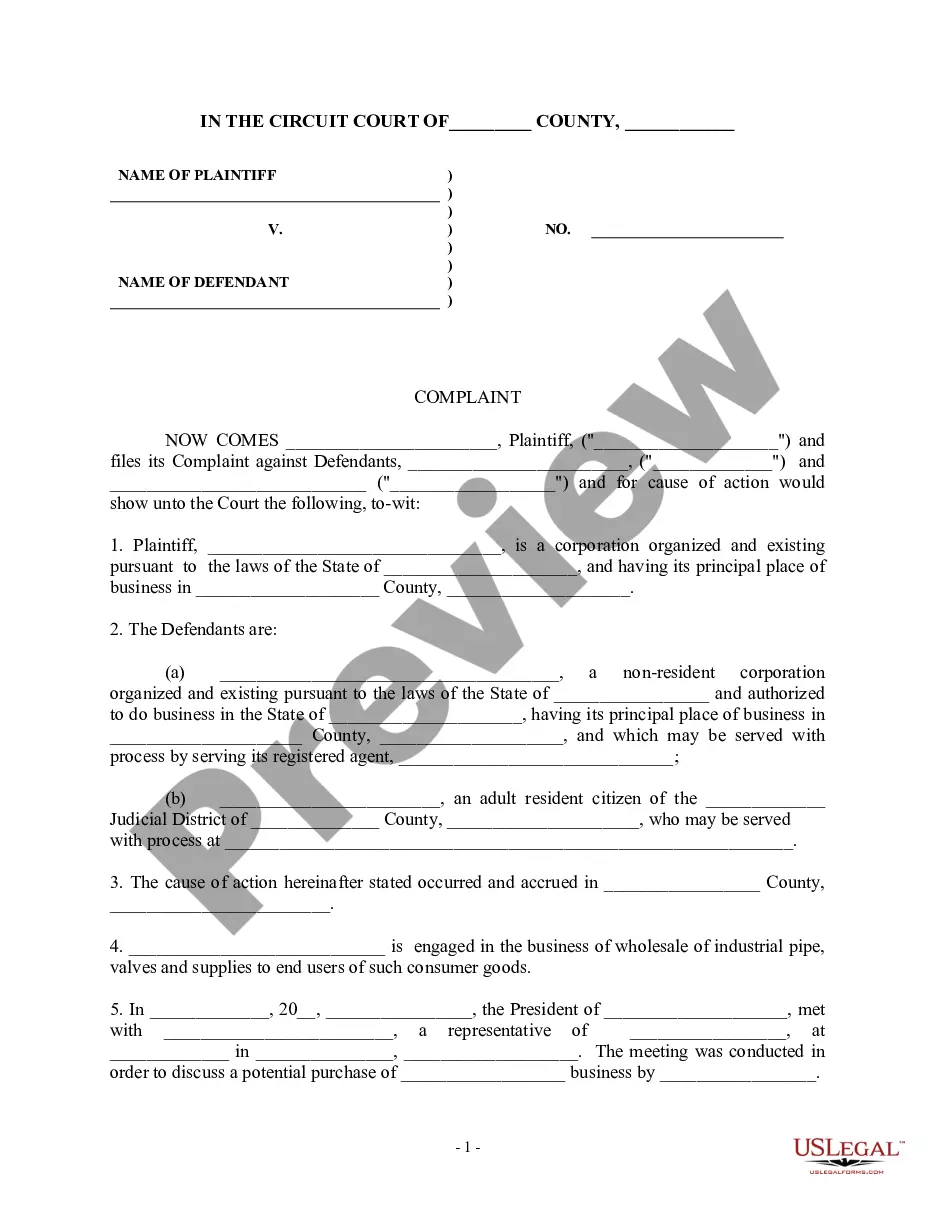
  • Preview Complaint for Injunctive Relief and Damages for Breach of Noncompetition Agreement - Breach of Contract - Violation of Trade Secrets Act
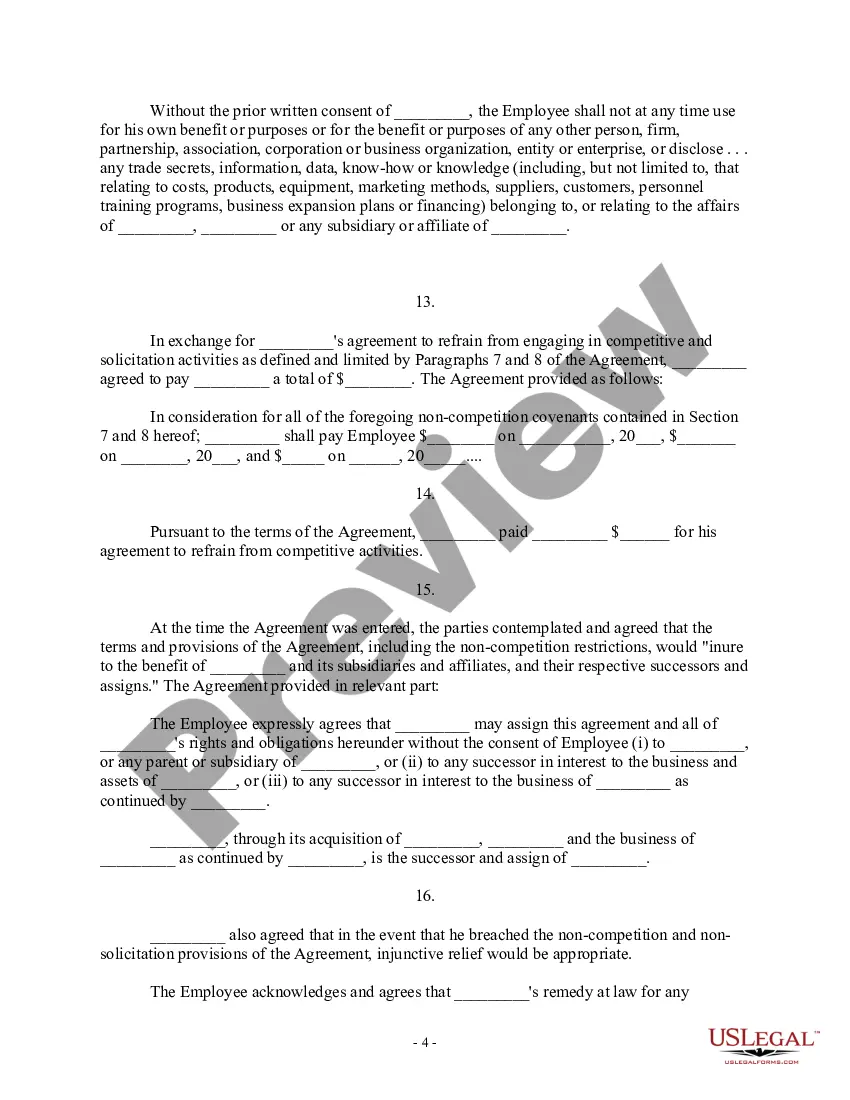
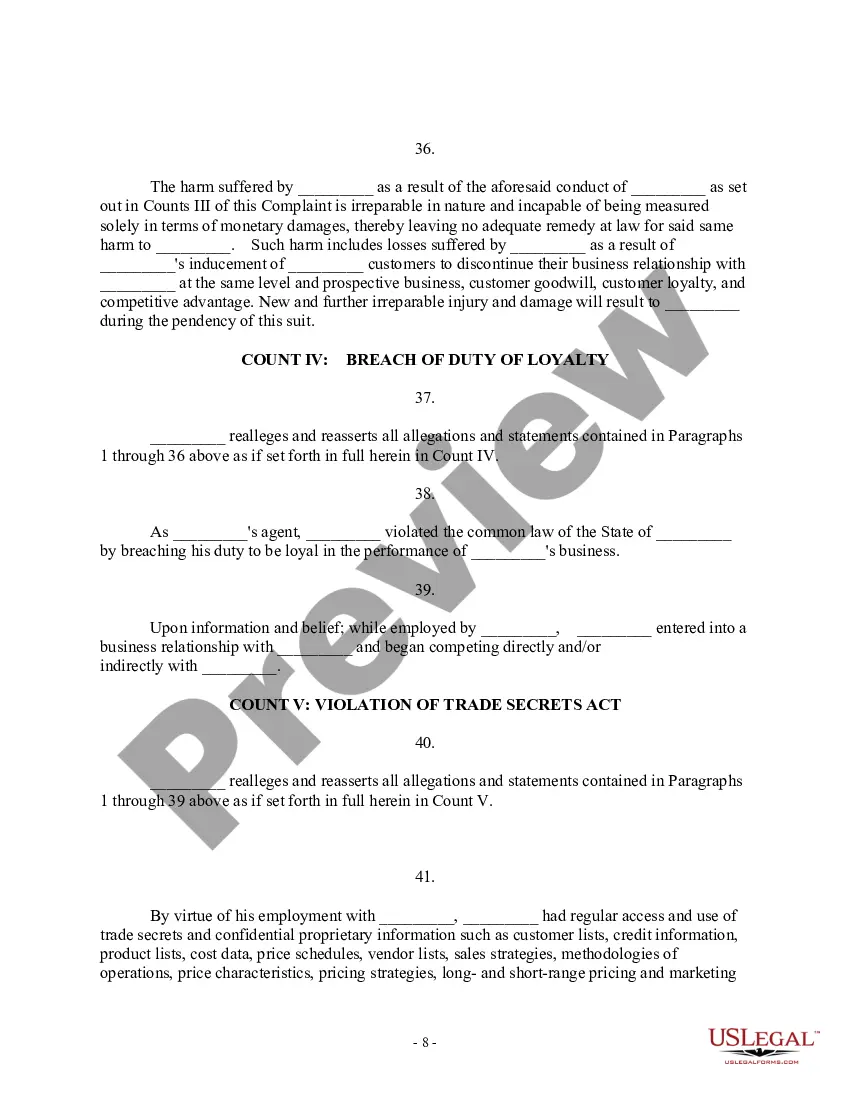
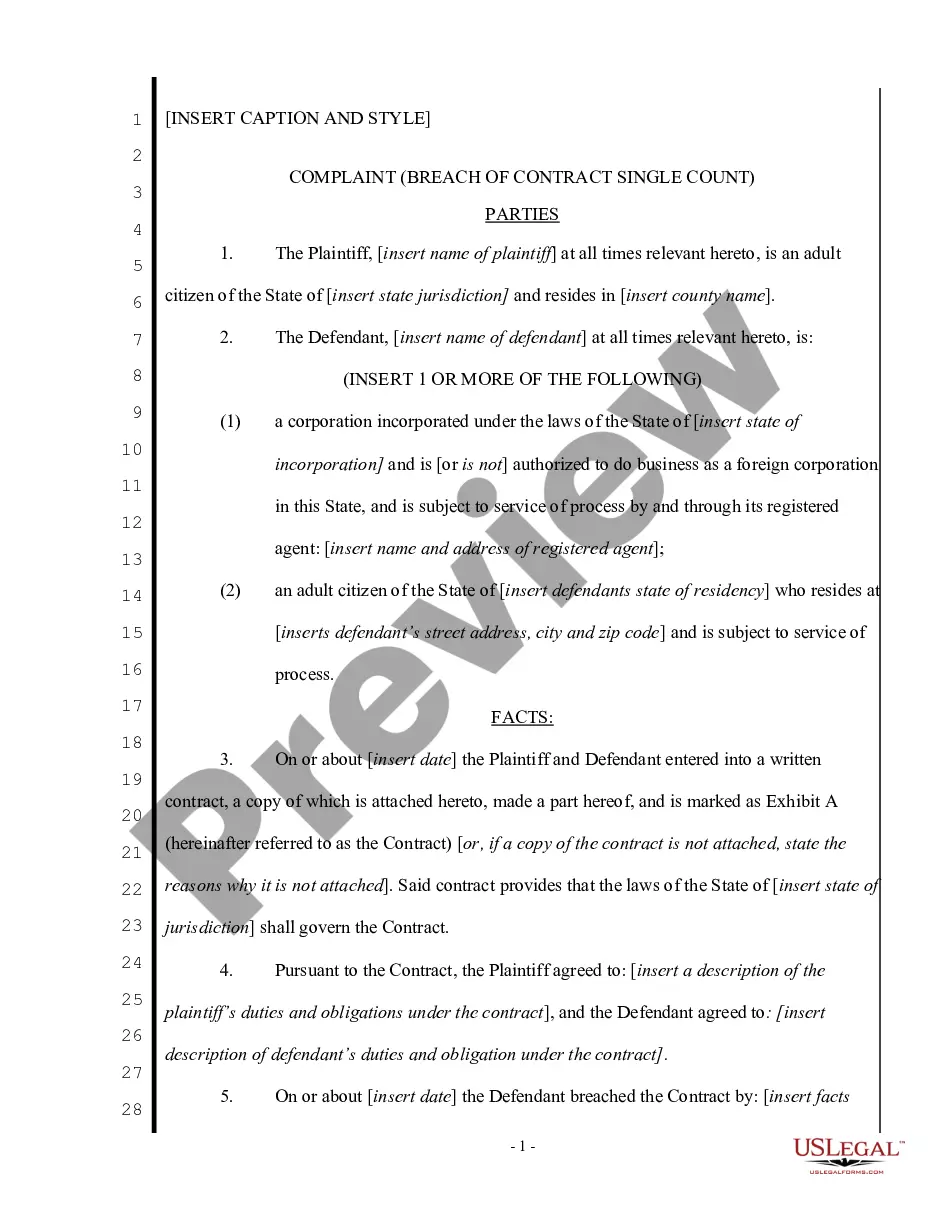
  • Preview Complaint for Injunctive Relief and Damages for Breach of Noncompetition Agreement - Breach of Contract - Violation of Trade Secrets Act
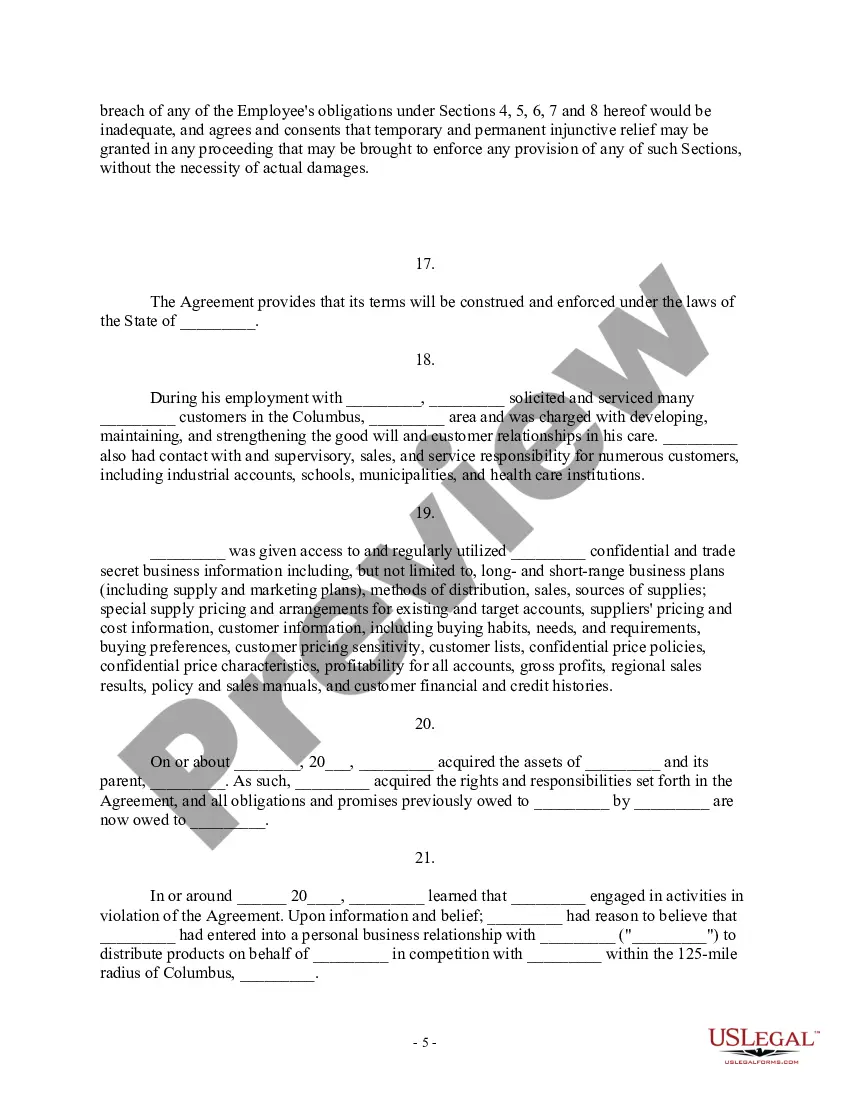
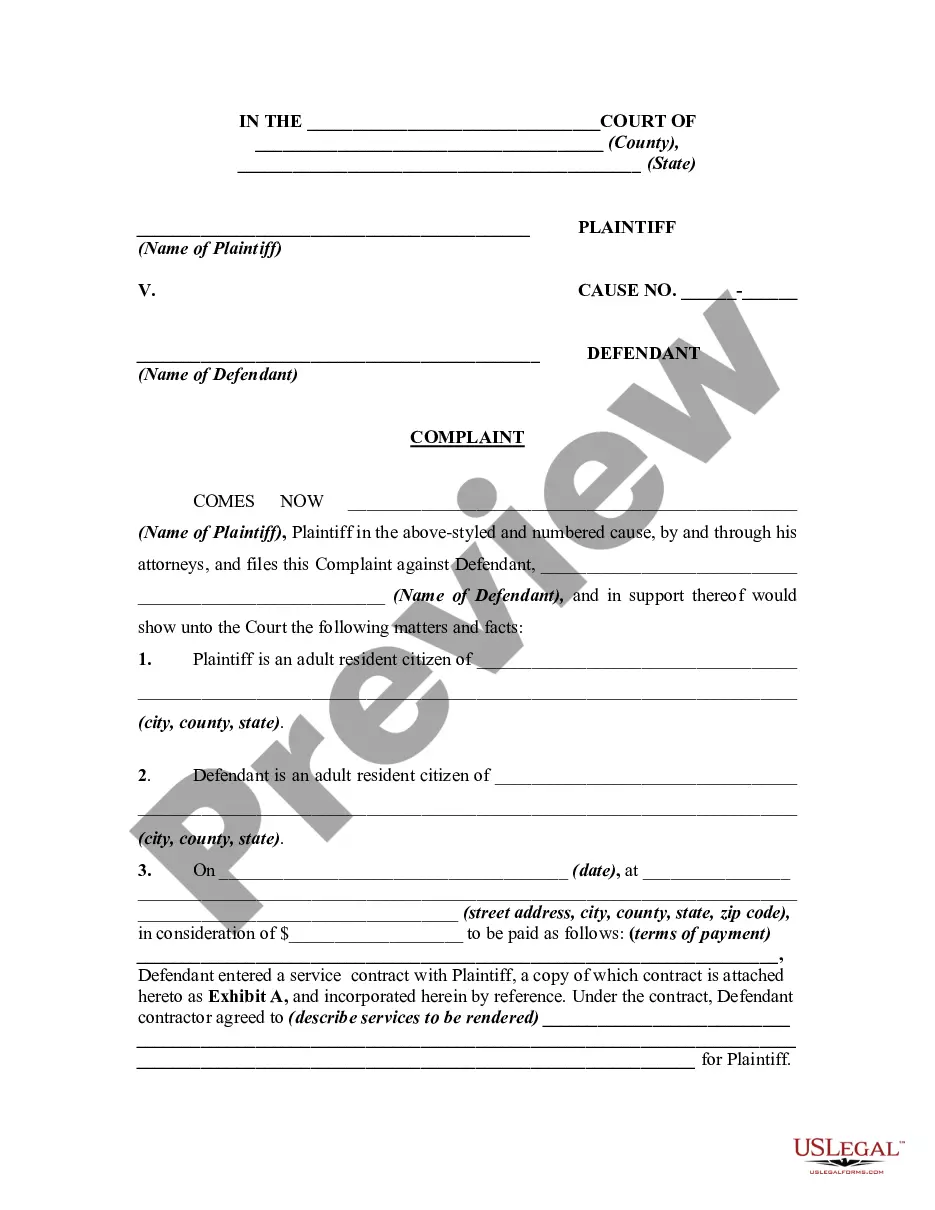
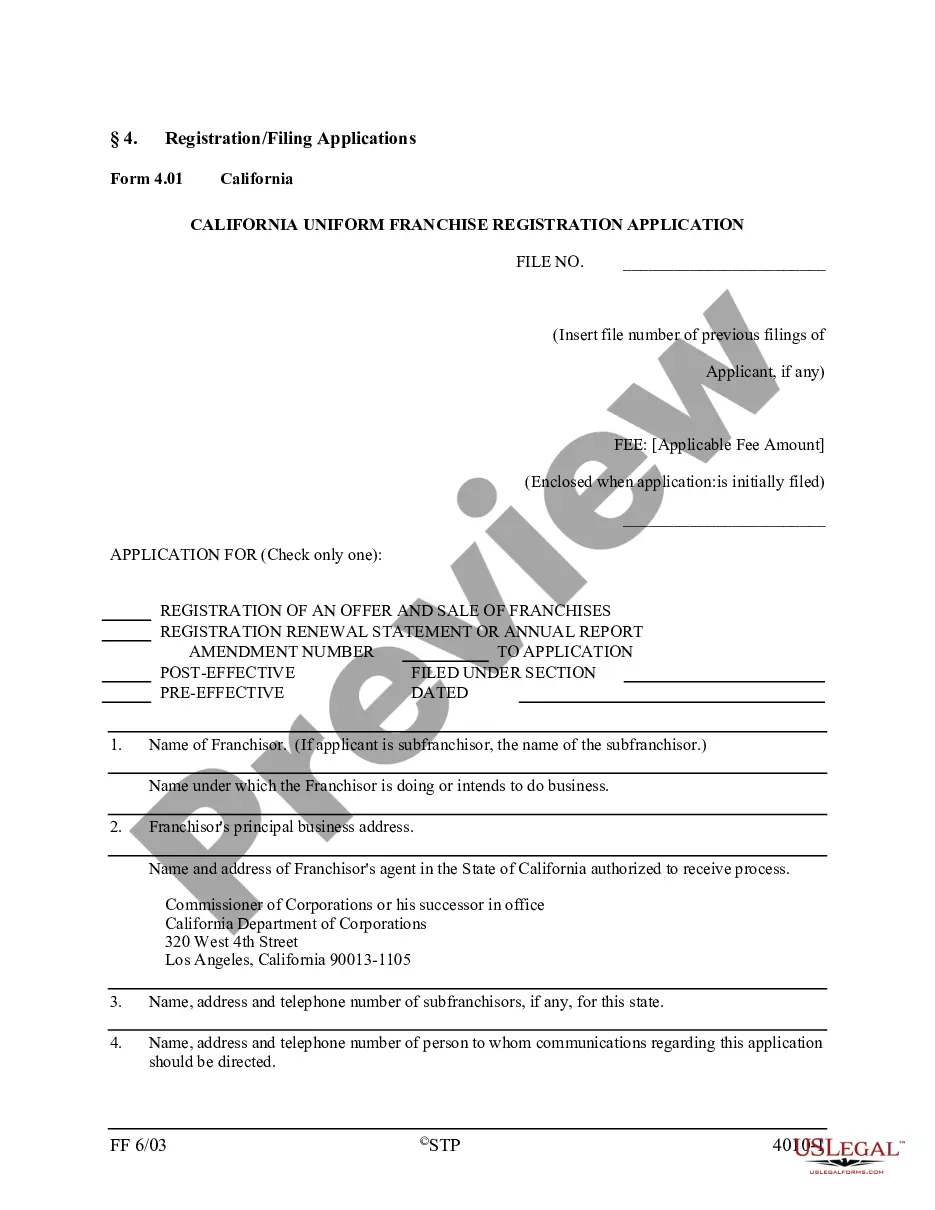
  • Preview Complaint for Injunctive Relief and Damages for Breach of Noncompetition Agreement - Breach of Contract - Violation of Trade Secrets Act
  • Preview Complaint for Injunctive Relief and Damages for Breach of Noncompetition Agreement - Breach of Contract - Violation of Trade Secrets Act
  • Preview Complaint for Injunctive Relief and Damages for Breach of Noncompetition Agreement - Breach of Contract - Violation of Trade Secrets Act
  • Preview Complaint for Injunctive Relief and Damages for Breach of Noncompetition Agreement - Breach of Contract - Violation of Trade Secrets Act
  • Preview Complaint for Injunctive Relief and Damages for Breach of Noncompetition Agreement - Breach of Contract - Violation of Trade Secrets Act

Form popularity

FAQ

A prohibitory injunction, meanwhile, is an injunction of the court that prohibits or prevents a party from doing something specific. For example, this could be to prevent a breach of contract, or to prevent a party from dissipating their assets.

An injunction or temporary restraining order is an order from the court prohibiting a party from performing or ordering a specified act, either temporarily or permanently.

These courts consider: (1) the likelihood of success on the merits; (2) irreparable harm if the injunction is not granted; (3) whether a balancing of the relevant equities favors the injunction; and (4) whether the issuance of the injunction is in the public interest.

Injunctions: Injunctions can be used to stop an ongoing breach of contract. Obtaining an injunction can be complex and requires a court order, with the court ordering a party to do or stop doing a particular action.

Injunctive relief usually takes one of three forms: temporary restraining order (TRO), preliminary injunction, and permanent injunction. As their modifying terms imply, each has a different level of the time commitment involved.

A prohibitory injunction is the most common form of injunction, and directs a party to refrain from acting in a certain manner. Examples of a prohibitory injunction are cease and desist orders such as an order stopping a bulldozer prior to the razing of an historic building.

First, an injunction is a court order delivered in a civil trial or suit. This court order stops the defendant from pursuing a certain activity. This can include constructing a new building, pursuing a business venture, or making transactions that are harmful to the plaintiff.

After a summons with notice is served, the defendant will demand that the plaintiff serve a complaint. The plaintiff must then have the complaint served within 20 days after being served with the demand, or the case may be dismissed.

Use certified copies of marriage and divorce certificates or name change orders as proof to notify these federal and state agencies that you changed your name. Social Security card. Driver's license or state ID card. Tax returns. U.S. passport. Naturalization certificate and certificate of citizenship. Veterans benefits.

Trusted and secure by over 3 million people of the world’s leading companies

Injunctive Relief Agreement For Breach In Kings