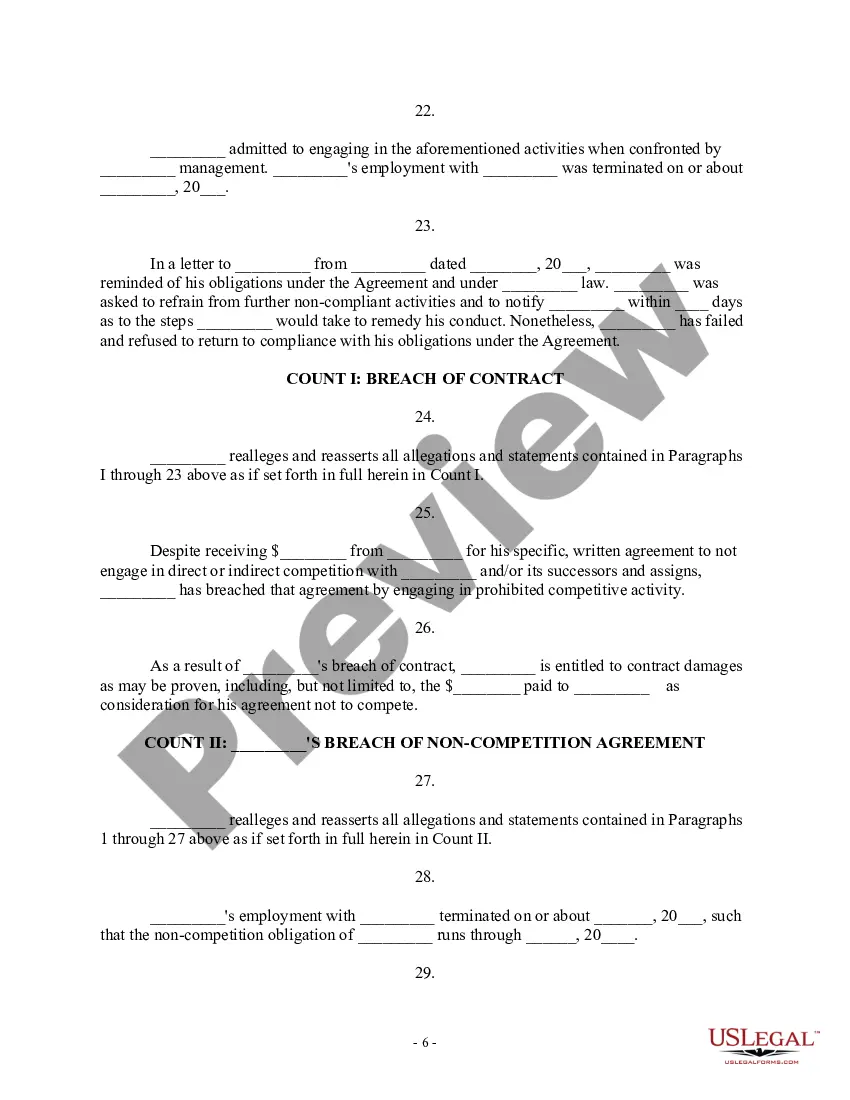
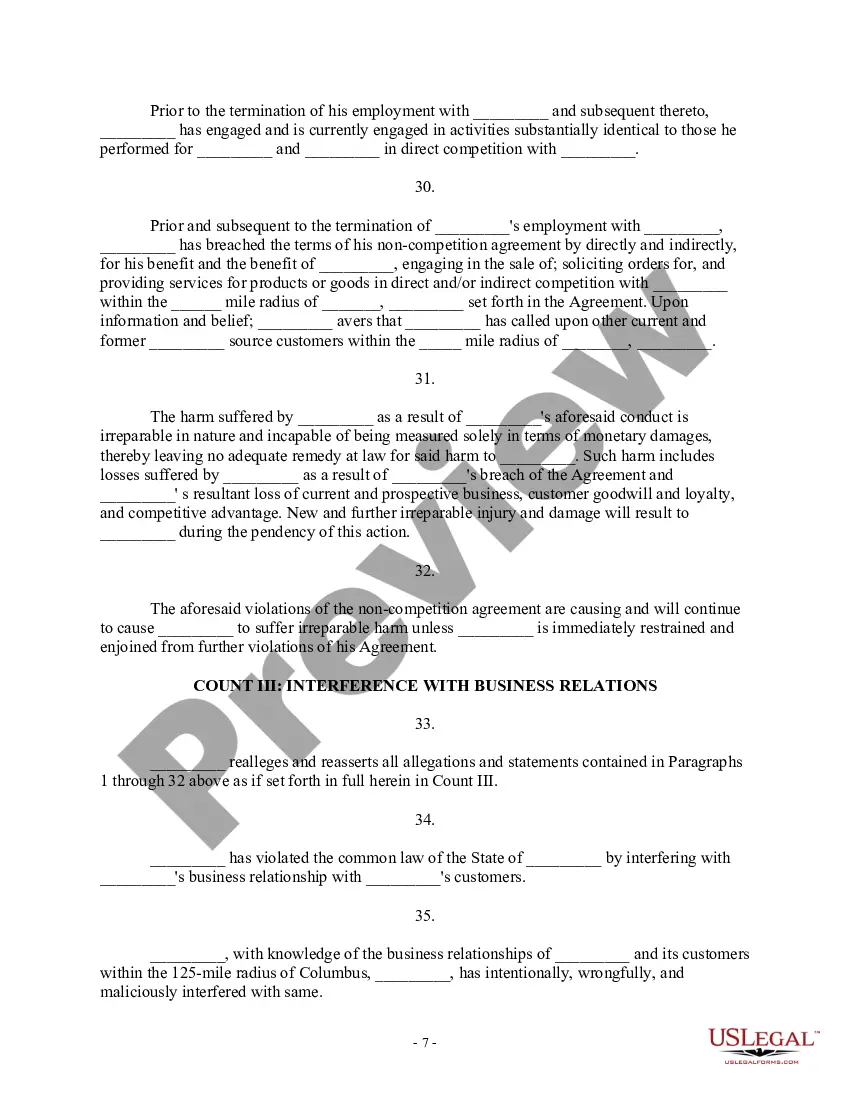
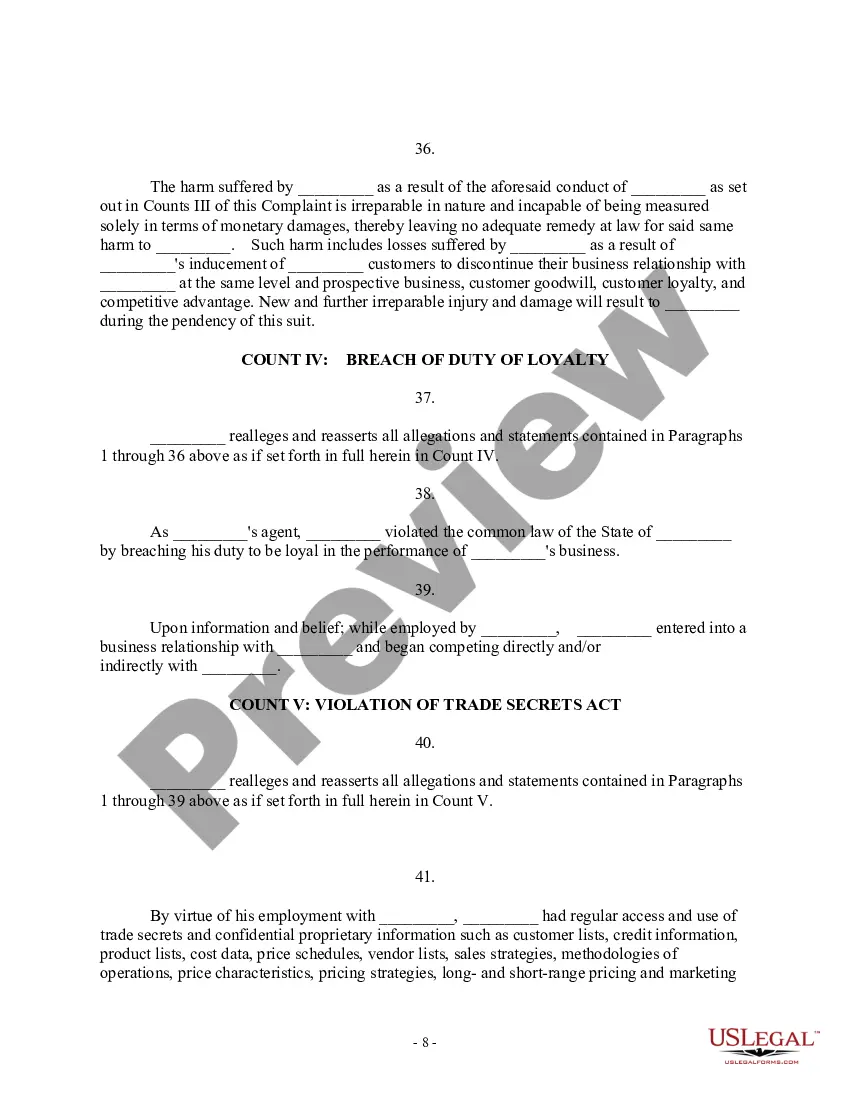
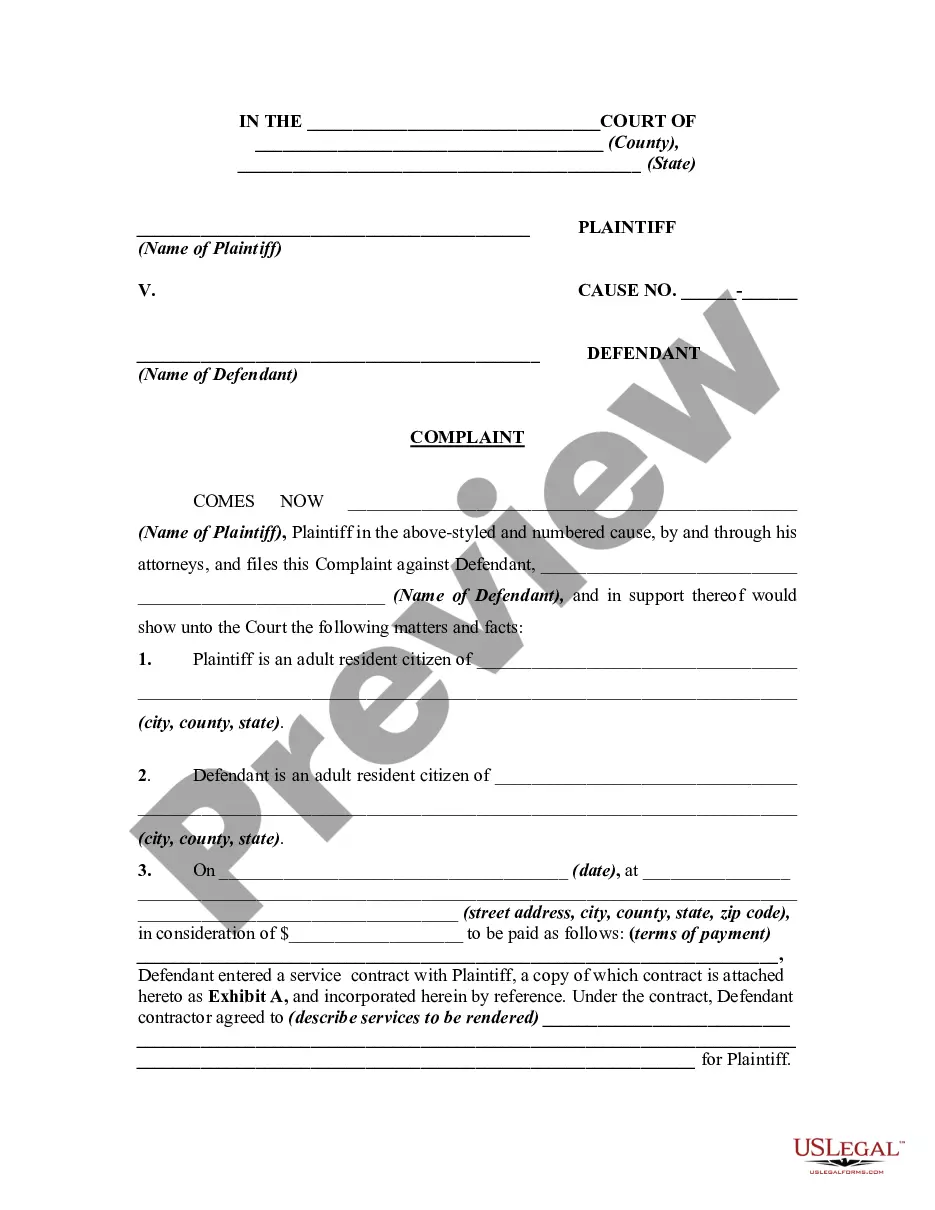
Complaint Relief With Contacts In Pennsylvania
Description




Form popularity
FAQ
Your response to the complaint is called the answer. You should respond to each paragraph of the complaint matching your response to the exact number used in the complaint. Be very careful with the statement you make in your answer. These statements can become admissions of facts that could be used against you.
In addition to disputing all or parts of a plaintiff's complaint, it is common to include on or more defenses in your Answer. A defense is a legal reason why the other side should lose. For example, a defense could be that the other side waited too long to sue you.
The answer must be in writing and: (1) Set forth in paragraphs numbered to correspond with the complaint. (2) Advise the parties and the Commission as to the nature of the defense. (3) Admit or deny specifically all material allegations of the complaint.
They include the complaint, answer, and reply. The complaint is filed and served with a summons on the defendants. The defendants must then serve a written answer to respond to the complaint. The answer may contain affirmative defenses and counterclaims against the plaintiff.
On a separate page or pages, write a short and plain statement of the answer to the allegations in the complaint. Number the paragraphs. The answer should correspond to each paragraph in the complaint, with paragraph 1 of the answer corresponding to paragraph 1 of the complaint, etc.
These include misconduct such as (a) violating or attempting to violate the Rules of Professional Conduct, (b) knowingly assisting or inducing another to violate the Rules of Professional Conduct, or violating the Rules of Professional Conduct through the acts of another; (c) committing a criminal act that reflects ...
(B) admit or deny the allegations asserted against it by an opposing party. (2) Denials—Responding to the Substance. A denial must fairly respond to the substance of the allegation. (3) General and Specific Denials.
Competition and Consumer Protection Commission (CCPC) Consumer information. The CCPC has a consumer helpline and website that provides information on. Complaints handling. Enforcement. Registration and licencing.
Department of Consumer Affairs. File a complaint online at .dca.ca or call 800.952. 5210 to have a complaint form mailed to you.
The FTC's Bureau of Consumer Protection stops unfair, deceptive and fraudulent business practices by: collecting complaints and conducting investigations. suing companies and people that break the law.
