Film Agreement Sample With Collateral In Utah
Description





Form popularity
FAQ
The collateral source rule is a legal doctrine in tort law that prohibits the admission of evidence showing that the plaintiff or victim has received compensation from sources other than the damages sought against the defendant.
Suppose you agree to rent an apartment. The lease agreement you sign with the landlord is the main contract. However, your landlord promises to fix the toilet drainage. Therefore, this is the collateral contract.
A quick definition of collateral order doctrine: The three conditions are: the decision settles an important question, the question is separate from the main case, and the decision can't be appealed after the case is finished.
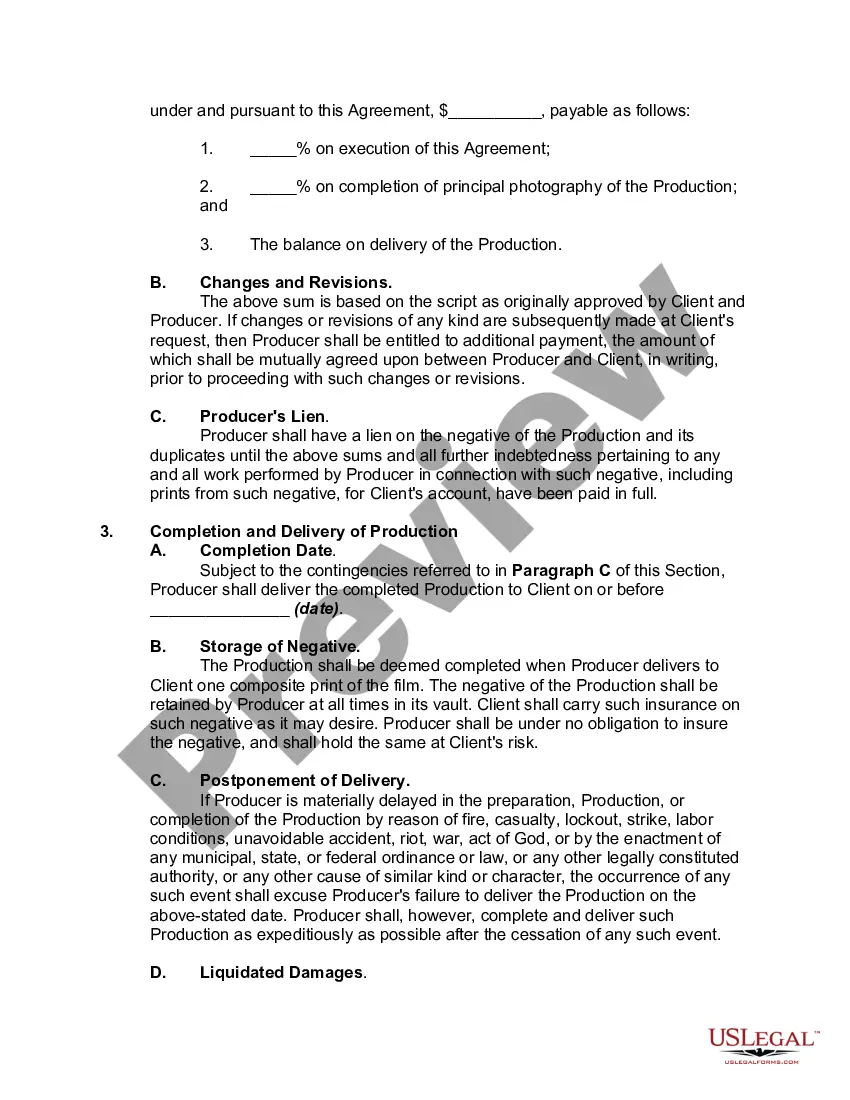
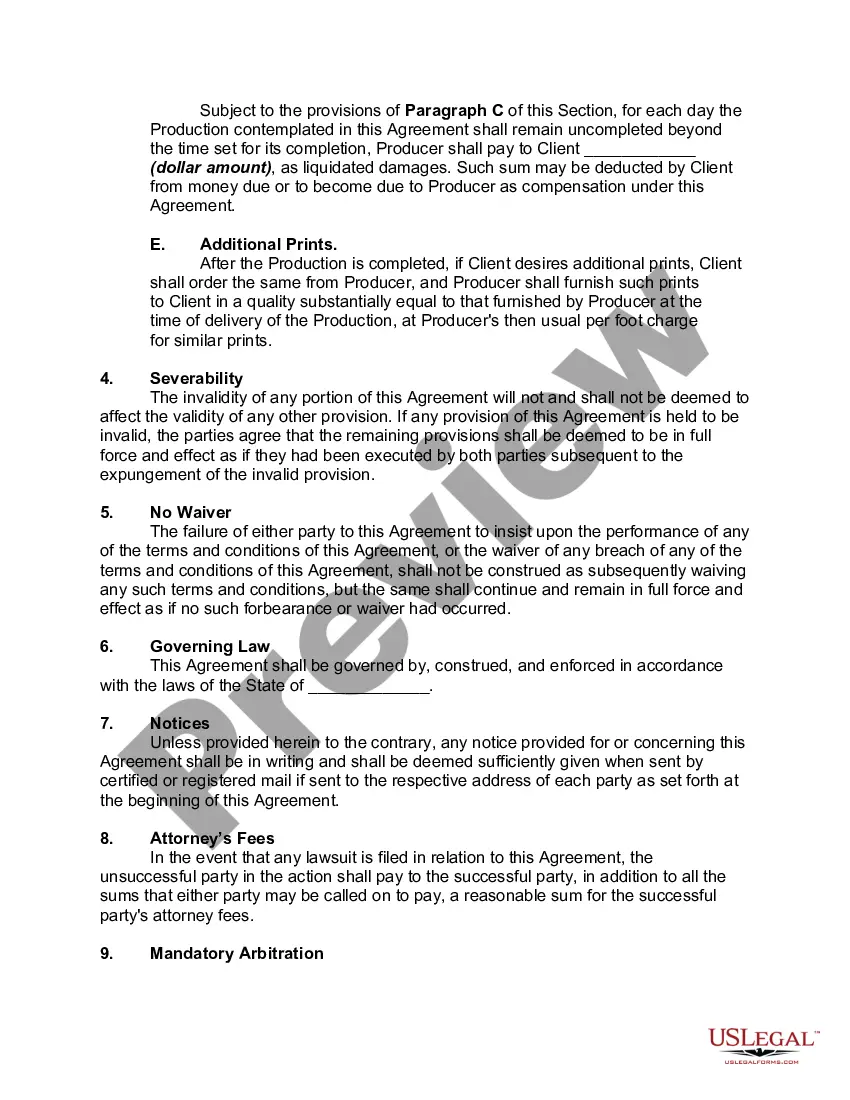
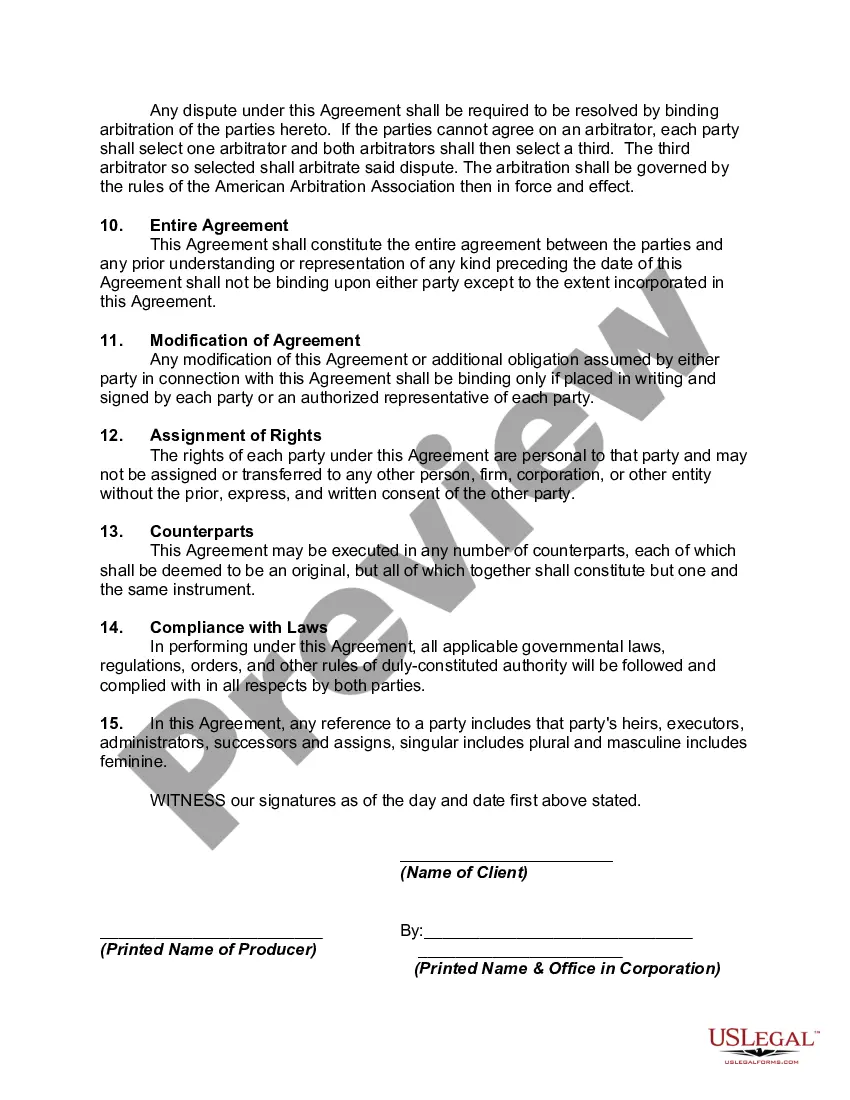
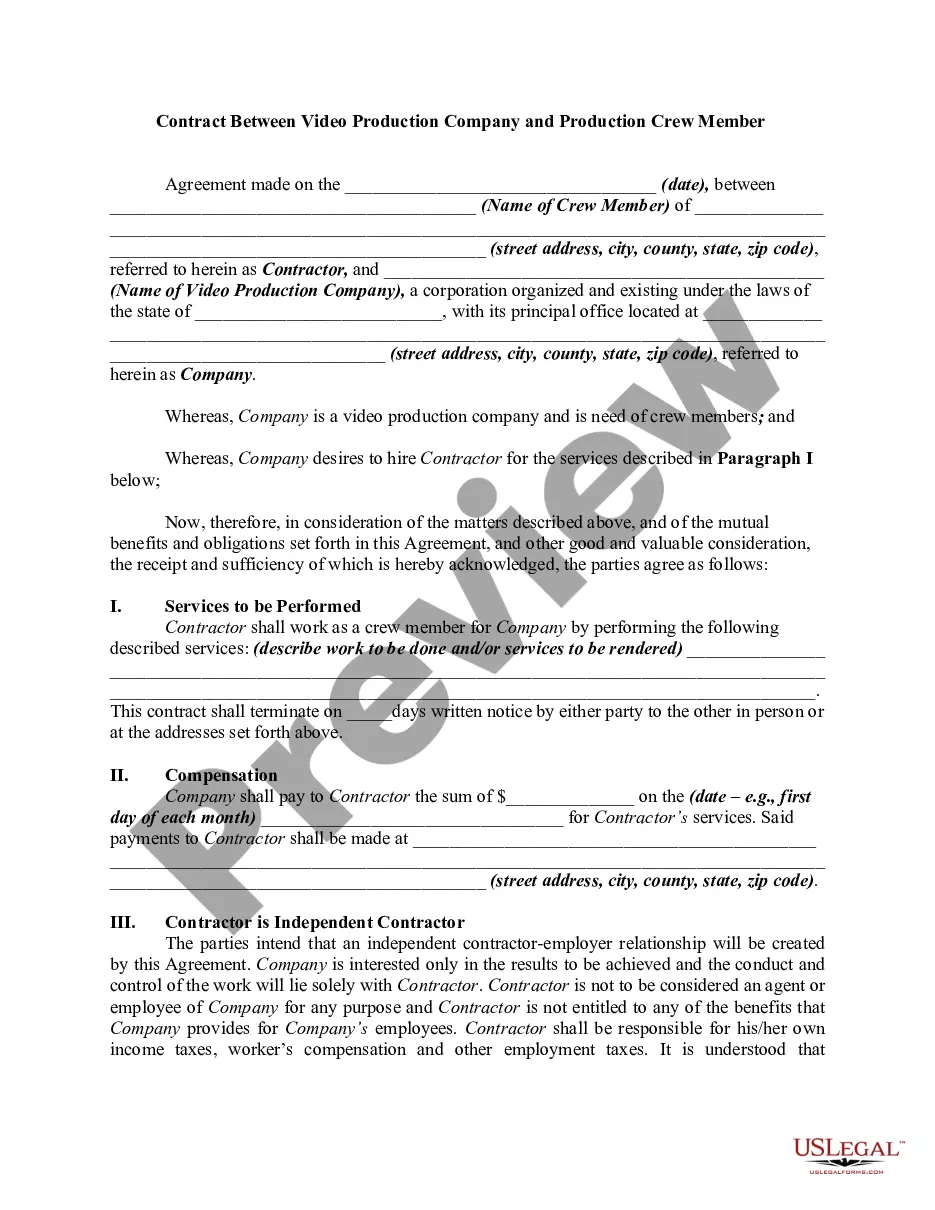
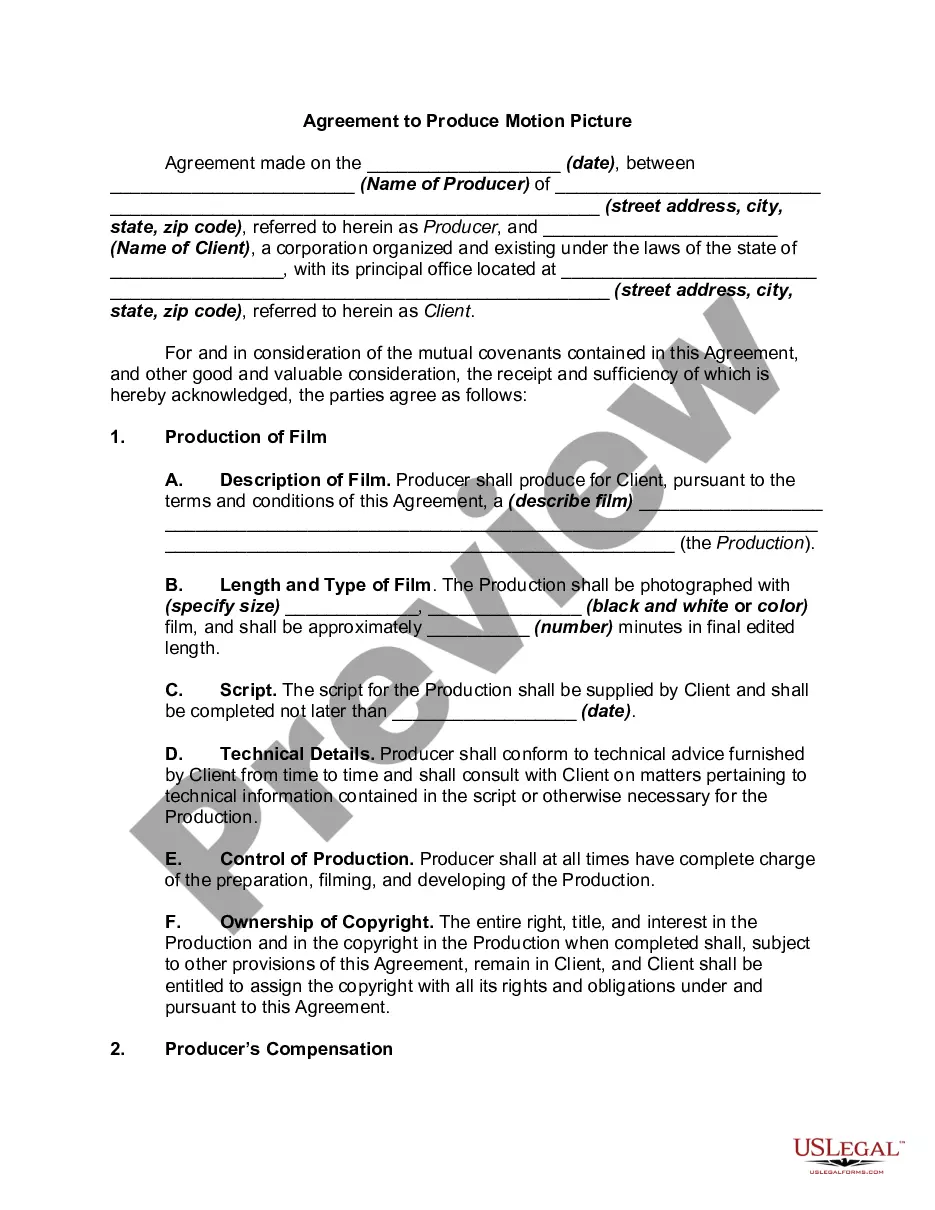
Sample Movie Production Agreement Description of Project. . Production Specifications. The Project will be produced in color on , using both studio and location recording techniques. Budget. Script. Date of Delivery. Ownership of Rights in Project. Credits. Right to Enter Project in Competitions.
A collateral contract is a contract to enter into an future contract. Part of the consideration for the collateral contract is the promise to enter into the second contract. This is similar to a conditional contract whereby the consideration for one party is conditioned on the other party doing something.
