Agreement Form Assignment Purchase With Contract In Middlesex
Description




Form popularity
FAQ
How to draft a contract between two parties: A step-by-step checklist Know your parties. Agree on the terms. Set clear boundaries. Spell out the consequences. Specify how you will resolve disputes. Cover confidentiality. Check the legality of the contract. Open it up to negotiation.
How to write a letter of agreement Title the document. Add the title at the top of the document. List your personal information. Include the date. Add the recipient's personal information. Address the recipient. Write an introduction paragraph. Write your body. Conclude the letter.
The assignor must agree to assign their rights and duties under the contract to the assignee. The assignee must agree to accept, or "assume," those contractual rights and duties. The other party to the initial contract must consent to the transfer of rights and obligations to the assignee.
Also, to enhance its enforceability, it is advisable to have the assignment agreement witnessed or notarized, depending on the jurisdiction's legal requirements. Additionally, maintaining a record of the executed contract is essential for future reference and as evidence of the assignment.
Not all assignment contracts are required to be made in writing, but they often are. Assignment contracts may also need to be notarized and witnessed in order to be valid. The assignment of property and collateral for loans must be in writing.
In most cases, a contract does not have to be notarized since the signed contract itself is enforceable and legally binding in state or federal courts. Many types of written contracts don't require a notary public to be valid.
In business contracts, assignment refers to transferring an agreement's rights, obligations, and property to another party. For example, most commercial tenancy agreements include a clause allowing the tenant to assign their lease to a third party, and that third party becomes the new tenant.
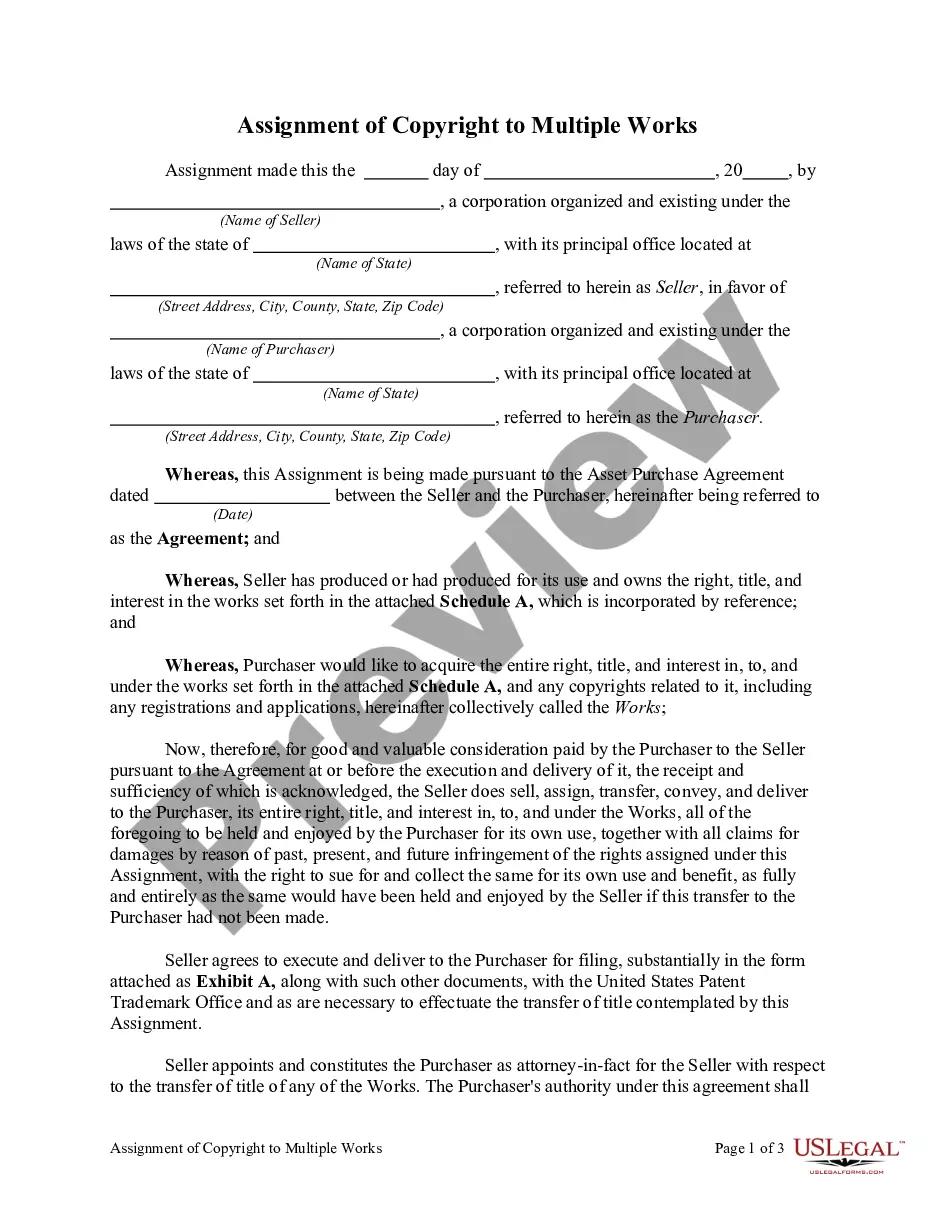
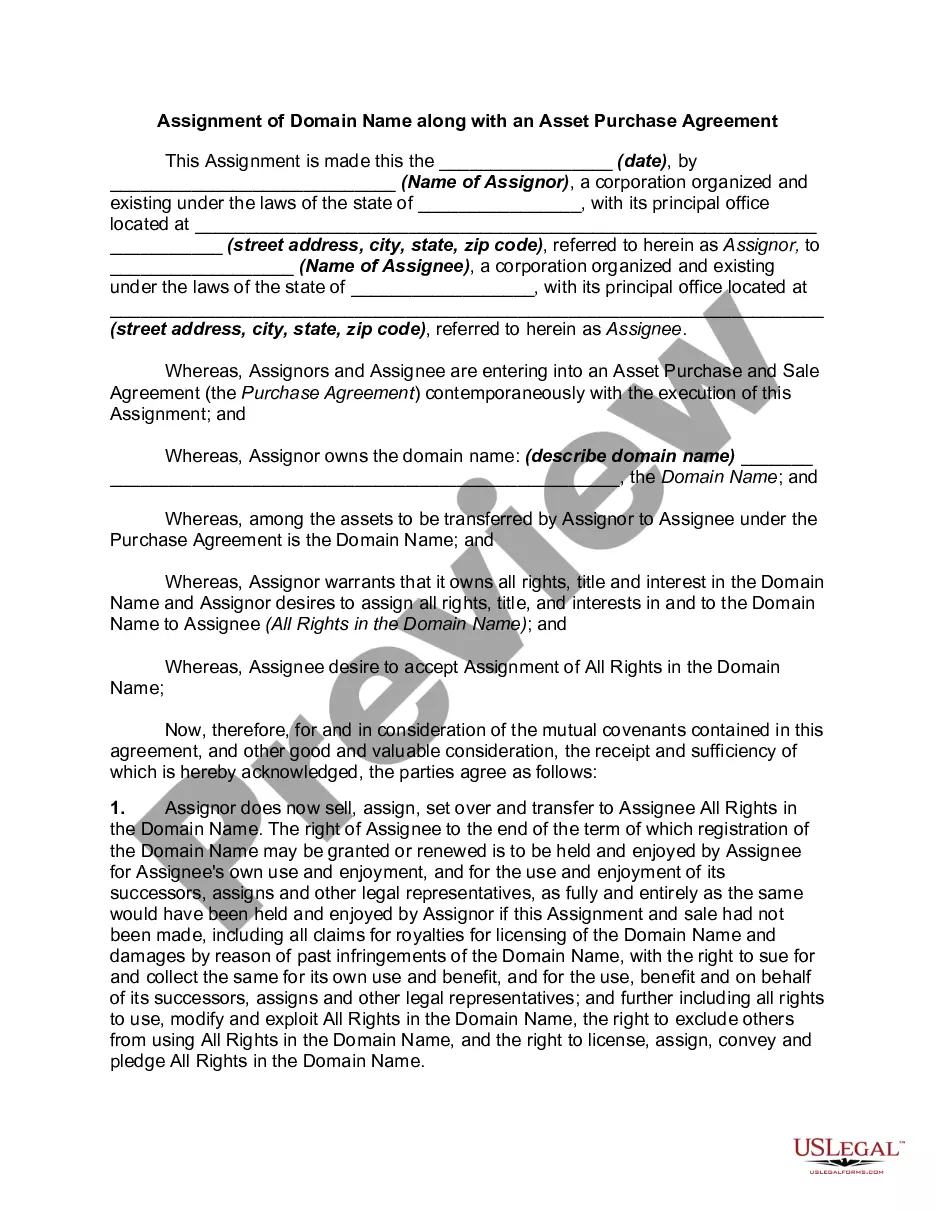
An assignment and assumption agreement is used after a contract is signed, in order to transfer one of the contracting party's rights and obligations to a third party who was not originally a party to the contract.
A contract assignment means that a party to the contract assigns the entire contract to another party. This means that the party gives the obligations and benefits of an existing contract to another party.
The ordinary rule is that a party can only assign its benefits without the consent of the other party to the contract and will remain liable to the other party for its performance obligations (see National Trust Co. v.
