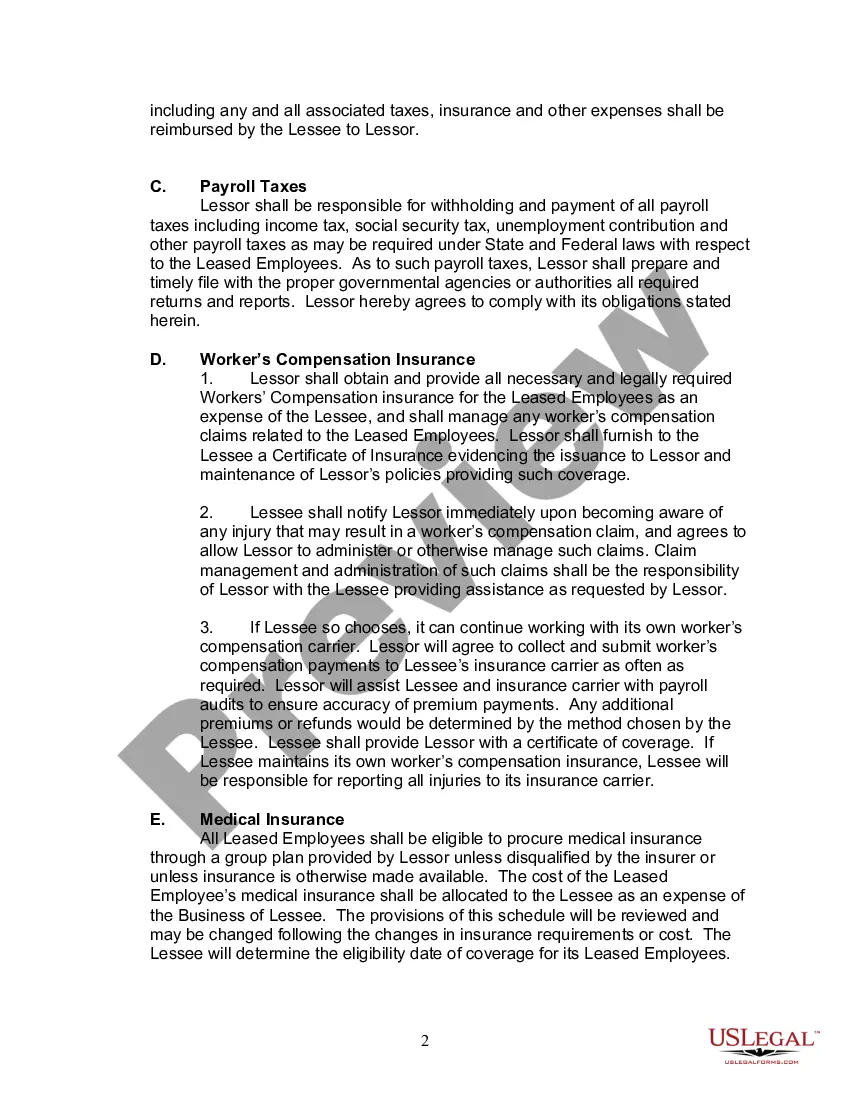
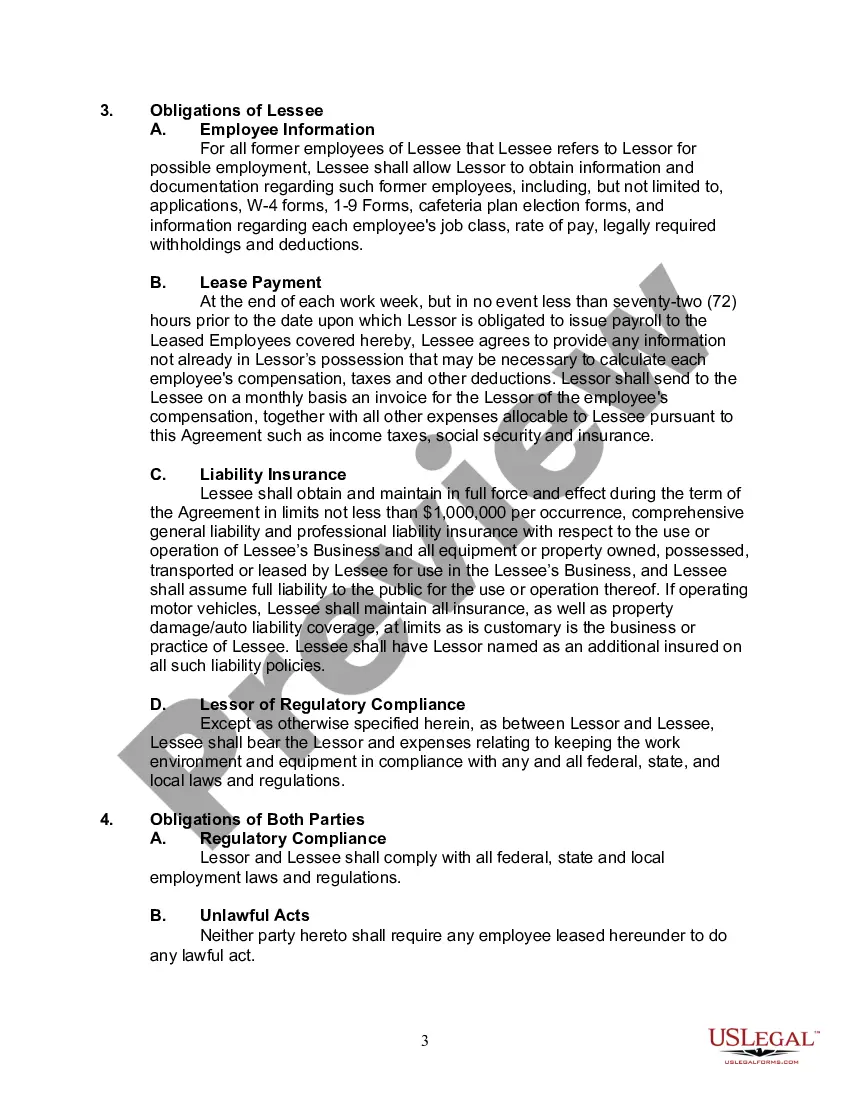
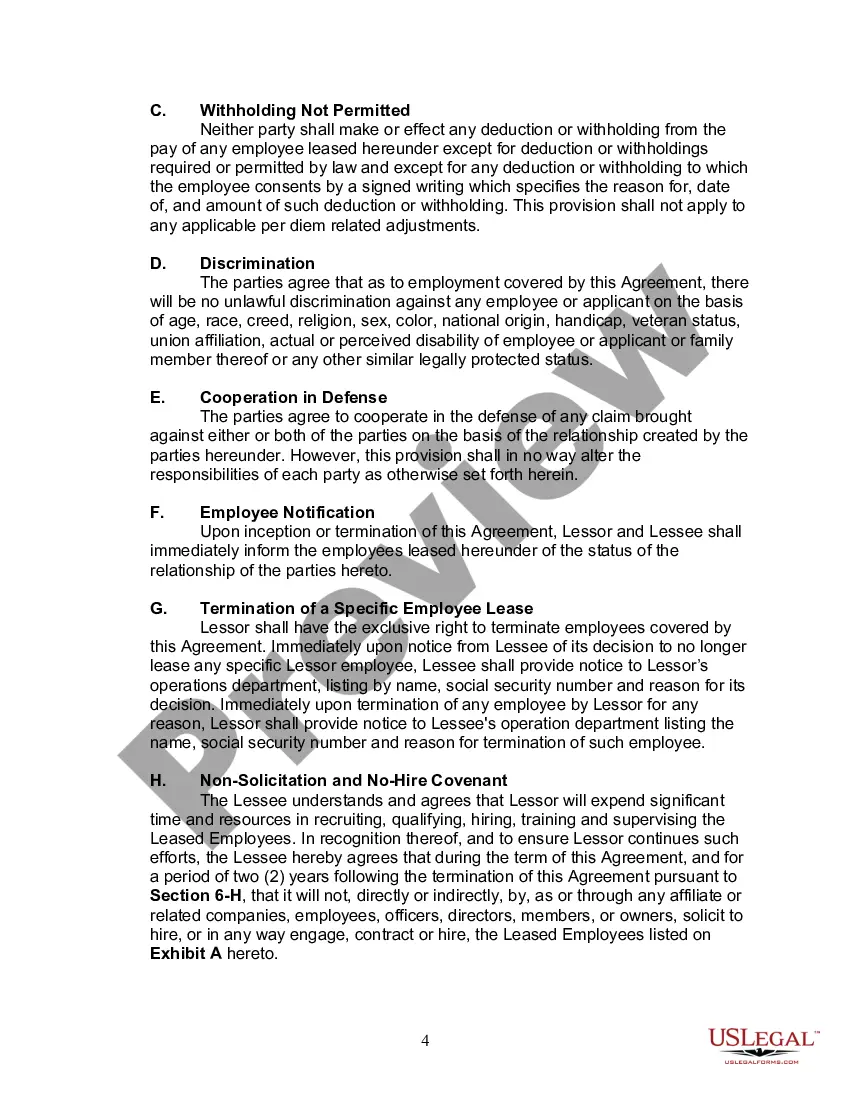
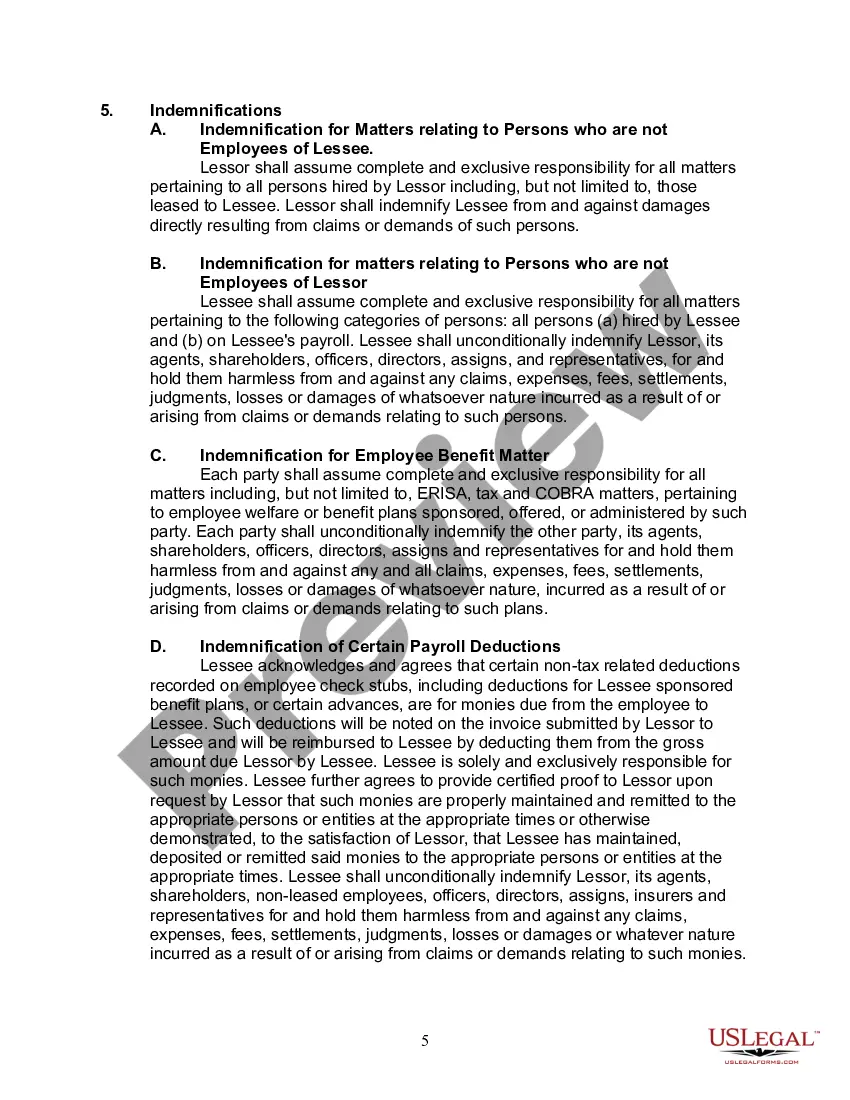
Employment Lease Agreement For Commercial Property In Florida
Description

Form popularity
FAQ
Gross Lease Gross leases are most common for commercial properties such as offices and retail space. The tenant pays a single, flat amount that includes rent, taxes, utilities, and insurance.
Further, any lease over one year in duration must be in writing and signed by the parties. There is currently no witness requirement for commercial leases in Florida, and a notary is not necessary.
Gross leases tend to benefit the tenant, whereas net leases are more landlord friendly.
There are three different types of net leases: single, double and triple net lease. A triple net lease, sometimes known as an NNN lease, is the most common type of commercial lease.
Here are some of the most common ones: Office Spaces. Industrial Spaces. Multifamily Rental Buildings. Retail Spaces.
What are the most important steps for drafting a commercial lease agreement? Identify the parties and the property. Determine the rent and the term. Negotiate the improvements and the maintenance. Allocate the taxes and the insurance. Include the clauses and the contingencies. Review and sign the agreement.
The following terms should be included in a written commercial real estate lease agreement including: (1) party names (today, in commercial leases, most landlords also name the individual with the business entity), (2) a description of the subject property, (3) the lease term (can be in years or months), (4) the amount ...
5 Steps to Leasing a Commercial Property Step 1: Assess your business. Step 2: Search for properties that meet your needs and budget. Step 3: Set up Showings. Step 4: Negotiate the Letter of Intent (LOI) or Lease Proposal. Step 5: Executing a Lease.
Unlike residential leasing, commercial leasing involves more complex and negotiable terms, such as rent, duration, maintenance, improvements, and subleasing. To qualify for commercial leasing, you need to prepare a strong application that showcases your business plan, financials, and credibility.
