Leased Employee Agreement With Mexico In Montgomery
Description



Form popularity
FAQ
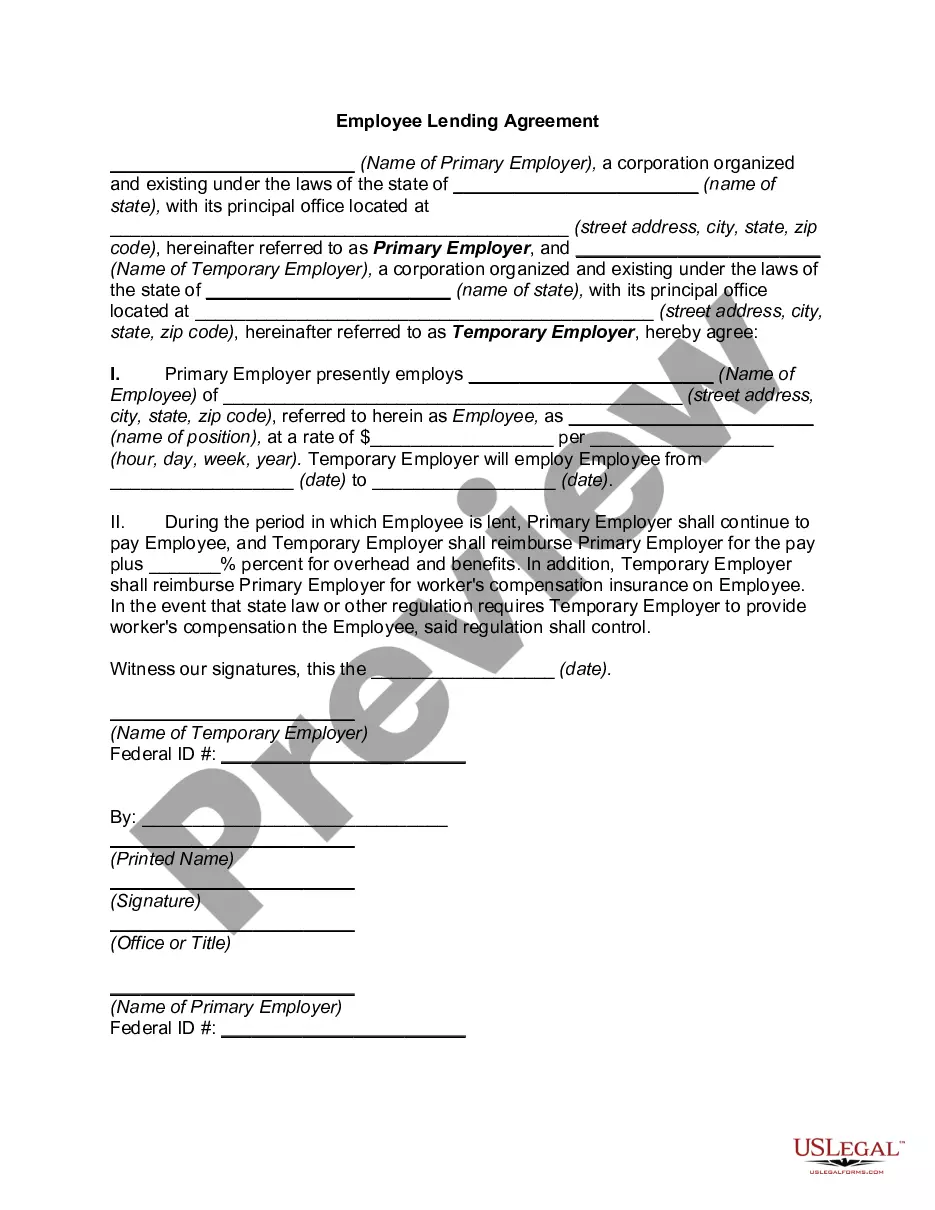
Employee leasing is one form of temporarily hiring staff. This allows an employer to have employees on hand for a set amount of time or until a specific project is completed. Typically, a business will get in touch with a staffing agency in order to lease an employee.
An employee is an individual who works for an employer in return for compensation, while an employer is a person or company that hires an employee to perform tasks. Employers compensate employees for their work.
For example, leased employees are official employees for the PEO that manages them, while independent contractors operate independently of any employer, and they typically provide a service to a client who pays them directly for those services.
Employee leasing is an arrangement between a business and a staffing firm, who supplies workers on a project-specific or temporary basis. These employees work for the client business, but the leasing agency pays their salaries and handles all of the HR administration associated with their employment.
The leased employees are employees of the staffing agency. This means that when the need for the employee is over, whether that's the predetermined time or the completion of a project, they are returned to the staffing agency that leased them. At no time is the leased employee an employee of the client's company.
Leased employees, often known as contract workers or temps, fill temporarily vacant company positions. These temporary employees are often hired for particular projects or for a short time until a task is completed.
Leased employees are considered to be employees of the recipient organization for purposes of the requirements set forth in section 414(n)(3)(A) and (B), even though they are common law employees of the leasing organization, unless (i) they are covered by a safe harbor plan of the leasing organization, and (ii) leased ...
Write the contract in six steps Start with a contract template. Open with the basic information. Describe in detail what you have agreed to. Include a description of how the contract will be ended. Write into the contract which laws apply and how disputes will be resolved. Include space for signatures.
For a contract to be legally binding, it must have 4 essential elements: An offer. Acceptance of material terms of the offer. Consideration by both parties. Mutual assent (called a “meeting of the minds”)
What to include in an apartment lease agreement. Tenant information. Include each tenant's full name and contact information. Rental property description. List the apartment's location, all common areas, parking spaces, and included facilities. Security deposit. Monthly rent amount. Utilities. Lease term. Policies. Late fees.
