Competition Noncompetition For 50 In Cook
Description





Form popularity
FAQ
The following are the most common ways to get out of a non-compete agreement: Determine that the terms of the contract do not in fact prevent you from a desired course of action. Recognize when a non-compete contradicts the law. Negotiate a release agreement with the involved parties. Ignore the agreement.
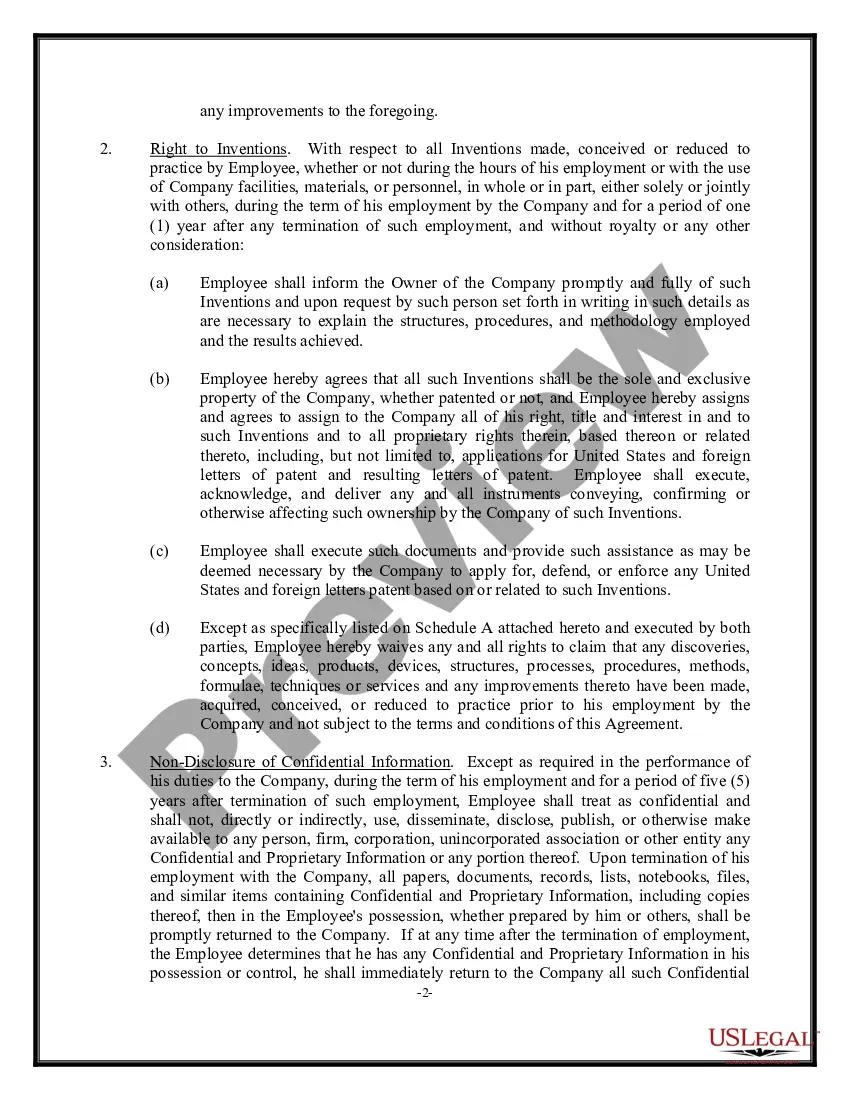
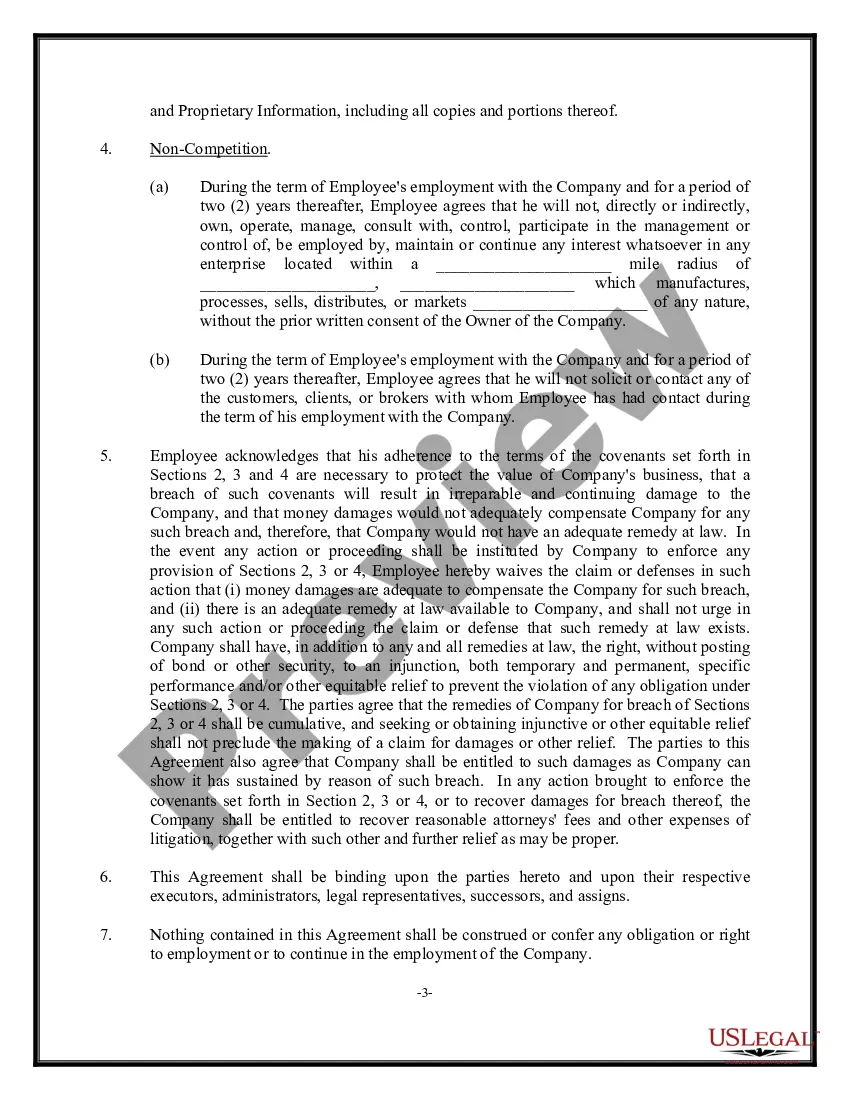
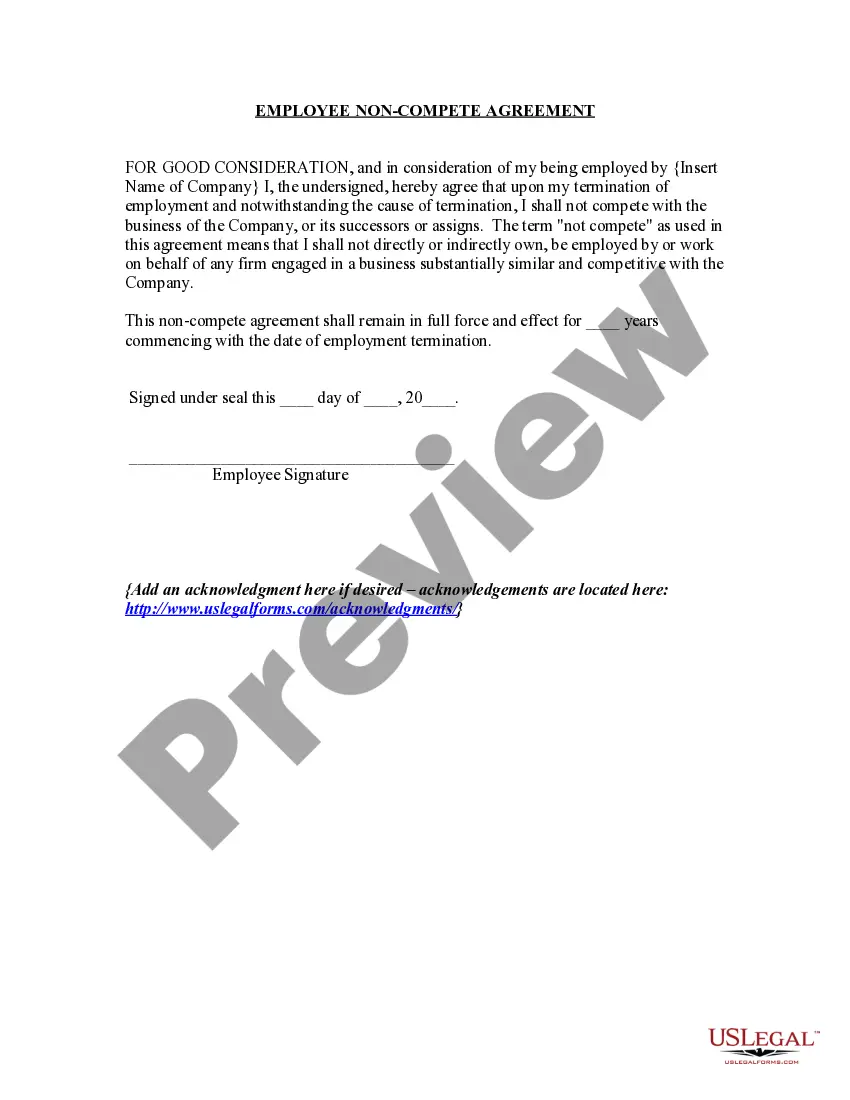
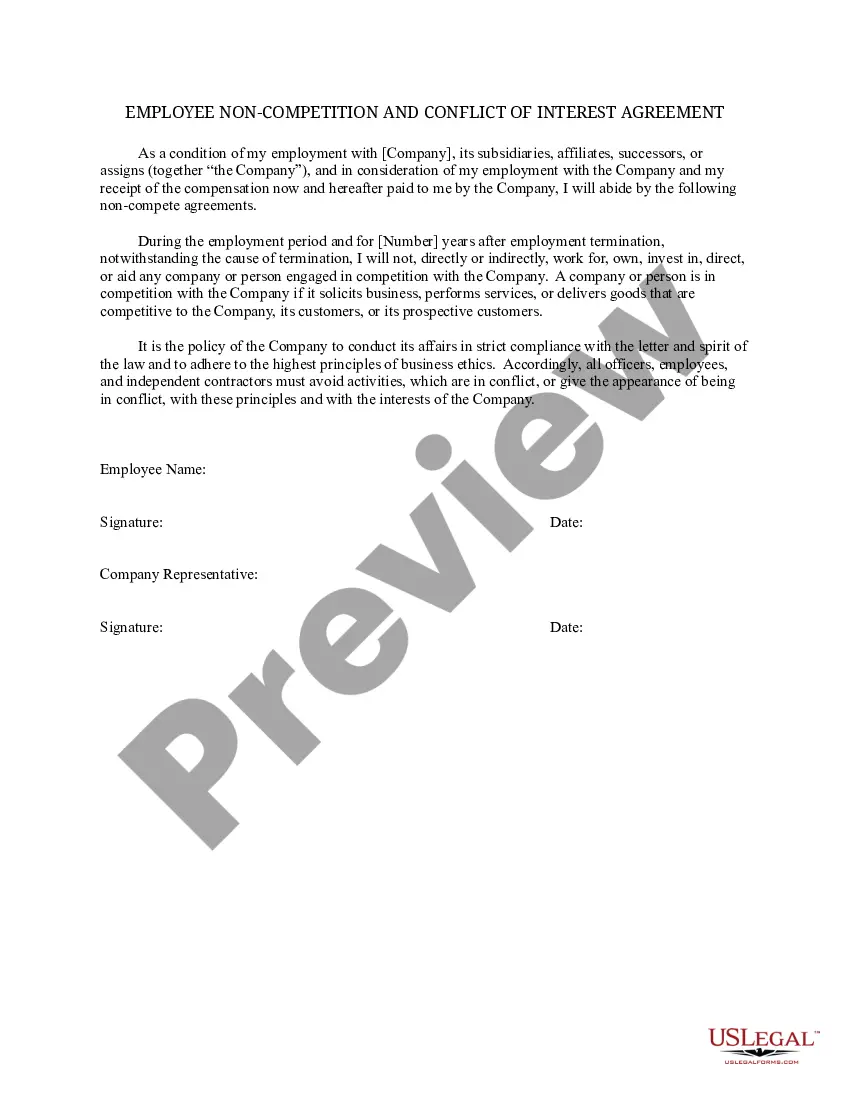
(c) Employee name agrees not to set up in business as a direct competitor of company name within a radius of number miles of company name and location for a period of number and measure of time (e.g., “four months” or “10 years”) following the expiration or termination of this agreement.
Several factors can void or limit the enforceability of a non-compete agreement, including overly broad restrictions, unreasonable time frames or geographical limits, lack of consideration (such as compensation or job opportunities provided in exchange for the agreement), and violation of public policy.
Reasonableness: Non-compete agreements must be reasonable in terms of their scope and duration. This means that the restrictions must be no broader than necessary to protect the legitimate business interests of the employer, such as protecting trade secrets, confidential information, and/or customer relationships.
Reasonableness: Non-compete agreements must be reasonable in terms of their scope and duration. This means that the restrictions must be no broader than necessary to protect the legitimate business interests of the employer, such as protecting trade secrets, confidential information, and/or customer relationships.
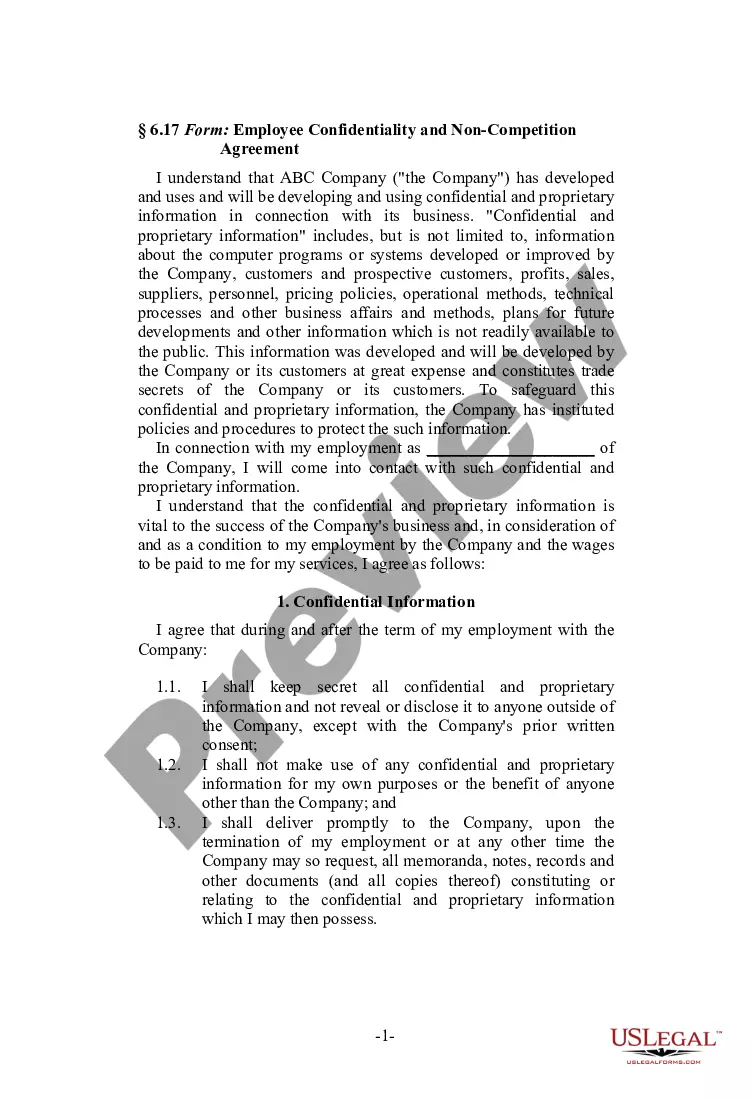
Add information about the parties involved. Describe the terms of the Non-Compete Agreement, such as the length and area of the restriction. If necessary, you can include a non-solicitation clause. Create any additional clauses you want to add.
Use Form 3949-A, Information Referral if you suspect an individual or a business is not complying with the tax laws. Don't use this form if you want to report a tax preparer or an abusive tax scheme. We will keep your identity confidential when you file a tax fraud report.
Tax Implications Non-compete agreements are generally taxed as ordinary income to the seller, which from the seller's perspective is less than desirable. But, for a buyer, it is expensed as incurred, which is desirable for the buyer but not the seller.
Today's question is, do non-compete agreements apply to independent contractors? Absolutely. They apply to independent contractors just as well as they apply to employees.
