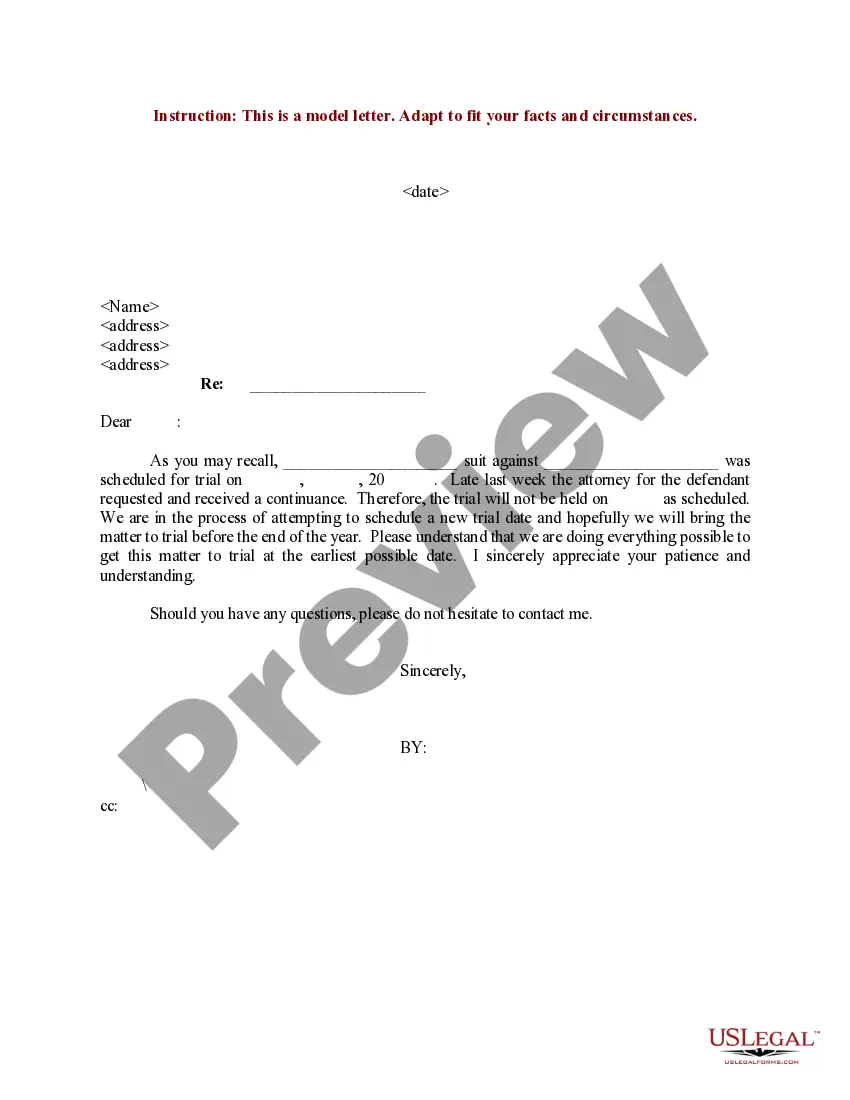
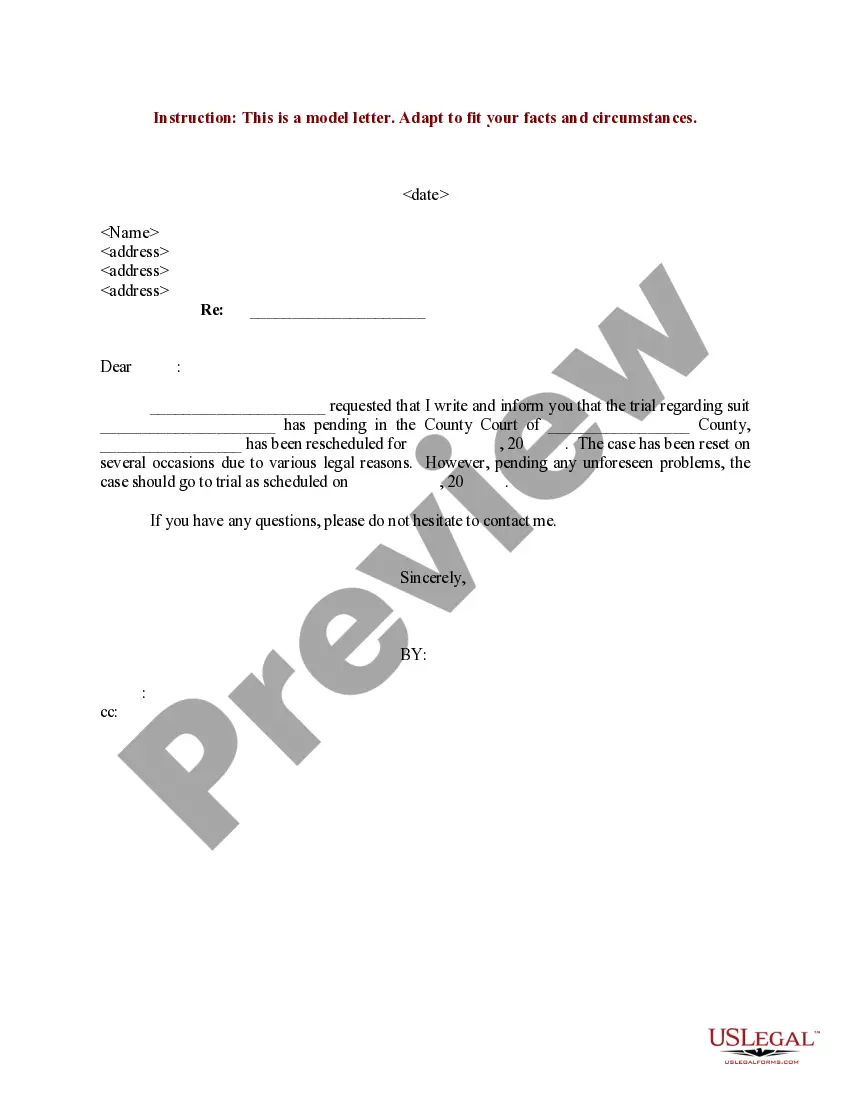
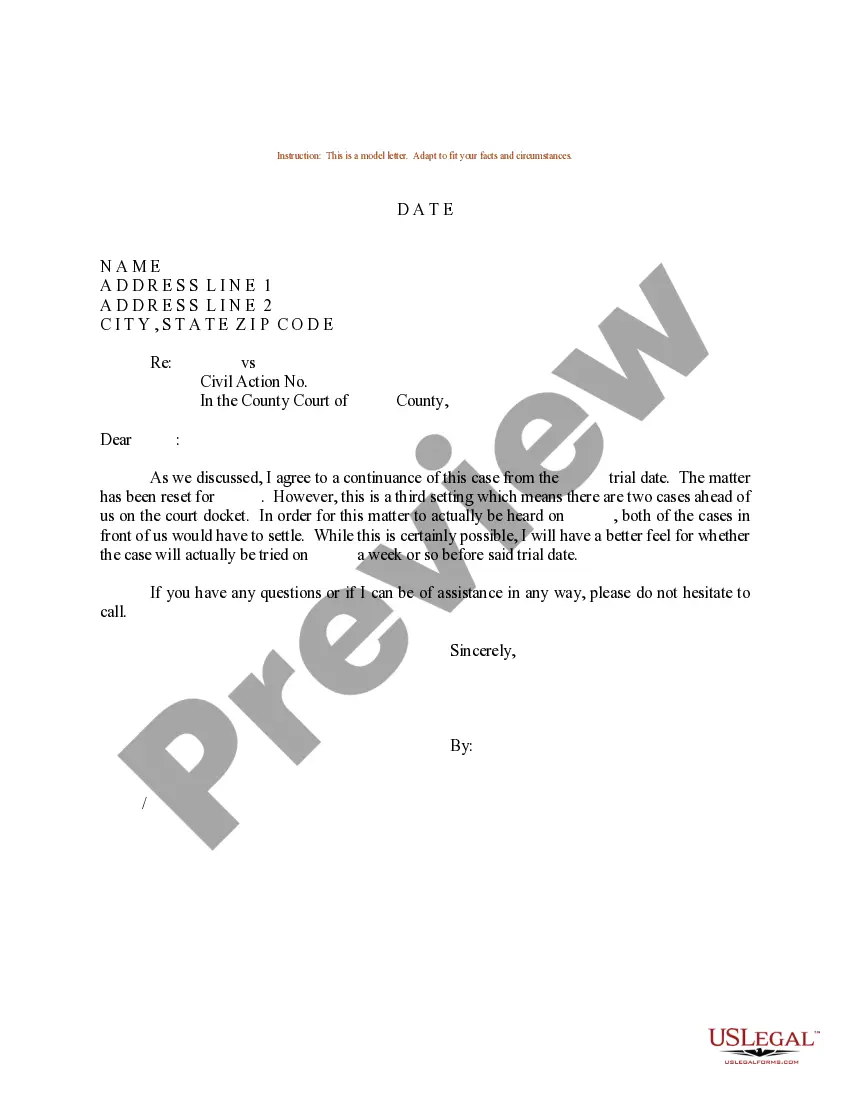
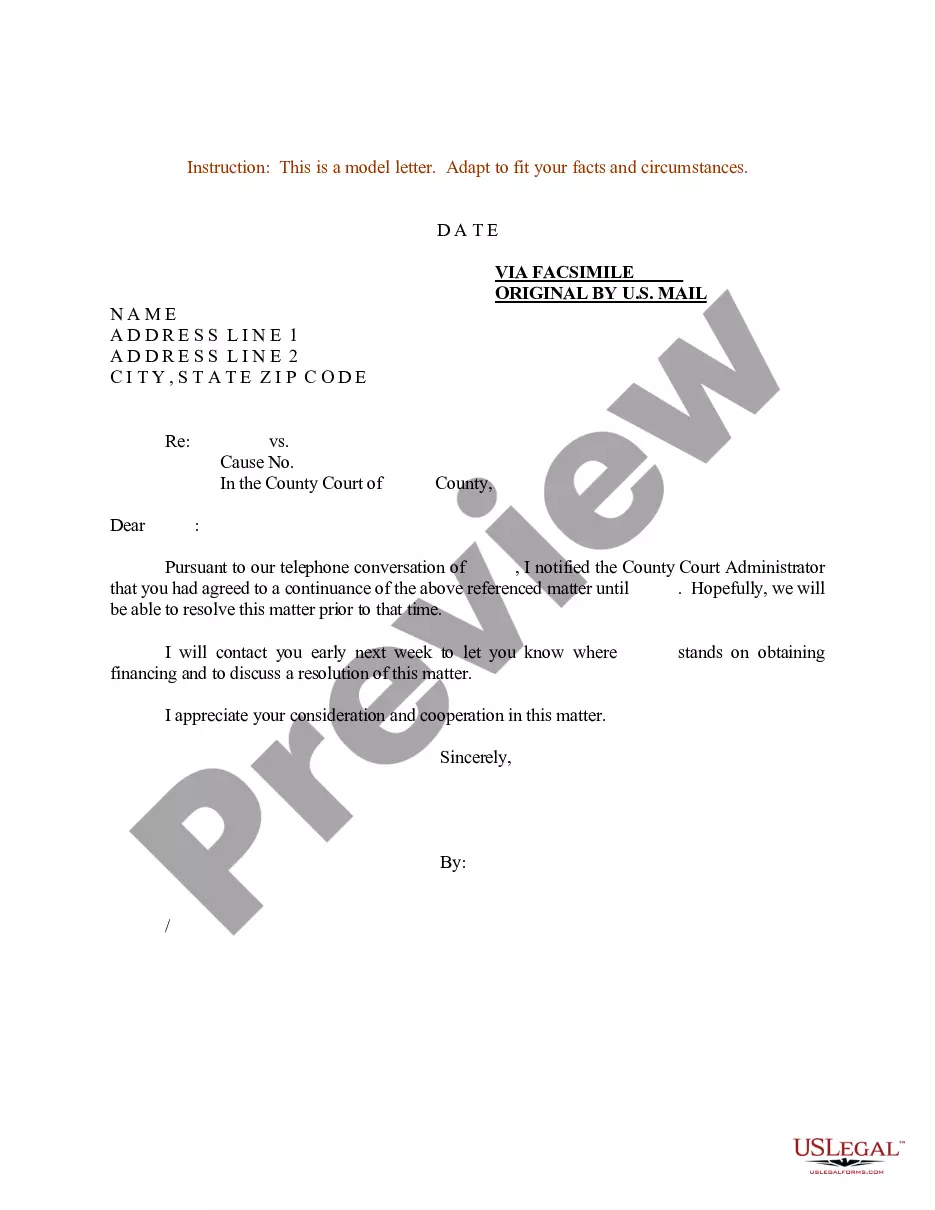
Continuance For Trial In Arizona
Description
Form popularity
FAQ
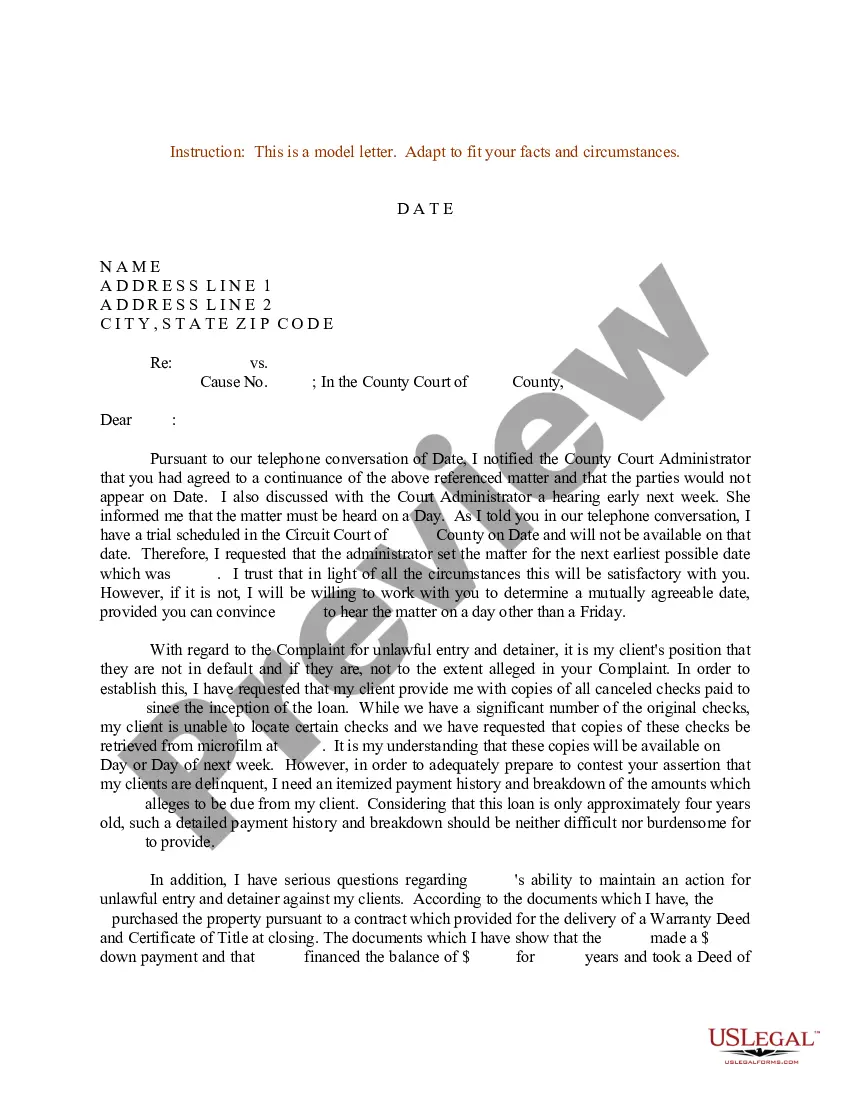
Some of the reasons that might necessitate a continuance include: You need additional time to secure an attorney to represent you in court. You need more time to gather evidence because the other side has been stalling on discovery requests. You need more time to locate witnesses who are critical to your case.
The Federal Circuit stated: Rule 11 expressly requires that an attorney presenting a pleading, motion, or other paper before the court certify that he has performed "an inquiry reasonable under the circumstances" such that he can verify that (1) "it is not being presented for any improper purpose, such as to harass, ...
Arizona's Rule 11 of the Arizona Rules of Criminal Procedure is in place for defendants with mental disabilities, handicaps, or other similar psychological or neurological conditions that prevent a standard court of law from having due process from being tried or punished.
Every pleading, written motion, and other paper must be signed by at least one attorney of record in the attorney's name – or by a party personally if the party is unrepresented.
In Arizona, a Rule 11 hearing is a court proceeding where the judge determines whether the criminal defendant is mentally competent enough to stand trial. Defendants are incompetent if they are unable to understand the court proceedings or cannot assist in their own defense.
The continuence might be longer this allows both parties adequate time to prepare their casesMoreThe continuence might be longer this allows both parties adequate time to prepare their cases properly.
Arizona's Rule 11 of the Arizona Rules of Criminal Procedure is in place for defendants with mental disabilities, handicaps, or other similar psychological or neurological conditions that prevent a standard court of law from having due process from being tried or punished.
A continuance is granted for good cause. More time to prepare could be good cause depending upon the circumstances. You (or your attorney) must argue how desperate you are for court orders, and/or that more preparation is not necessary based upon the circumstances.
(a)Rule number: Rule 34 of the Arizona Rules of Civil Procedure (b)Procedure: Under Rule 34, a party may serve on any other party a request to produce and permit the party making the request, or someone acting on their behalf, to inspect and copy any designated documents or electronically stored information (ESI) that ...
Every matter submitted for determination to a judge of the superior court for decision shall be determined and a ruling made not later than sixty days from submission thereof, in ance with Section 21. Article VI of the Arizona Constitution.