Trial Continuance Without A Trial In Nevada
Description

Get your form ready online
Our built-in tools help you complete, sign, share, and store your documents in one place.
Make edits, fill in missing information, and update formatting in US Legal Forms—just like you would in MS Word.
Download a copy, print it, send it by email, or mail it via USPS—whatever works best for your next step.
Sign and collect signatures with our SignNow integration. Send to multiple recipients, set reminders, and more. Go Premium to unlock E-Sign.
If this form requires notarization, complete it online through a secure video call—no need to meet a notary in person or wait for an appointment.
We protect your documents and personal data by following strict security and privacy standards.

Make edits, fill in missing information, and update formatting in US Legal Forms—just like you would in MS Word.

Download a copy, print it, send it by email, or mail it via USPS—whatever works best for your next step.

Sign and collect signatures with our SignNow integration. Send to multiple recipients, set reminders, and more. Go Premium to unlock E-Sign.

If this form requires notarization, complete it online through a secure video call—no need to meet a notary in person or wait for an appointment.

We protect your documents and personal data by following strict security and privacy standards.
Looking for another form?

Form popularity
FAQ
What Is Considered a “Good Cause?” Either the defendant or prosecution needs more time to prepare for trial; The defendant became ill or experienced an unexpected life change; Witnesses cannot be tracked down or cannot attend the scheduled court date; The defendant needs more time to retain a lawyer;
Circumstances that may indicate good cause for a continuance include the unavailability of an essential witness (CRC 3.1332 (c)(1)); the unavailability of a party because of death, illness, or other excusable circumstances (CRC 3.1332 (c)(2)); or a significant, unanticipated change in the status of the case as a result ...
(2) For purposes of this section, "good cause" includes, but is not limited to, those cases involving murder, as defined in subdivision (a) of Section 187, allegations that stalking, as defined in Section 646.9, a violation of one or more of the sections specified in subdivision (a) of Section 11165.1 or Section ...
On a motion for a new trial in an action tried without a jury, the court may open the judgment if one has been entered, take additional testimony, amend findings of fact and conclusions of law or make new findings and conclusions, and direct the entry of a new judgment.
What are valid reasons for requesting a continuance? Valid reasons include personal emergencies, unavailability of essential evidence, and lack of legal representation.
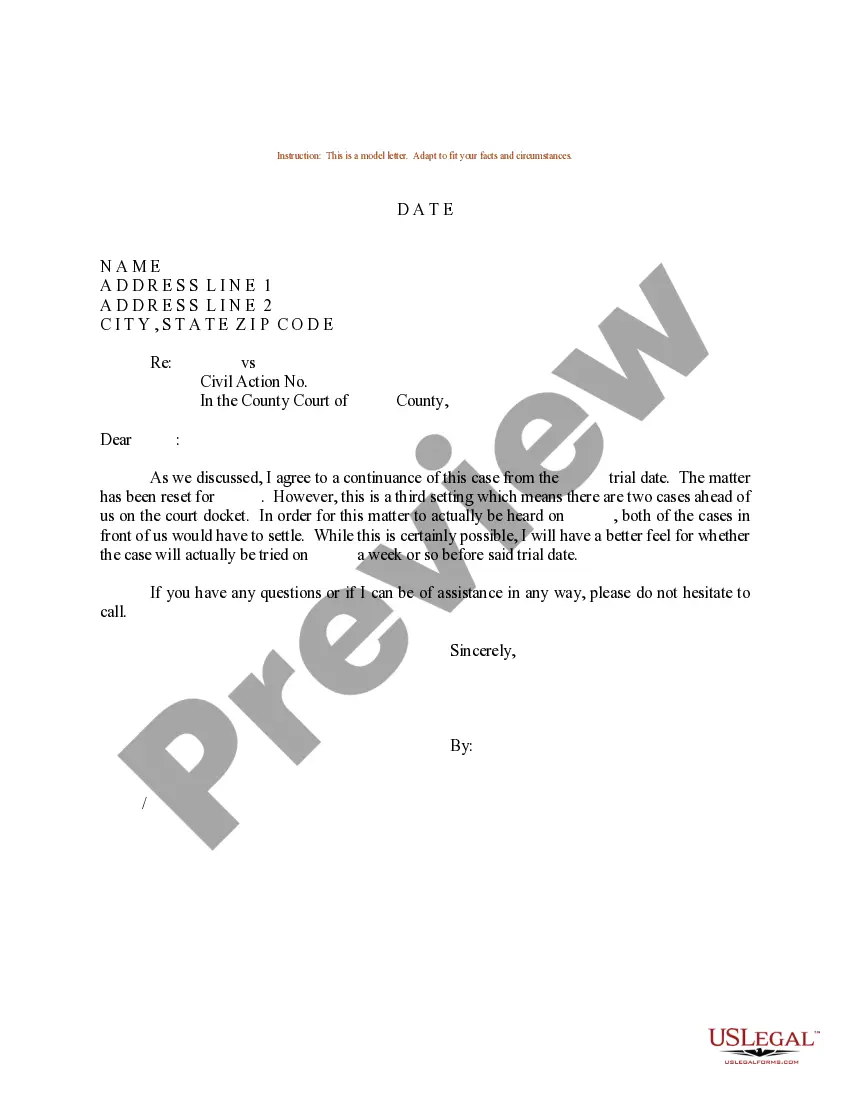
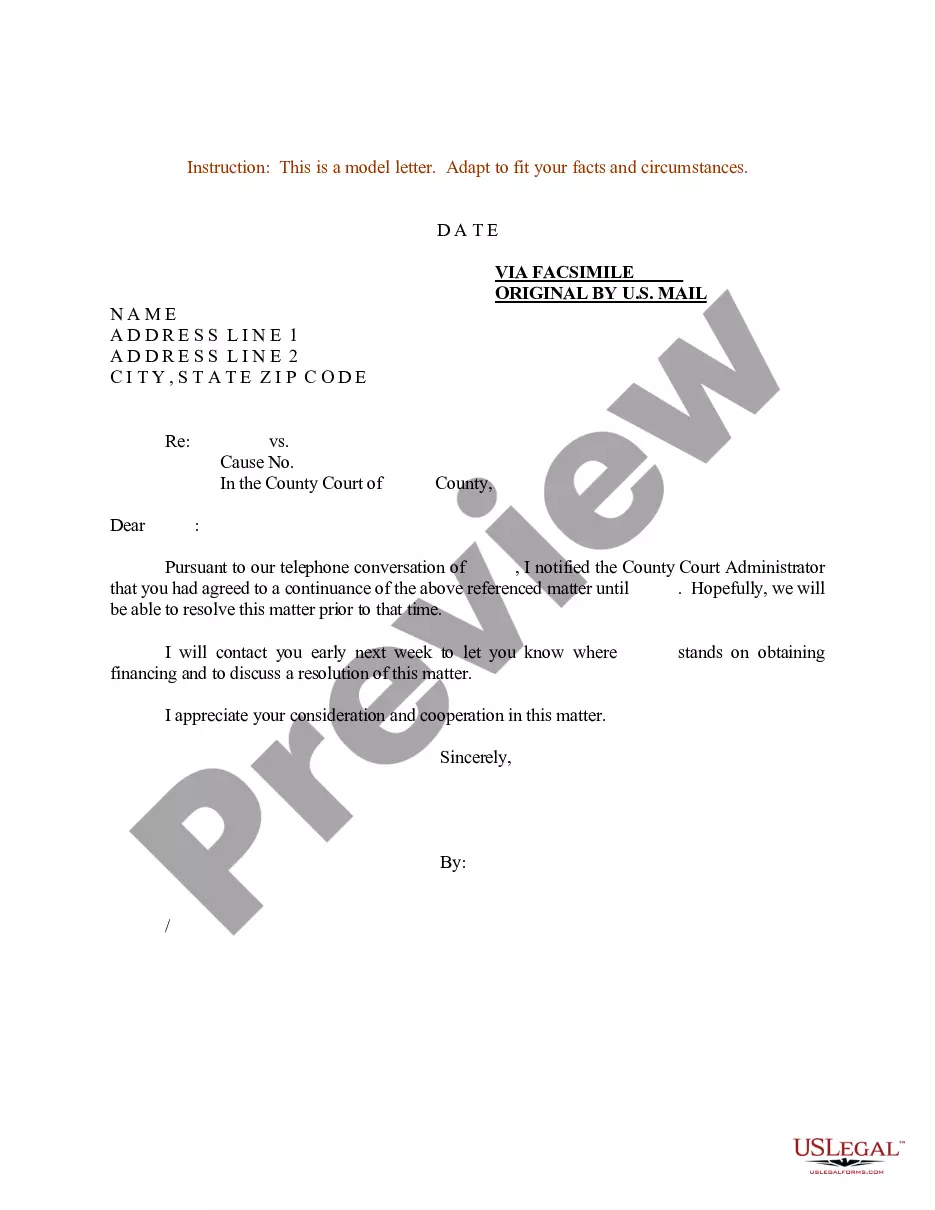
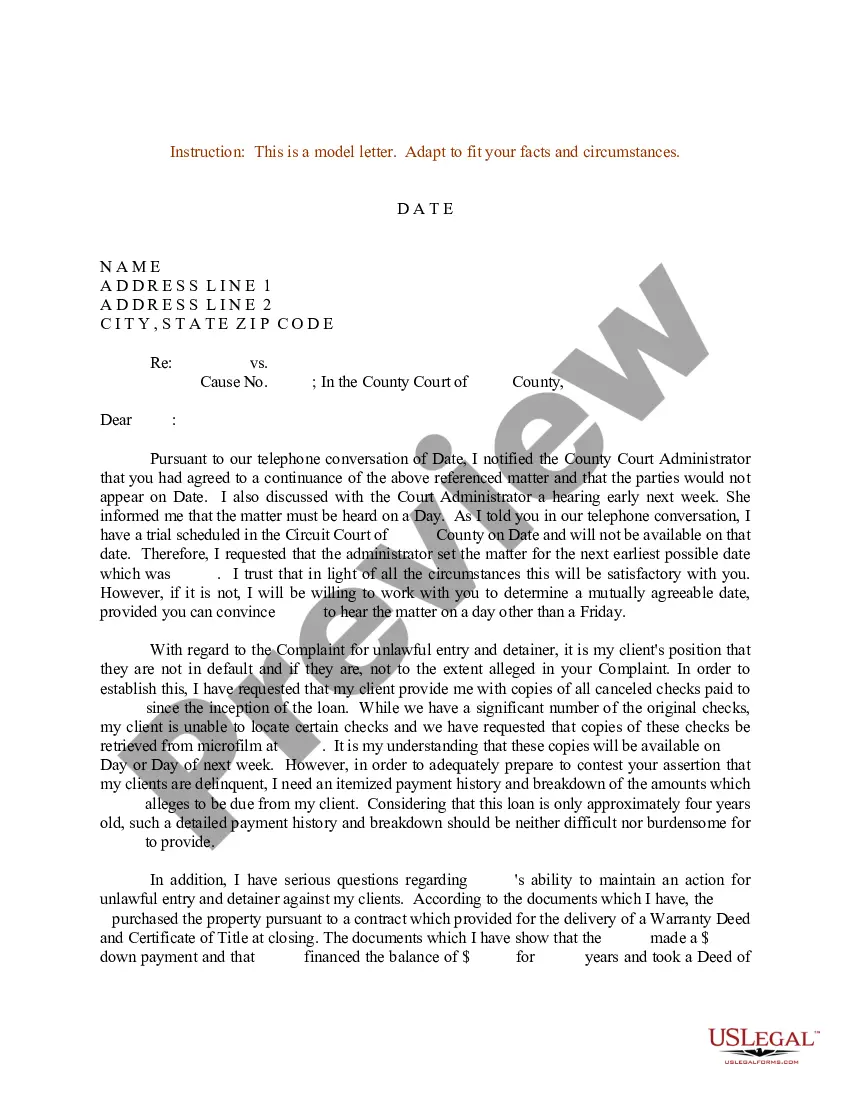
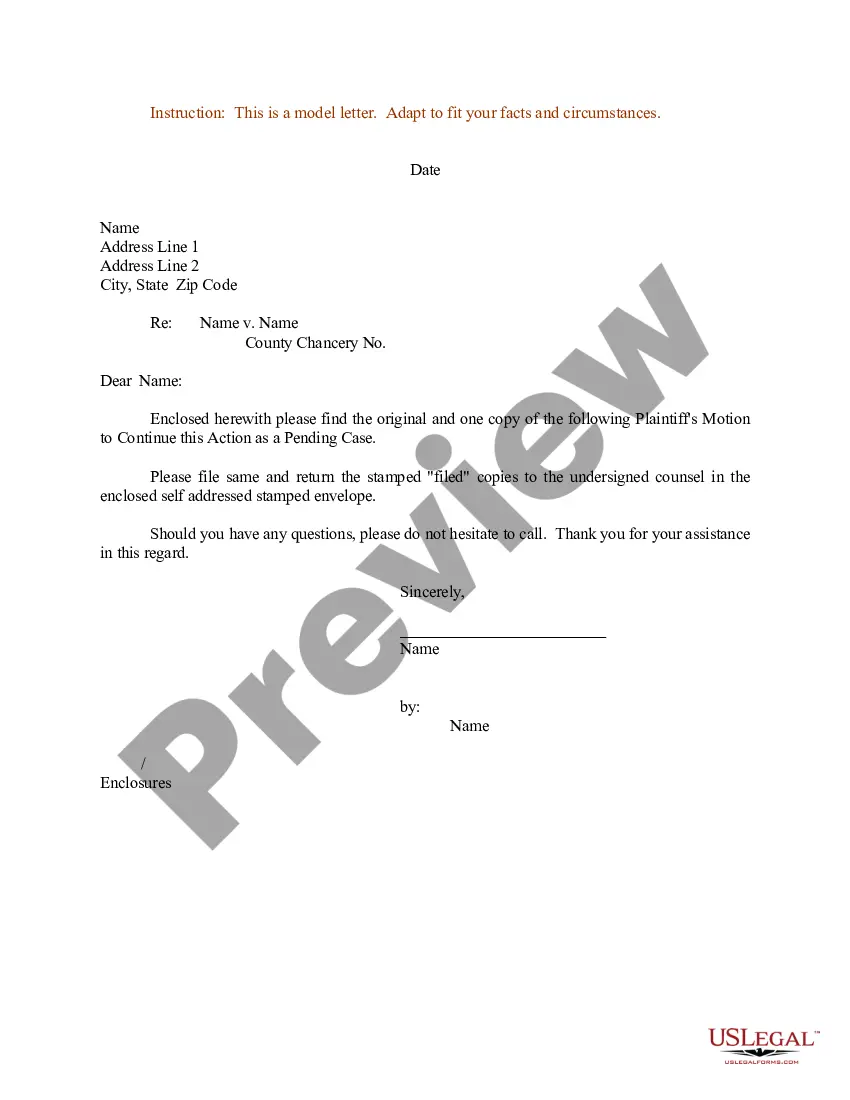
__________ (Name), __________ (plaintiff or defendant) in the above-entitled and numbered action, moves the court for a continuance in this action until __________ (date), on the ground that __________ (plaintiff or defendant) will be unable to attend the trial due to the following facts: 1.
Written Motion: Most courts require a written motion for a continuance. This document should include your name, the case number, the current hearing date, and the reason for the request. It should be clear, concise, and respectful in tone. Propose a New Date: If possible, suggest a new date for the hearing.
Is there any civil rule or what law that governs asking for continuance 1. Medical condition; 2. Significant changes in the circumstances; 3. Scheduling conflict. 4. Lack of preparation.
Absolutely. You would just need to draft it and explain why you need the continuance.
On a motion for a new trial in an action tried without a jury, the court may open the judgment if one has been entered, take additional testimony, amend findings of fact and conclusions of law or make new findings and conclusions, and direct the entry of a new judgment.

