Sample Schedule Form For Loan Application In Pennsylvania
Description

Get your form ready online
Our built-in tools help you complete, sign, share, and store your documents in one place.
Make edits, fill in missing information, and update formatting in US Legal Forms—just like you would in MS Word.
Download a copy, print it, send it by email, or mail it via USPS—whatever works best for your next step.
Sign and collect signatures with our SignNow integration. Send to multiple recipients, set reminders, and more. Go Premium to unlock E-Sign.
If this form requires notarization, complete it online through a secure video call—no need to meet a notary in person or wait for an appointment.
We protect your documents and personal data by following strict security and privacy standards.
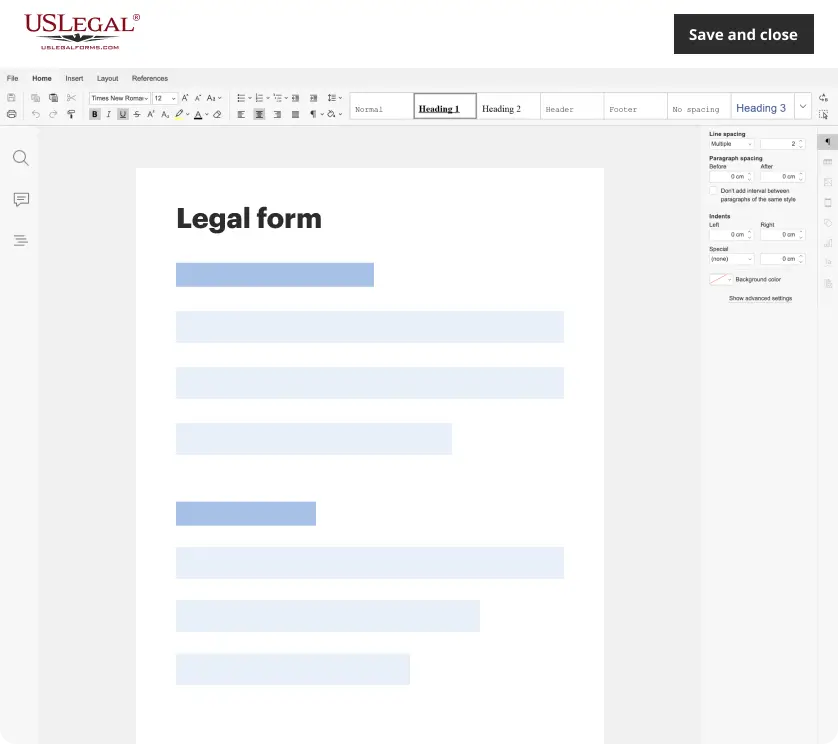
Make edits, fill in missing information, and update formatting in US Legal Forms—just like you would in MS Word.
Download a copy, print it, send it by email, or mail it via USPS—whatever works best for your next step.
Sign and collect signatures with our SignNow integration. Send to multiple recipients, set reminders, and more. Go Premium to unlock E-Sign.

If this form requires notarization, complete it online through a secure video call—no need to meet a notary in person or wait for an appointment.
We protect your documents and personal data by following strict security and privacy standards.
Looking for another form?









Form popularity
FAQ
The PA S corporation or partnership must also retain a copy of all PA-20S/PA-65 Schedules NRK-1 as part of the entity's records. Owners that are estates, trusts, other PA S corporations, other partnerships, and other pass through entities receive both PA-20S/PA-65 Schedules RK-1 and NRK-1.
Partnerships and S corporations use PA Schedule RK-1 to report income and losses by class of income to each of its resident owners. A PA Schedule RK-1 is prepared for each individual partner or shareholder showing the share of income (losses) by class and other items required to be reported.
Corporations subject to the Corporate Net Income Tax (excluding PA S Corporations that have Built-In-Gains) must continue to file the RCT-101 annually.
Filing Requirements – Partnership A partnership must file a PA-20S/PA-65 Information Return to report the income, deductions, gains, losses etc. from their operations. The partnership passes through any profits (losses) to the resident and nonresident partners.
Every resident, part-year resident or nonresident individual must file a Pennsylvania Income Tax Return (PA-40) when he or she realizes income generating $1 or more in tax, even if no tax is due (e.g., when an employee receives compensation where tax is withheld).

