Director Resign From Company In Montgomery
Description

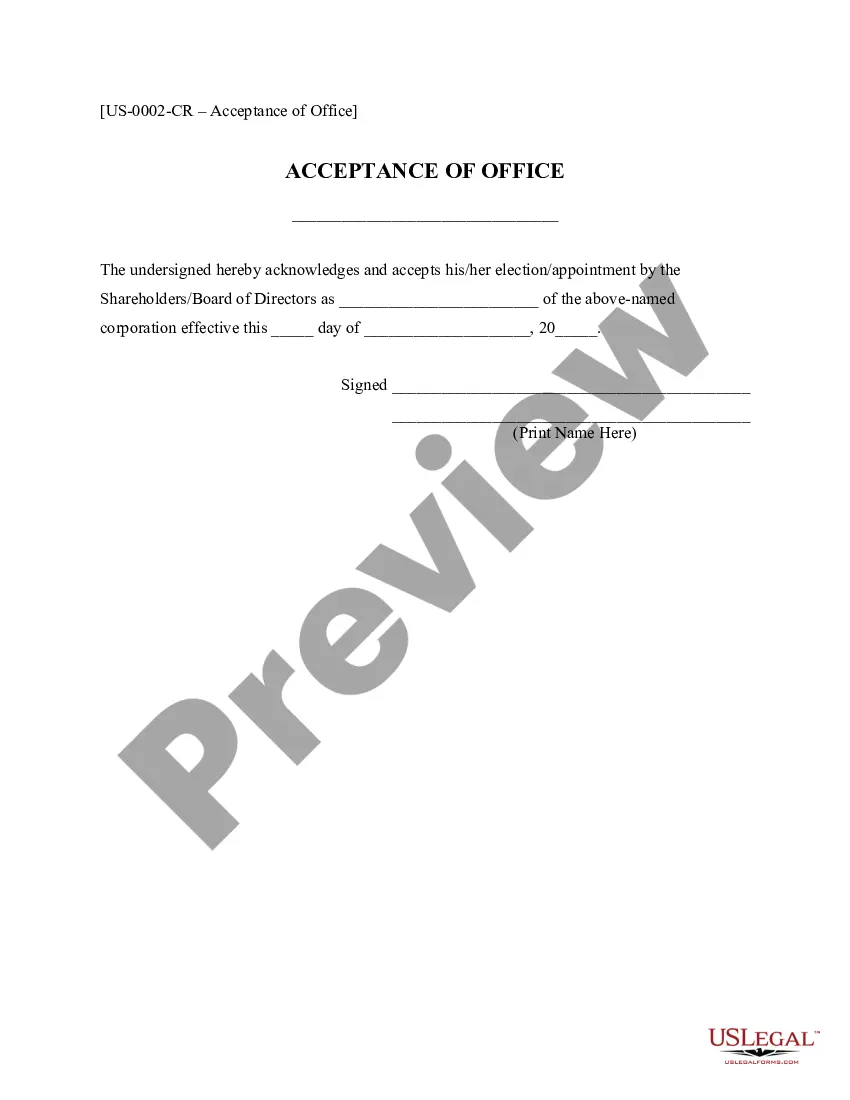
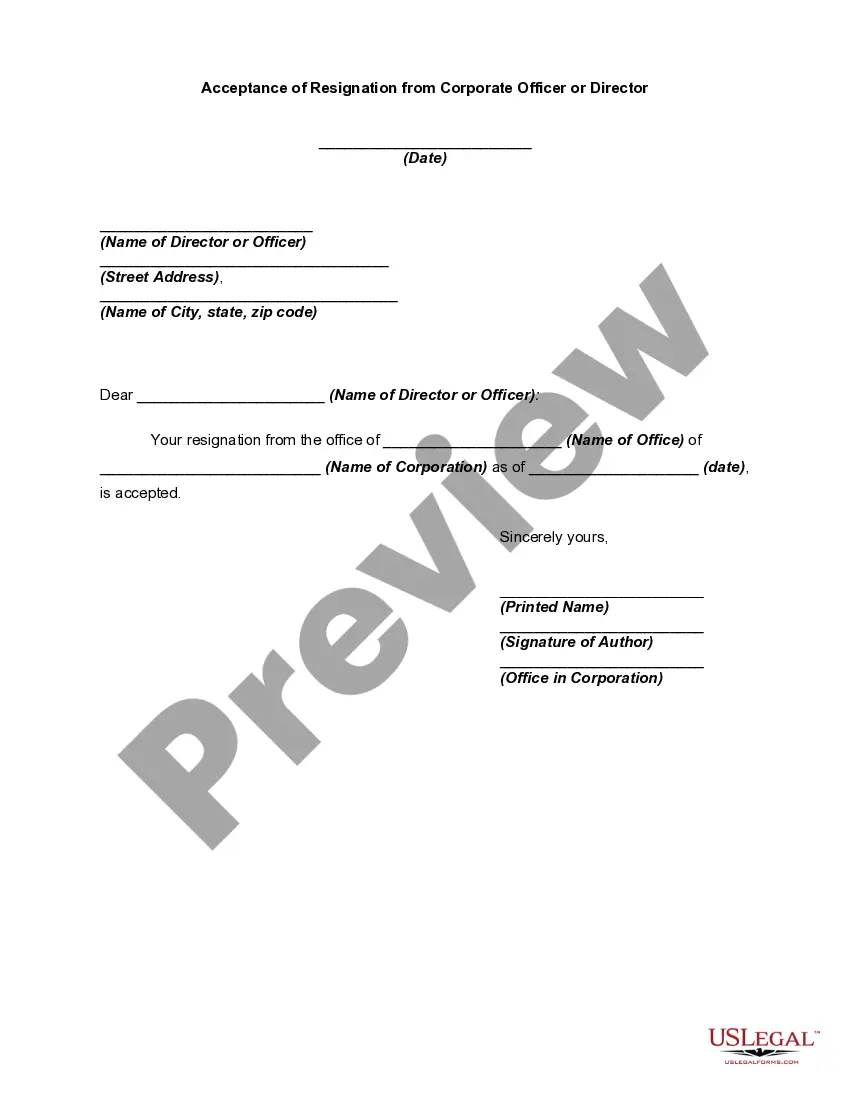
Get your form ready online
Our built-in tools help you complete, sign, share, and store your documents in one place.
Make edits, fill in missing information, and update formatting in US Legal Forms—just like you would in MS Word.
Download a copy, print it, send it by email, or mail it via USPS—whatever works best for your next step.
Sign and collect signatures with our SignNow integration. Send to multiple recipients, set reminders, and more. Go Premium to unlock E-Sign.
If this form requires notarization, complete it online through a secure video call—no need to meet a notary in person or wait for an appointment.
We protect your documents and personal data by following strict security and privacy standards.

Make edits, fill in missing information, and update formatting in US Legal Forms—just like you would in MS Word.

Download a copy, print it, send it by email, or mail it via USPS—whatever works best for your next step.

Sign and collect signatures with our SignNow integration. Send to multiple recipients, set reminders, and more. Go Premium to unlock E-Sign.

If this form requires notarization, complete it online through a secure video call—no need to meet a notary in person or wait for an appointment.

We protect your documents and personal data by following strict security and privacy standards.
Looking for another form?
Form popularity
FAQ
Directors resign by giving written notice to the company's registered office (Corporations Act, s 203A (a replaceable rule)).
Director resignations must be submitted to CIPC and can be filed directly through InfoDocs. Resigning a director requires submitting a director change or amendment (COR39) to the Companies and Intellectual Property Commission (CIPC) and preparing the relevant supporting documents.
If one cannot persuade a corporate director to resign, then one does not ``force'' a resignation. Instead: The shareholders vote to remove the director; or If permitted by the corporation's bylaws, the other directors vote to remove the director in question. Disclaimer:
The statutory procedure allows any director to be removed by ordinary resolution of the shareholders in general meetings (i.e., the holders of more than 50% of the voting shares must agree). This right of removal by the shareholders cannot be excluded by the Articles or by any agreement.
Under article 18 of the model articles, a person will stop being a director immediately if: they resign. a majority of the company shareholders vote them out by ordinary resolution. they're stopped from being a director by a court or in law.
To inform Companies House and terminate the appointment of a company director, you need to submit a Terminate an appointment of a director (TM01) form to companies house. This can be done online. A notice of resignation must contain: The name and registered number of the company.
A director may resign from his office by giving a notice in writing to the company and the Board shall on receipt of such notice take note of the same and the company shall intimate the Registrar in such manner, within such time and in such form as may be prescribed and shall also place the fact of such resignation in ...
A director may resign from his office by giving a notice in writing to the company and the Board shall on receipt of such notice take note of the same and the company shall intimate the Registrar in such manner, within such time and in such form as may be prescribed and shall also place the fact of such resignation in ...
Directors have obligations under company law. These include acting in the best interests of the company, its employees, and its creditors, especially when the company is facing financial difficulties. Ignoring these responsibilities and simply walking away without addressing the debts can lead to legal consequences.
To inform Companies House and terminate the appointment of a company director, you need to submit a Terminate an appointment of a director (TM01) form to companies house. This can be done online. A notice of resignation must contain: The name and registered number of the company.

