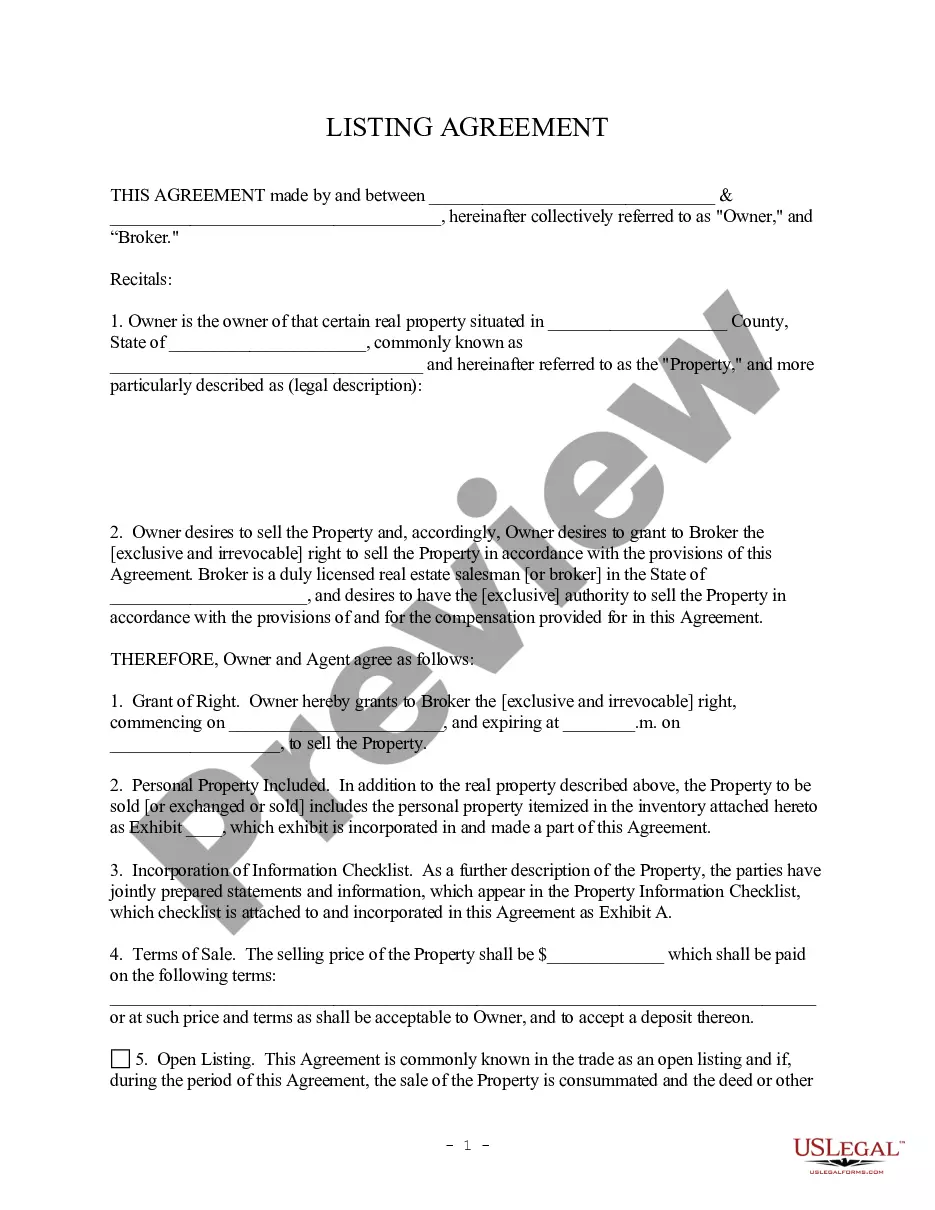
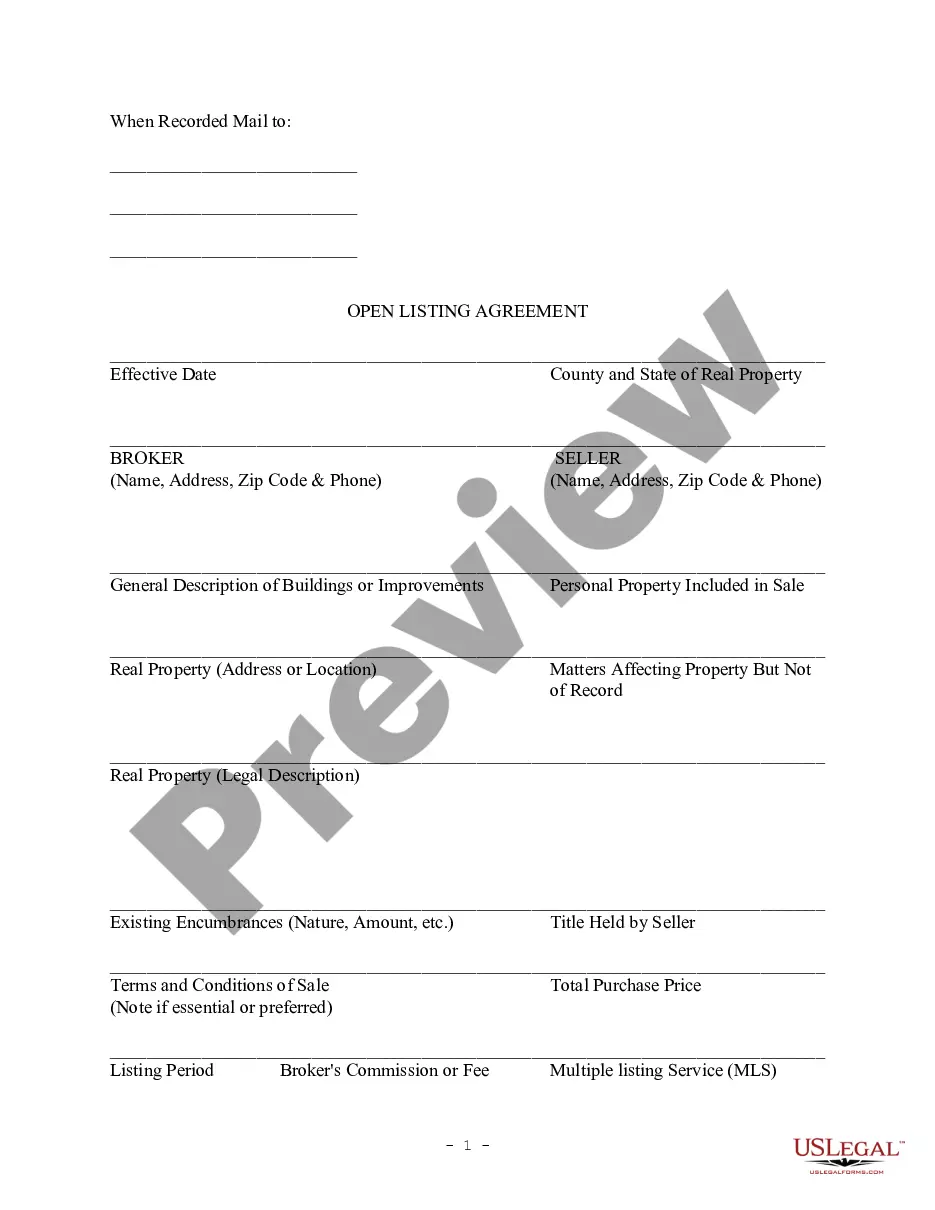
Listing Agreement Contract With America In Montgomery
Description
Get your form ready online
Our built-in tools help you complete, sign, share, and store your documents in one place.
Make edits, fill in missing information, and update formatting in US Legal Forms—just like you would in MS Word.
Download a copy, print it, send it by email, or mail it via USPS—whatever works best for your next step.
Sign and collect signatures with our SignNow integration. Send to multiple recipients, set reminders, and more. Go Premium to unlock E-Sign.
If this form requires notarization, complete it online through a secure video call—no need to meet a notary in person or wait for an appointment.
We protect your documents and personal data by following strict security and privacy standards.

Make edits, fill in missing information, and update formatting in US Legal Forms—just like you would in MS Word.

Download a copy, print it, send it by email, or mail it via USPS—whatever works best for your next step.

Sign and collect signatures with our SignNow integration. Send to multiple recipients, set reminders, and more. Go Premium to unlock E-Sign.

If this form requires notarization, complete it online through a secure video call—no need to meet a notary in person or wait for an appointment.

We protect your documents and personal data by following strict security and privacy standards.
Looking for another form?


Form popularity
FAQ
Types of Listing Agreements Exclusive Right to Sell Listing. As the most commonly used listing agreement, the Exclusive Right to Sell Listing's name pretty much says it all. Open Listing. An Open Listing Agreement is the exact opposite of an Exclusive Right to Sell Listing Agreement. Exclusive Agency Listing.
An exclusive right-to-sell listing is the most commonly used contract. With this type of listing agreement, one broker is appointed the sole seller's agent and has exclusive authorization to represent the property.
A listing contract (or listing agreement) is a contract between a real estate broker and an owner of real property granting the broker the authority to act as the owner's agent in the sale of the property.
An exclusive right-to-sell listing is the most commonly used real estate contract. With this type of listing agreement, one broker is authorized as the seller's sole agent and has exclusive authorization to represent the property.
The most predominant listing agreement in California is the Exclusive Right to Sell Agreement. This agreement entitles the listing agent to a commission regardless of who finds the buyer, granting them exclusive marketing rights for the home. Other types of agreements exist but are less common.
An exclusive right-to-sell listing is the most commonly used contract. With this type of listing agreement, one broker is appointed the sole seller's agent and has exclusive authorization to represent the property.
An Exclusive Authorization and Right to Sell contract provides the most protection to a broker. This type of contract grants the broker exclusive rights to represent the seller and market the property. It ensures that the broker is the only authorized party to sell the property during the contract period.
With an Exclusive Right to Sell agreement, the agent has the incentive to employ a comprehensive marketing strategy to attract potential buyers. They can allocate their resources, advertise the property extensively, utilize various marketing channels, and leverage their network to maximize exposure.
An exclusive right to sell listing is the most widely-used listing agreement. Under this agreement, the broker has the exclusive right to market the property for a specified period of time.

