Board Meeting With In Fairfax
Description



Get your form ready online
Our built-in tools help you complete, sign, share, and store your documents in one place.
Make edits, fill in missing information, and update formatting in US Legal Forms—just like you would in MS Word.
Download a copy, print it, send it by email, or mail it via USPS—whatever works best for your next step.
Sign and collect signatures with our SignNow integration. Send to multiple recipients, set reminders, and more. Go Premium to unlock E-Sign.
If this form requires notarization, complete it online through a secure video call—no need to meet a notary in person or wait for an appointment.
We protect your documents and personal data by following strict security and privacy standards.

Make edits, fill in missing information, and update formatting in US Legal Forms—just like you would in MS Word.

Download a copy, print it, send it by email, or mail it via USPS—whatever works best for your next step.

Sign and collect signatures with our SignNow integration. Send to multiple recipients, set reminders, and more. Go Premium to unlock E-Sign.

If this form requires notarization, complete it online through a secure video call—no need to meet a notary in person or wait for an appointment.

We protect your documents and personal data by following strict security and privacy standards.
Looking for another form?
Form popularity
FAQ
Yes, non-board members can often sit in on board meetings, depending on the organization's policies and state regulations. Many nonprofits encourage community members, donors, and volunteers to attend these meetings to foster transparency and collaboration.
State-specific sunshine laws and public disclosure Local government meetings must be public; exceptions include litigation, labor negotiations, and real estate discussions. All public board meetings are open; exceptions include discussions on security and pending litigation.
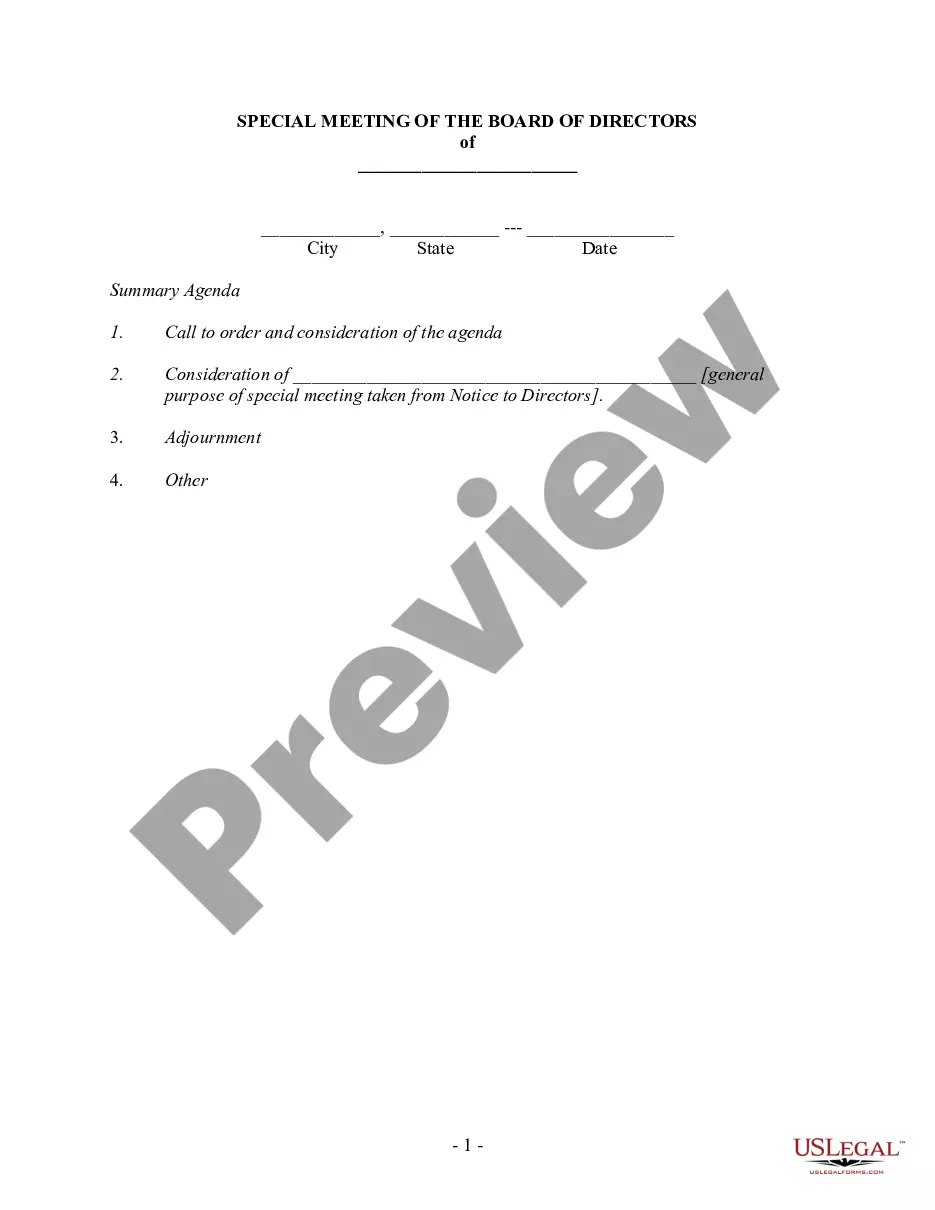
A board meeting agenda is a plan for the sequence of meeting activities, beginning with the call to order and ending with an adjournment. It also specifies the venue and time of the meeting. It tells you about the topics of discussion, such as reports, minutes of the previous meeting, and old and new plans.
Generally, board minutes are kept for internal records. However, in certain circumstances there may be a requirement to disclose/provide third parties with the record of board minutes.
Board meetings are almost always confidential. However, it takes both legally binding nondisclosure agreements and good board policy to ensure confidentiality.
Membership NamePartyDistrict Jeff McKay, Chairman Dem At-Large James R. Walkinshaw Dem Braddock James N. Bierman, Jr. Dem Dranesville Rodney L. Lusk Dem Franconia6 more rows
In some states there are laws known as “Sunshine laws” that require groups to open their meetings to the public, however, these laws generally only apply to governmental or quasi-governmental groups. Unless the nonprofit is a governmental entity, there is no obligation to open board meetings to the public.
Board meetings provide executives and directors the opportunity to discuss company performance, plans and progress. Having a specific agenda can ensure that the board can discuss needed topics and identify actions that different team members might complete.
Chairman Jeffrey C. McKay is a lifelong Fairfax County resident, born and raised on the historic Route One Corridor in Franconia District.
A board meeting is a regular formal gathering of a board of directors in order to discuss strategic matters of a company. This includes the corporate policies and issues, company performance reports and future endeavors.

