Director Meeting Vs Shareholder Meeting In Pennsylvania
Description







Form popularity
FAQ
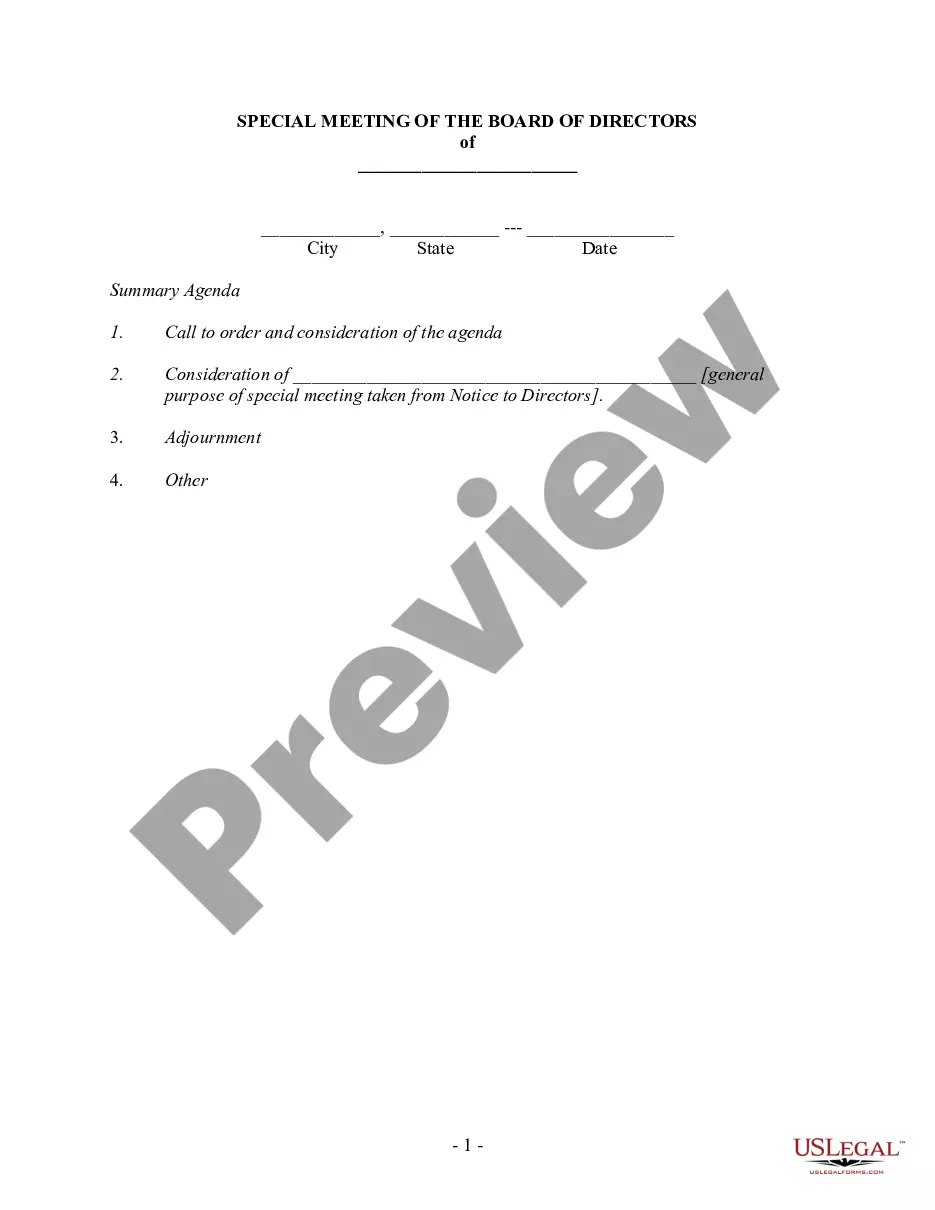
In essence, shareholders' meetings are about the ownership and broader governance of the company, while directors' meetings focus on the operational oversight and management of the company. Both play crucial roles in corporate governance but cater to different aspects and stakeholders within the organization.
While shareholders' meetings represent ownership, board meetings embody the company's leadership. The board of directors, acting as a bridge between management and shareholders, is responsible for making strategic decisions, overseeing management, and safeguarding the company's long-term interests.
Follow these steps to host an annual shareholder meeting. Planning and Preparation. A successful annual shareholder meeting requires detailed preparation. Notification to Shareholders. Organize the Meeting Logistics. Conducting the Meeting. Post-Meeting Follow-Up.
Shareholders are the individuals or entities that own company shares, giving them control over that company. The members of the board don't control the company (unless they are also shareholders), but they make the day-to-day decisions of the business. In a startup context, a board member may be the CEO, CTO, or CMO.
A general meeting can be called by the company directors or shareholders. A minimum notice period of 14 days is required for calling a general meeting in a private limited company. The notice must be sent to every member and director, and any persons entitled to a share on the death or bankruptcy of a shareholder.
Shareholder power depends on the level of ownership As such, a shareholder with only 10% of the voting rights and no influence over other shareholders would in practice have much less power over the company than its board of directors.
First Shareholders' Meeting Once this meeting has been completed, the directors can call a shareholders' meeting where the shareholders will elect directors (or re-elect the initial directors) and confirm the by-laws and auditor.
Board meetings vs. general meetings: what's the difference? While a directors' board meeting will only usually involve board members, the same cannot be said for an annual general meeting. In contrast, general meetings may also involve shareholders and key stakeholders.
There are three types of shareholders' meetings: an ordinary meeting, an extraordinary meeting and a special meeting.
Directors typically call general meetings. However, any shareholder holding at least 5% of the company shares can request that one be called if they believe it is necessary.

