Board Meeting With In San Bernardino
Description




Form popularity
FAQ
State-specific sunshine laws and public disclosure Local government meetings must be public; exceptions include litigation, labor negotiations, and real estate discussions. All public board meetings are open; exceptions include discussions on security and pending litigation.
Many people believe these meetings are exclusive to board members and staff, but that is not always the case. Depending on the organization's bylaws and state laws, various stakeholders, including donors, community members, and volunteers, may be allowed to attend.
The Directors shall attend Board Meetings in person. If unable to attend, a Director may appoint another Director to attend on his behalf by proxy which specifies the scope of authorization; any appointee shall not act as proxy for more than one Director.
At a regular meeting, the public is also permitted to comment on matters not on the agenda. California law imposes important guidelines on how and when boards can regulate public comment.
The Directors shall attend Board Meetings in person. If unable to attend, a Director may appoint another Director to attend on his behalf by proxy which specifies the scope of authorization; any appointee shall not act as proxy for more than one Director.
Col. Paul Cook (Ret.) Vice Chairman. Jesse Armendarez. Second District Supervisor. Jesse Armendarez was elected to the San Bernardino County Board of Supervisors in November 2022. Dawn Rowe. Chair. Third District Supervisor. Curt Hagman. Fourth District Supervisor. Joe Baca, Jr. Fifth District Supervisor.
Nonprofit board meeting minutes are generally not automatically made public, but the accessibility of these minutes depends on various factors, including the organization's policies, legal requirements, and state laws. Read on to learn more about transparency and nonprofit board meetings minutes.
In some states there are laws known as “Sunshine laws” that require groups to open their meetings to the public, however, these laws generally only apply to governmental or quasi-governmental groups. Unless the nonprofit is a governmental entity, there is no obligation to open board meetings to the public.
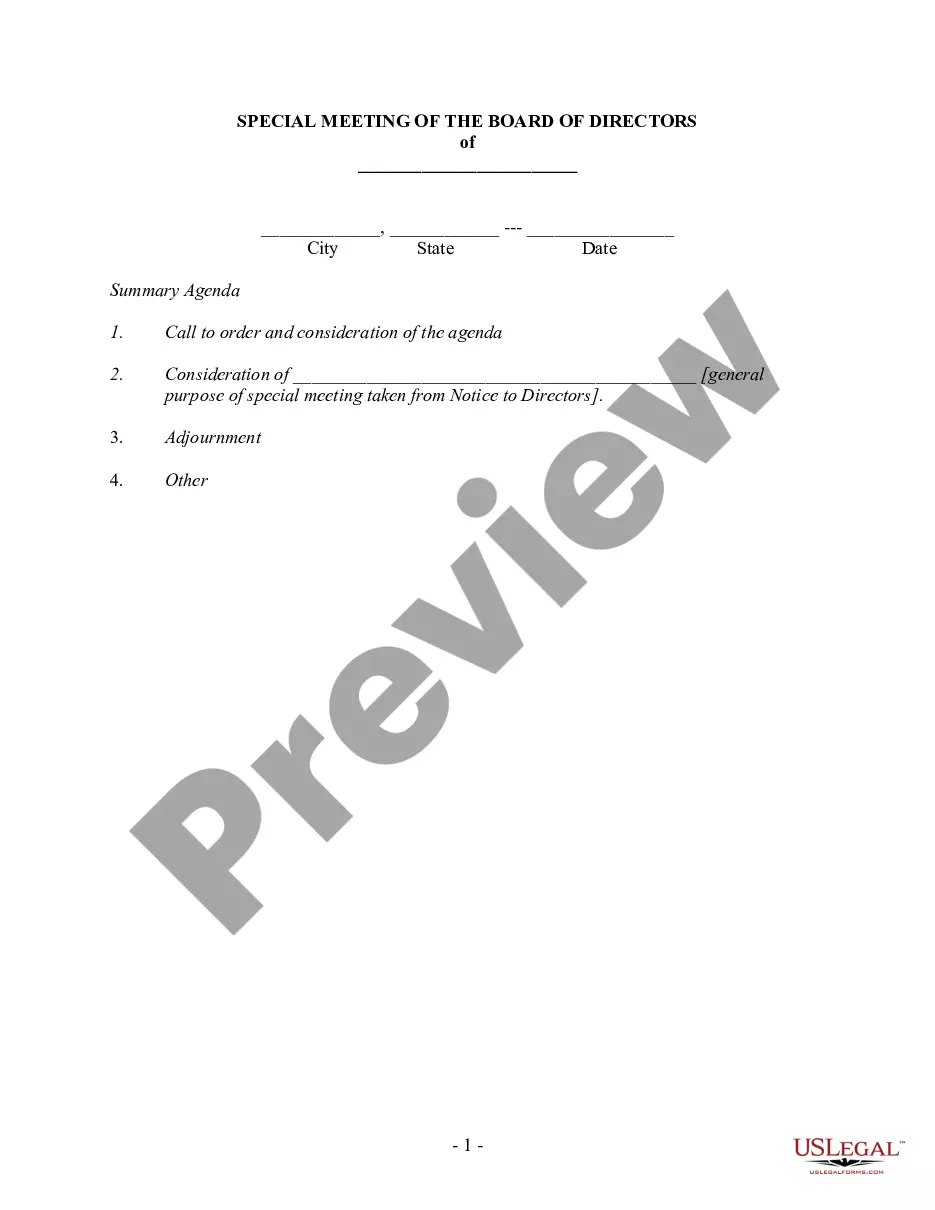
Ensure these key elements are included in your board meeting minute template: Date, time, location. Type of board meeting — regular, special or annual. Attendance of board chair, board members, secretary and other guests. If quorum requirements are satisfied. Approval of previous meeting minutes.
Essentially, the meeting protocol is a template workflow from calling the meeting to signing off the minutes from the previous meeting. The technical details that must be met to ensure the board can make its decisions. This could be the minimum number of members required for a quorum or the type of majority needed.

