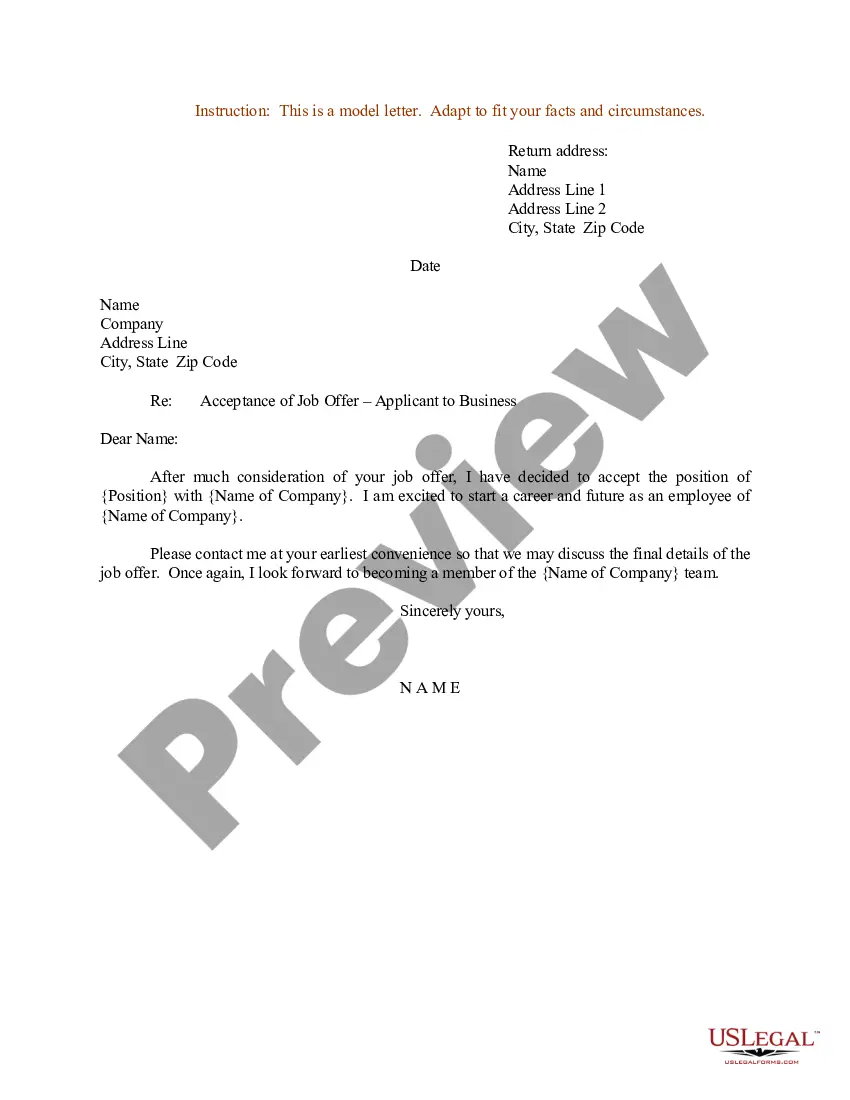
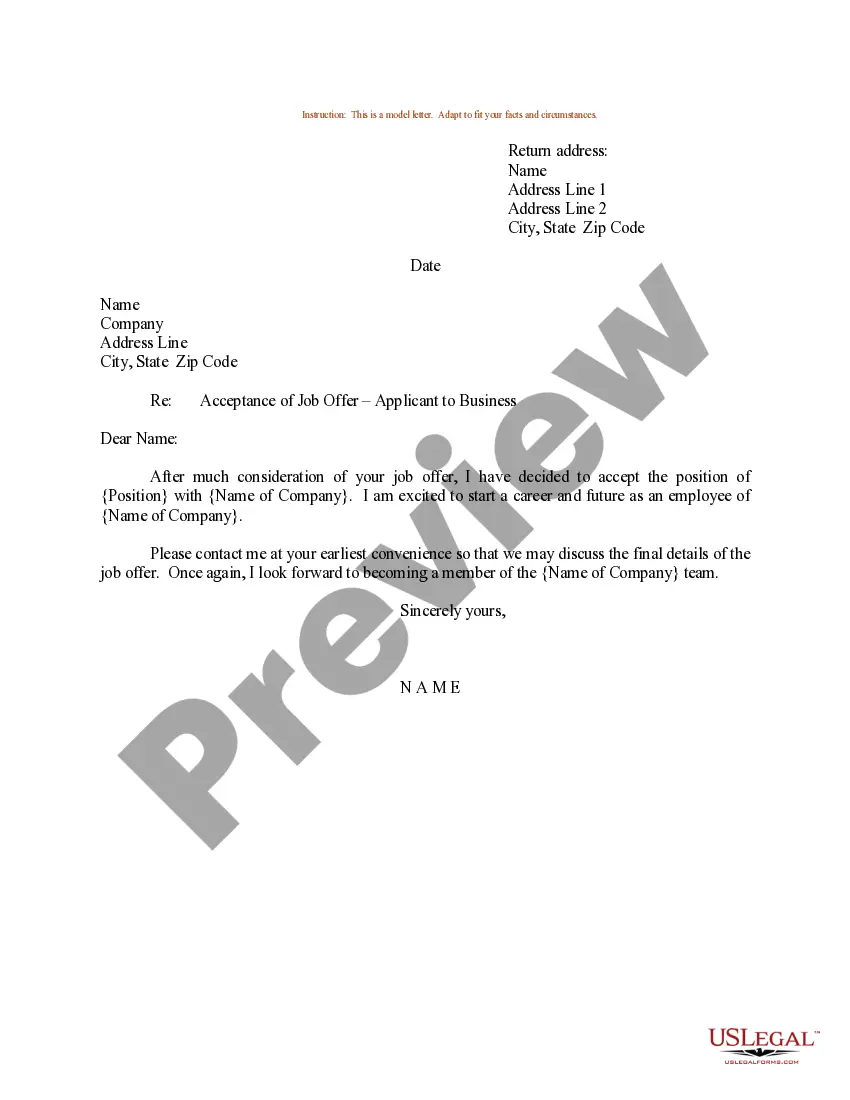
Job Acceptance Letter With Salary Negotiation In Texas
Description
Get your form ready online
Our built-in tools help you complete, sign, share, and store your documents in one place.
Make edits, fill in missing information, and update formatting in US Legal Forms—just like you would in MS Word.
Download a copy, print it, send it by email, or mail it via USPS—whatever works best for your next step.
Sign and collect signatures with our SignNow integration. Send to multiple recipients, set reminders, and more. Go Premium to unlock E-Sign.
If this form requires notarization, complete it online through a secure video call—no need to meet a notary in person or wait for an appointment.
We protect your documents and personal data by following strict security and privacy standards.

Make edits, fill in missing information, and update formatting in US Legal Forms—just like you would in MS Word.

Download a copy, print it, send it by email, or mail it via USPS—whatever works best for your next step.

Sign and collect signatures with our SignNow integration. Send to multiple recipients, set reminders, and more. Go Premium to unlock E-Sign.

If this form requires notarization, complete it online through a secure video call—no need to meet a notary in person or wait for an appointment.

We protect your documents and personal data by following strict security and privacy standards.
Looking for another form?


Form popularity
FAQ
Do Employers Rescind Job Offers When Candidates Negotiate? It happens. A Salary survey reported that 19% of respondents had lost a job offer because they negotiated. That's almost 1 in 5 people.
So even if an offer is a tad below what you're expecting, if the other aspects of the job make up for it, consider not negotiating. There's nothing more irritating to a hiring manager than a candidate agreeing to the salary range given in the beginning, then changing their mind at the end.
In the intricate dance of career progression, salary negotiation stands as a pivotal moment, shaping your financial future and professional trajectory. Amidst the myriad of advice circulating the web, one rule emerges as the lodestar guiding successful negotiations: Know Your Worth and Articulate It Confidently.
It can be worth trying to negotiate your salary even after accepting an offer, but it requires a delicate approach. If you have gained new information that justifies a higher salary or if your responsibilities have increased, it might be reasonable to reopen the conversation.
In the intricate dance of career progression, salary negotiation stands as a pivotal moment, shaping your financial future and professional trajectory. Amidst the myriad of advice circulating the web, one rule emerges as the lodestar guiding successful negotiations: Know Your Worth and Articulate It Confidently.
``Thanks so much for the offer--I'm excited about getting started with you! I would like to discuss the offered salary, though. If you could increase the amount by $X. xx I'll accept it immediately and we can begin plans for my first day!''
Be Specific: Clearly state the salary you are seeking, based on your research and current salary. Justify Your Request: Reference your research, your current salary, and the value you bring to the company. If the salary cannot be adjusted, consider negotiating other aspects, such as: Signing bonuses Performance bonuses.
In the intricate dance of career progression, salary negotiation stands as a pivotal moment, shaping your financial future and professional trajectory. Amidst the myriad of advice circulating the web, one rule emerges as the lodestar guiding successful negotiations: Know Your Worth and Articulate It Confidently.
Unfortunately, the offer seems to be lower than the average salary for this position in Location. Based on my qualifications, my research shows that the average salary for this position is Range. I was hoping for something closer to Amount, which I feel better reflects my qualifications and the job requirements.