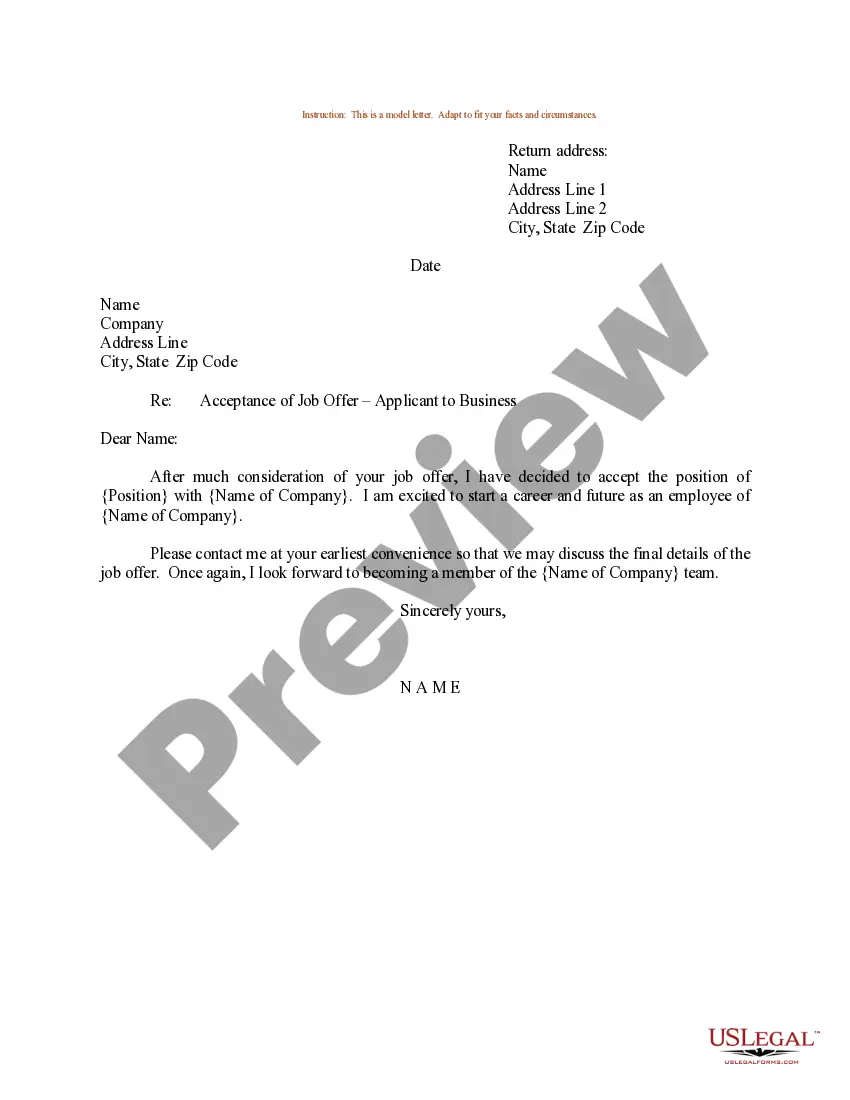
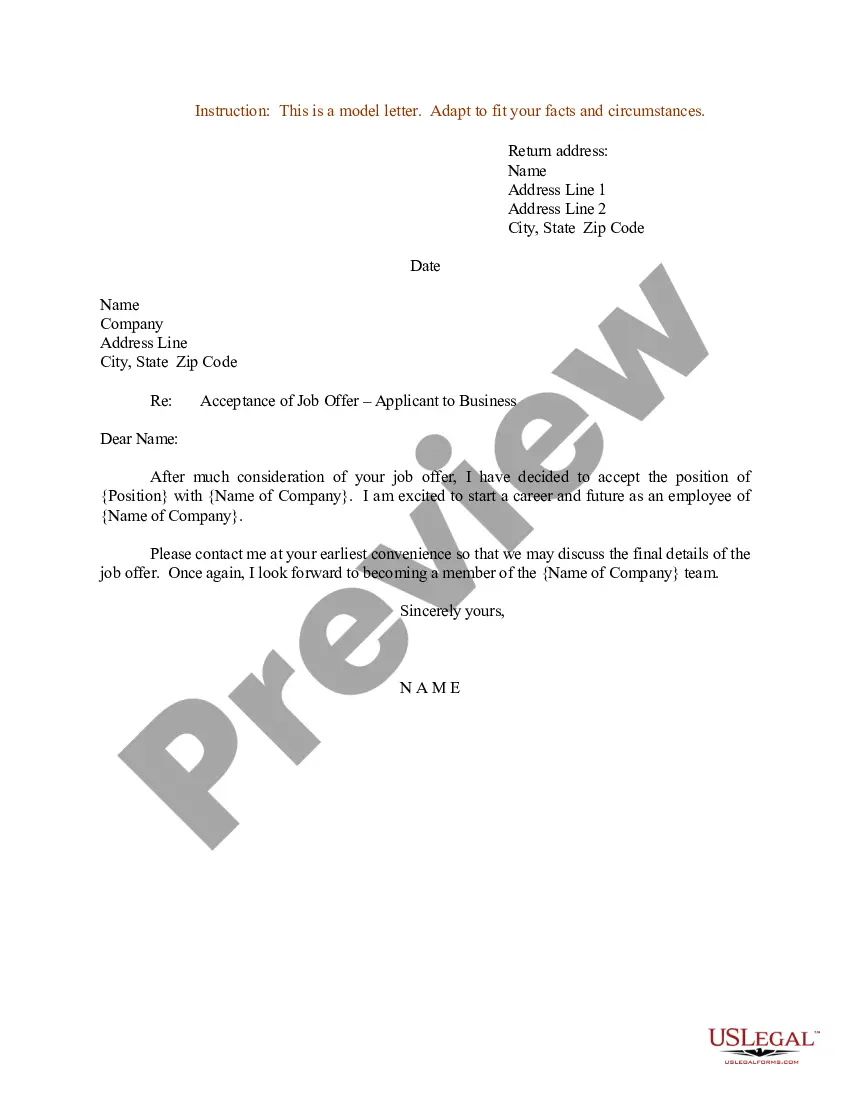
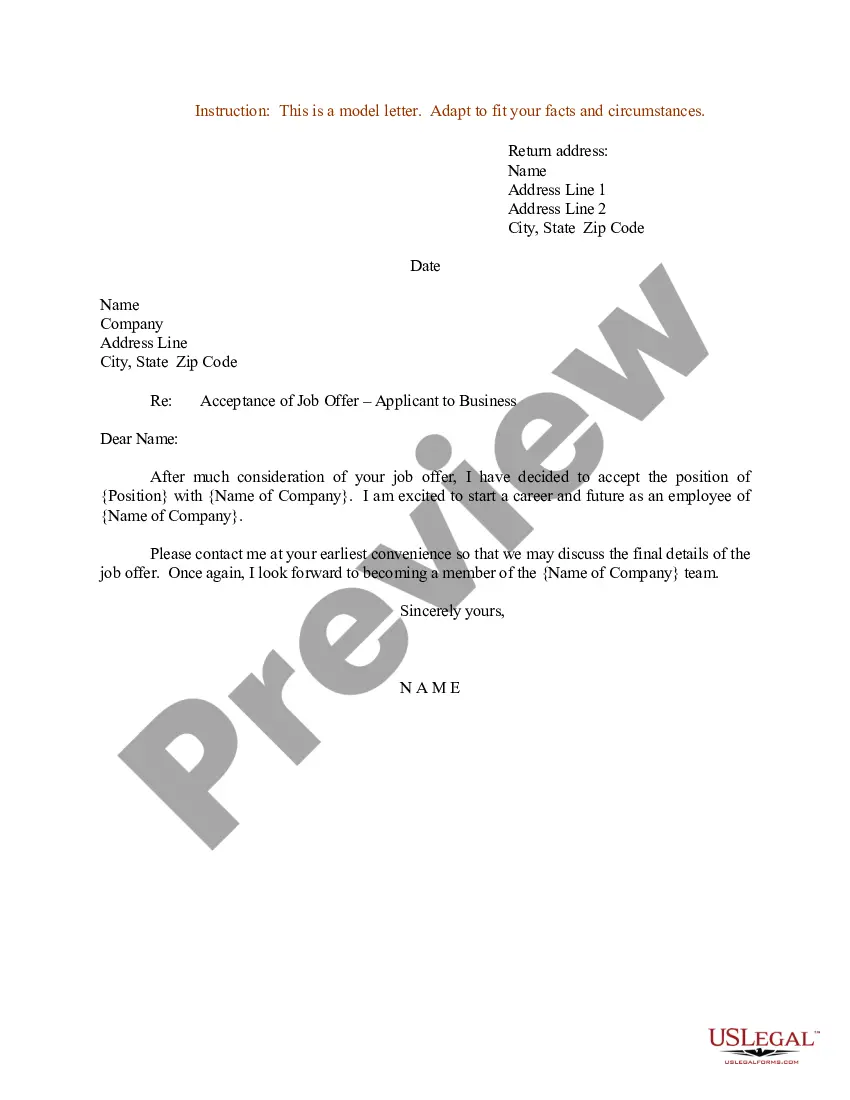
Military Acceptance Letter With Salary Negotiation In Wake
Description
Get your form ready online
Our built-in tools help you complete, sign, share, and store your documents in one place.
Make edits, fill in missing information, and update formatting in US Legal Forms—just like you would in MS Word.
Download a copy, print it, send it by email, or mail it via USPS—whatever works best for your next step.
Sign and collect signatures with our SignNow integration. Send to multiple recipients, set reminders, and more. Go Premium to unlock E-Sign.
If this form requires notarization, complete it online through a secure video call—no need to meet a notary in person or wait for an appointment.
We protect your documents and personal data by following strict security and privacy standards.

Make edits, fill in missing information, and update formatting in US Legal Forms—just like you would in MS Word.

Download a copy, print it, send it by email, or mail it via USPS—whatever works best for your next step.

Sign and collect signatures with our SignNow integration. Send to multiple recipients, set reminders, and more. Go Premium to unlock E-Sign.

If this form requires notarization, complete it online through a secure video call—no need to meet a notary in person or wait for an appointment.

We protect your documents and personal data by following strict security and privacy standards.
Looking for another form?
Form popularity
FAQ
If you're interviewing for a new role, it's important to be ready to discuss your salary expectations at the right time – which is usually once you've shown that you're suitable for the job, but before you sign a contract.
Here is a list of steps on how to respond to a low salary offer: Ask for time. Understand your minimum acceptable salary. Conduct research. Make a plan. Practice negotiations. Show enthusiasm. Negotiate for early performance reviews. Focus on your skills and expertise.
I would be delighted to accept, but I wanted to ask whether we could discuss the starting salary. I believe the starting salary doesn't reflect my (skills, experience, market conditions, other comparable roles, etc.). I'm more than happy to meet and discuss this or do a call to find a solution that works for us all.
Negotiating salary is generally more effective after receiving a written offer for several reasons: Leverage: A written offer provides you with a concrete starting point. The employer has already expressed their interest in hiring you, which can give you leverage in negotiations.
It's generally best to negotiate your salary before accepting an offer. Once you've accepted, your leverage decreases significantly. If circumstances change or you gain new information shortly after accepting, bring it up as soon as possible.
In the intricate dance of career progression, salary negotiation stands as a pivotal moment, shaping your financial future and professional trajectory. Amidst the myriad of advice circulating the web, one rule emerges as the lodestar guiding successful negotiations: Know Your Worth and Articulate It Confidently.
No. The more reasonable and realistic your request, the less likely it is. If you ask for a small increase to the offered salary or some small additional perks, you may not get them but it's unlikely that the offer is going to be pulled.
Do Employers Rescind Job Offers When Candidates Negotiate? It happens. A Salary survey reported that 19% of respondents had lost a job offer because they negotiated. That's almost 1 in 5 people.
I'm thrilled about the prospect of joining your team and would happily accept your offer if you could match this base salary. I understand that this figure may be above your planned budget, but I'm flexible and willing to find a solution that works for both of us. Thank you again for your offer.