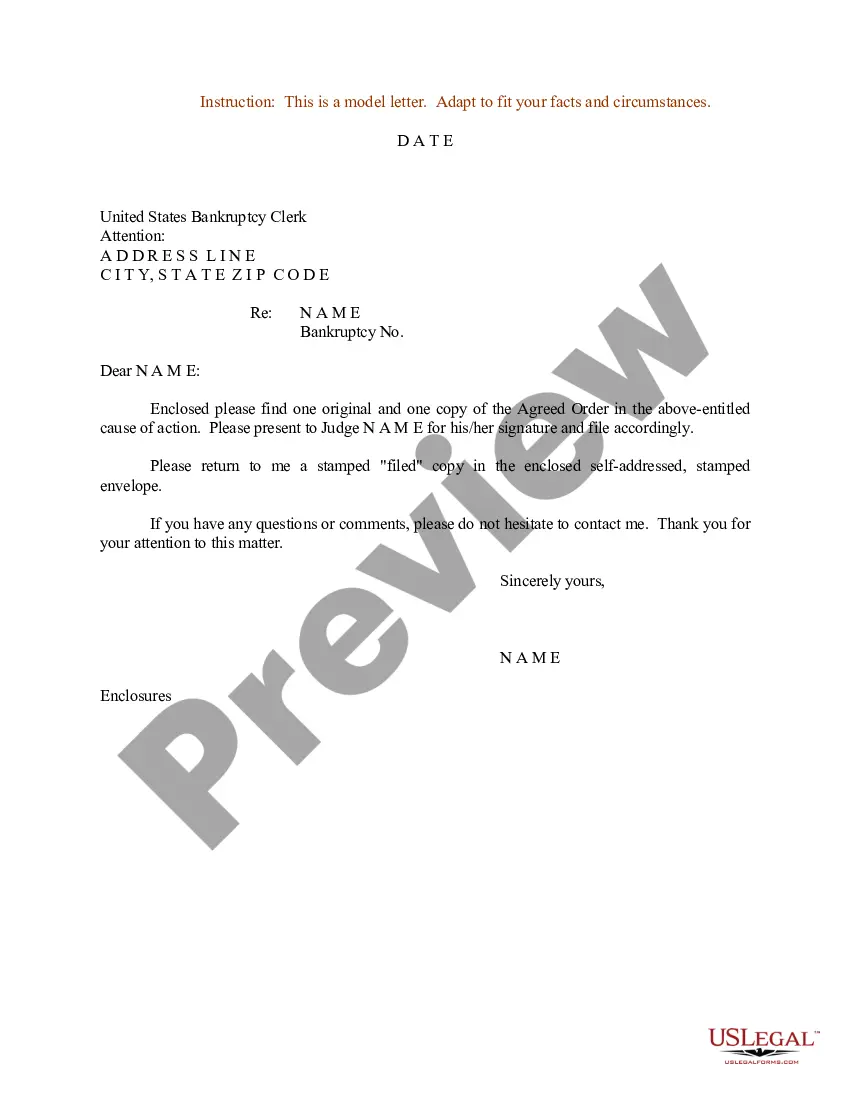
Sample Letter Judge With Proposed Order In Arizona
Description


Get your form ready online
Our built-in tools help you complete, sign, share, and store your documents in one place.
Make edits, fill in missing information, and update formatting in US Legal Forms—just like you would in MS Word.
Download a copy, print it, send it by email, or mail it via USPS—whatever works best for your next step.
Sign and collect signatures with our SignNow integration. Send to multiple recipients, set reminders, and more. Go Premium to unlock E-Sign.
If this form requires notarization, complete it online through a secure video call—no need to meet a notary in person or wait for an appointment.
We protect your documents and personal data by following strict security and privacy standards.

Make edits, fill in missing information, and update formatting in US Legal Forms—just like you would in MS Word.

Download a copy, print it, send it by email, or mail it via USPS—whatever works best for your next step.

Sign and collect signatures with our SignNow integration. Send to multiple recipients, set reminders, and more. Go Premium to unlock E-Sign.

If this form requires notarization, complete it online through a secure video call—no need to meet a notary in person or wait for an appointment.

We protect your documents and personal data by following strict security and privacy standards.
Looking for another form?
Form popularity
FAQ
These letters can be a very important part of the sentencing process because they help the judge get to know the person they are sentencing in ways other than just the facts of the offense: The letter should be addressed to the Judge, but mailed to the defendant's attorney.
The Order, or “proposed order” is an optional step in the motion process. You may fill out the Order form using your proposed language. This option requires you to provide pre-addressed, stamped envelopes for yourself and the other party. The Judge may then sign your proposed order and send a copy using your envelopes.
Use Vivid Language: Paint a picture with your words to evoke emotions. Keep It Concise: While you want to express your feelings, be mindful not to overwhelm her. Aim for clarity and impact. Edit and Revise: Take time to review your letter. Ensure it flows well and conveys your emotions clearly.
State that you respect that the defendant has been found guilty or pled guilty to a crime, and that you are writing the letter to offer a fuller picture of him or her as a person. Include specific examples of how the person has helped you or someone else, or how he or she has been a leader or an inspiration.
No. Don't do it. It is not necessary. It is not OK. It is not going to be read. And it's would be a violation of court proceedings for it to be part of the case. If this is something substantial, contact either the Prosecution or Defense.
Writing a letter to a judge can be extremely impactful if it is written properly. Whether you are writing as a victim or on behalf of a defendant, it must be written in business-style and in a professional tone in order for the judge to take the letter seriously.
The structure of a character letter should include an introduction stating your relationship with the defendant, body paragraphs detailing specific positive traits and examples, and a concluding statement reiterating your support. Ensure it's concise, respectful, and professionally formatted.
These letters can be a very important part of the sentencing process because they help the judge get to know the person they are sentencing in ways other than just the facts of the offense: The letter should be addressed to the Judge, but mailed to the defendant's attorney.
The best way to do this is to tell a story about the defendant. Give specific examples. For example, instead of saying the defendant is generous and kind-hearted, give the judge an example of an instance when the defendant showed these attributes.
Do Judges care about character letters? Yes they do. Such letters are particularly useful during sentencing when a Judge may be considering a more harsh or a less harsh sentence. Character letters are unlikely to be persuasive on the issue of guil...

