Sample Letter Judge With Proposed Order In San Jose
Description


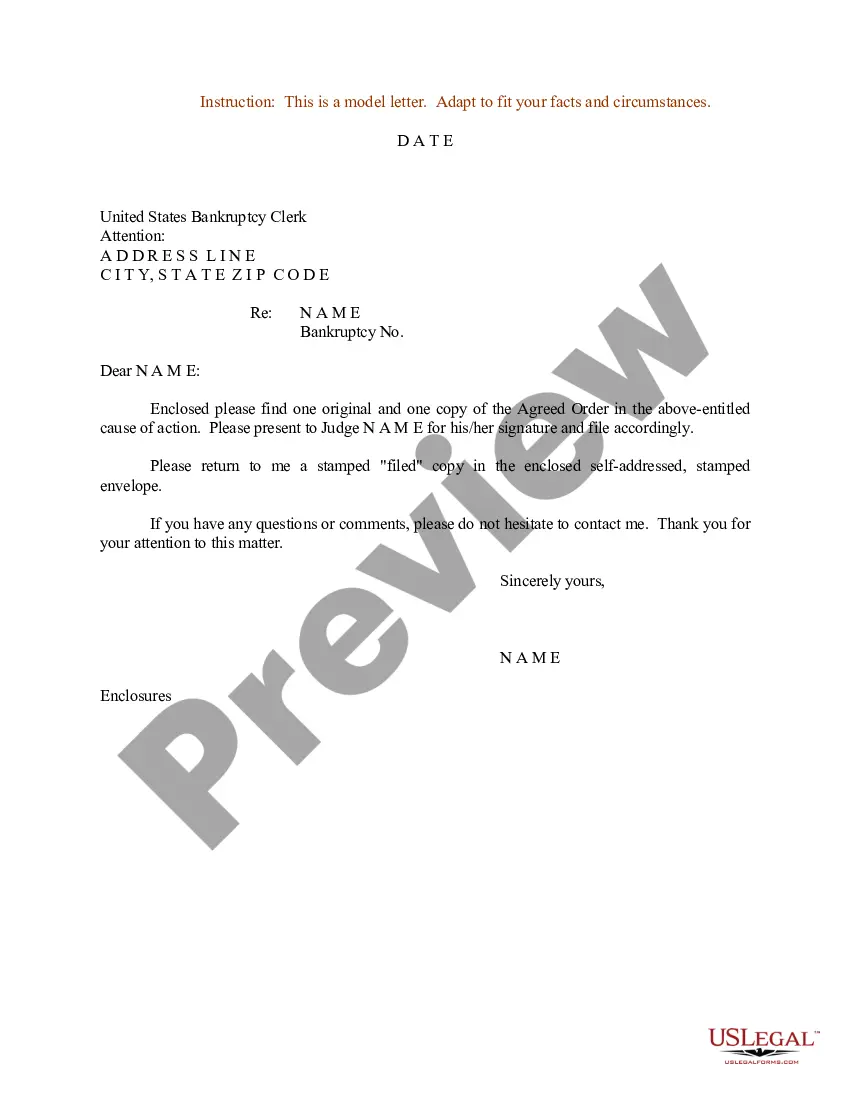
Get your form ready online
Our built-in tools help you complete, sign, share, and store your documents in one place.
Make edits, fill in missing information, and update formatting in US Legal Forms—just like you would in MS Word.
Download a copy, print it, send it by email, or mail it via USPS—whatever works best for your next step.
Sign and collect signatures with our SignNow integration. Send to multiple recipients, set reminders, and more. Go Premium to unlock E-Sign.
If this form requires notarization, complete it online through a secure video call—no need to meet a notary in person or wait for an appointment.
We protect your documents and personal data by following strict security and privacy standards.

Make edits, fill in missing information, and update formatting in US Legal Forms—just like you would in MS Word.

Download a copy, print it, send it by email, or mail it via USPS—whatever works best for your next step.

Sign and collect signatures with our SignNow integration. Send to multiple recipients, set reminders, and more. Go Premium to unlock E-Sign.

If this form requires notarization, complete it online through a secure video call—no need to meet a notary in person or wait for an appointment.

We protect your documents and personal data by following strict security and privacy standards.
Looking for another form?
Form popularity
FAQ
You start by addressing the letter to the Honorable Judge so and so, and begin with Your honor. You end with respectfully yours, and then sign your name (write your name in block letters underneath your signature.
Introduce yourself to the Court. Explain how you know (and how long you have known) the defendant. Make it personal when describing the defendant's characteristics. Can you think of examples of good deeds done by the defendant (hard work, dedication to family/church/community, generosity, etc).
1. Use formal language: Address the judge as "Honorable Full Name". 2. Include proper titles: Use "Dear Judge Last Name" as the salutation.
1. Use formal language: Address the judge as "Honorable Full Name". 2. Include proper titles: Use "Dear Judge Last Name" as the salutation.
A proposed order, in the context of legal proceedings, is a document that outlines the specific actions or decisions that a party involved in a case is asking the court to make. It is typically drafted by one of the parties or their attorney and presented to the court for approval.
Steps to respond to a request for a court order Respond. Fill out court form to tell the court if you agree or disagree. File forms. File the forms with the court. Serve other side. Serve copies of the forms on the other side (or their lawyer if they have one). Attend hearing.
Proposed Orders refer to any unsigned orders, such as Final Decrees, Rule Nisi, Orders on Affidavit of Poverty, Child Support Addendums, and similar documents.
A proposed order, in the context of legal proceedings, is a document that outlines the specific actions or decisions that a party involved in a case is asking the court to make. It is typically drafted by one of the parties or their attorney and presented to the court for approval.
It serves as a formal communication that outlines the terms, conditions, and objectives of a potential agreement between parties. A proposal can be written or verbal, depending on the circumstances and the preferences of the parties involved.

