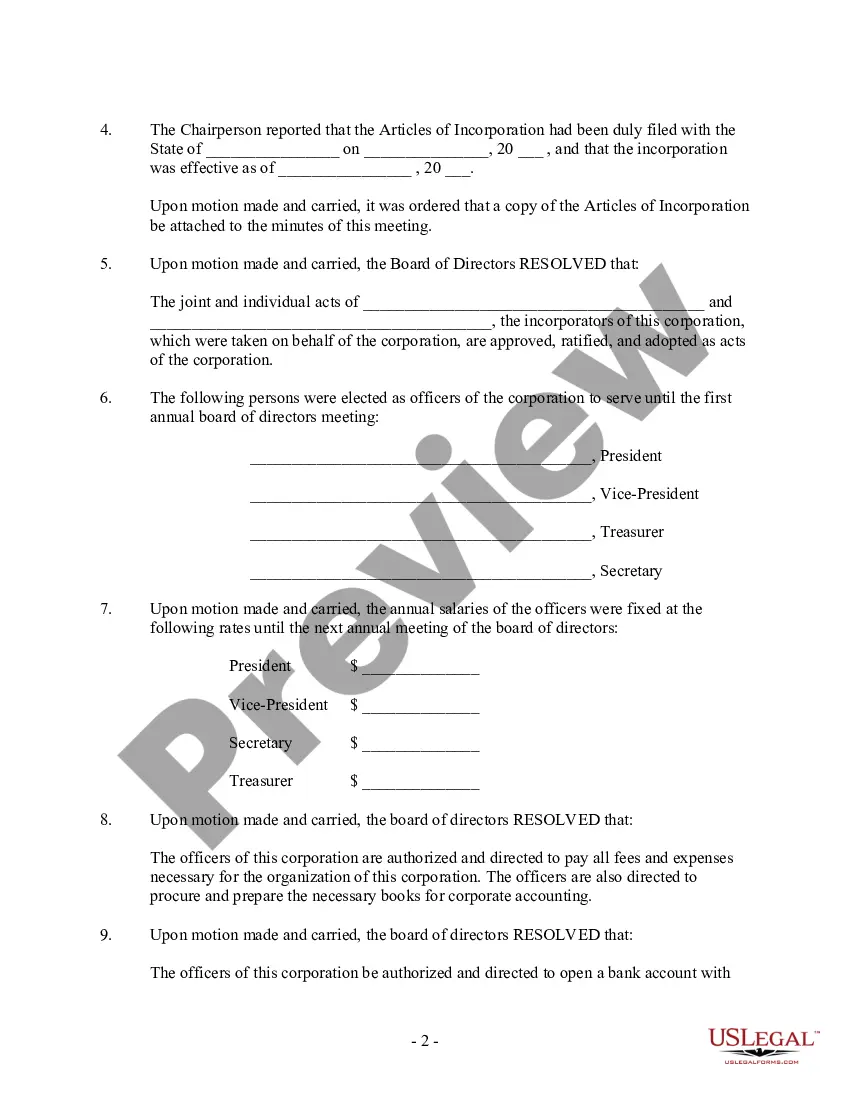
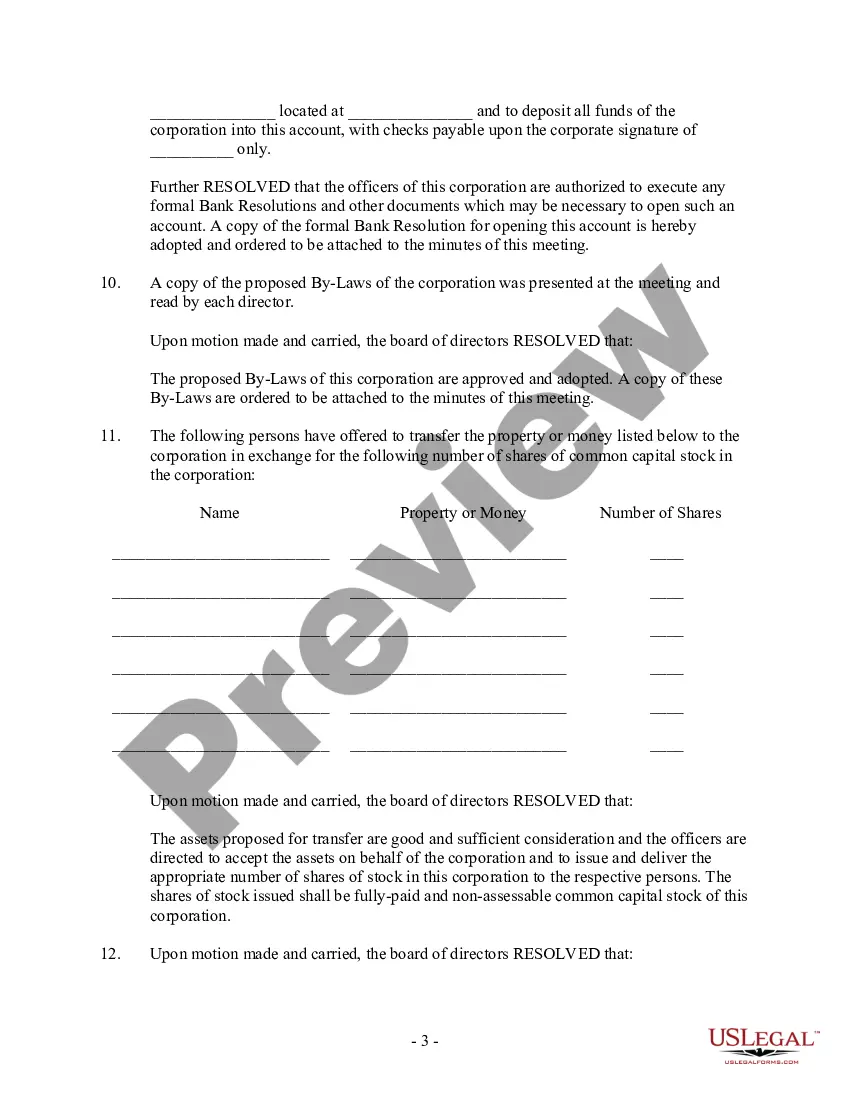
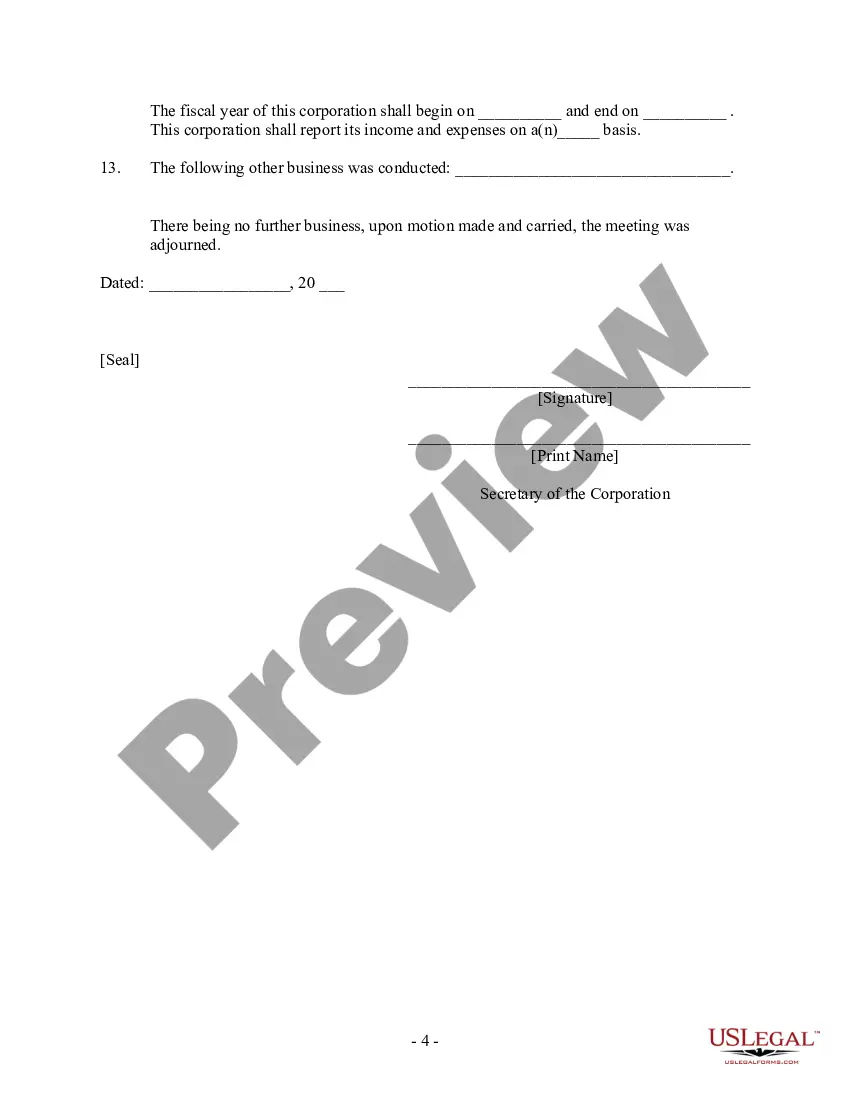
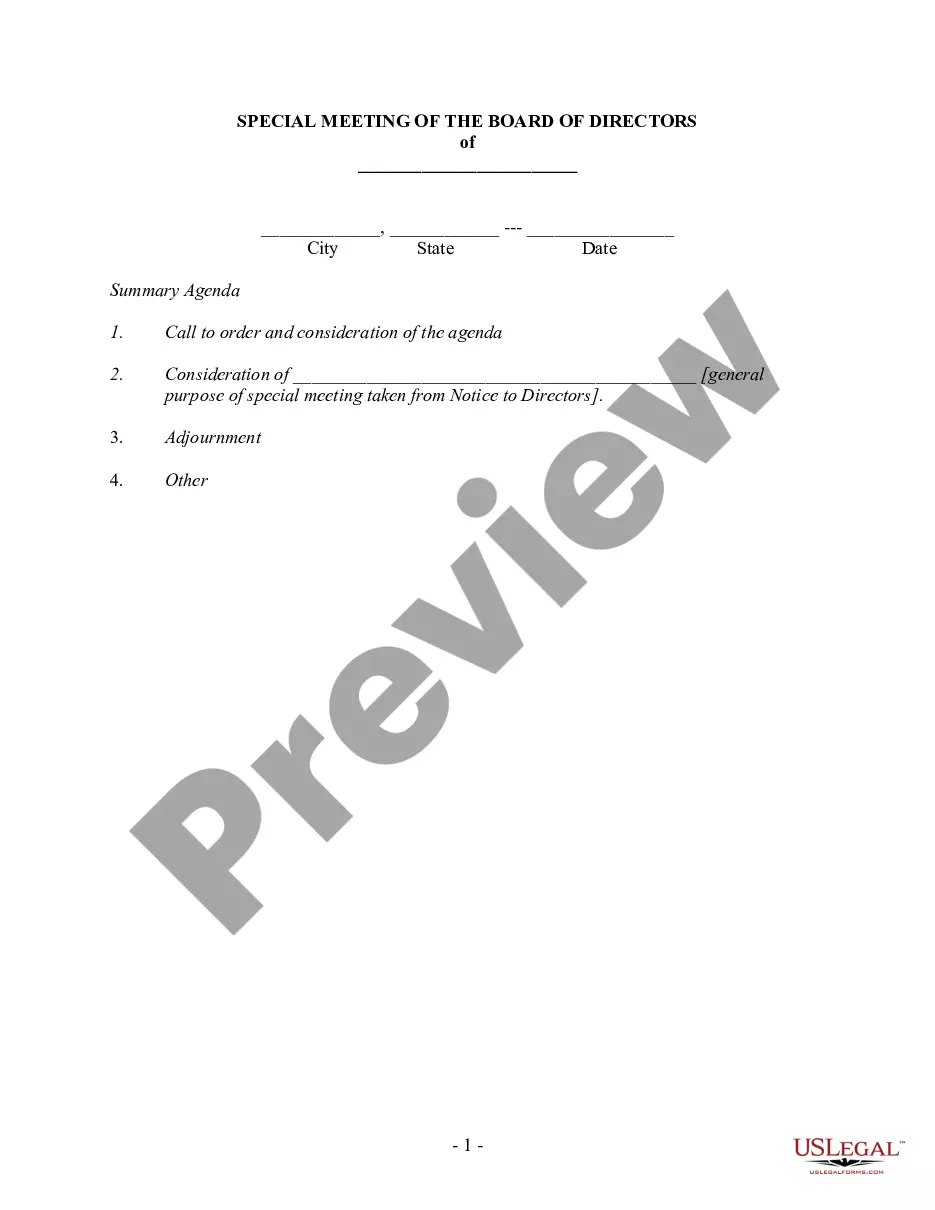
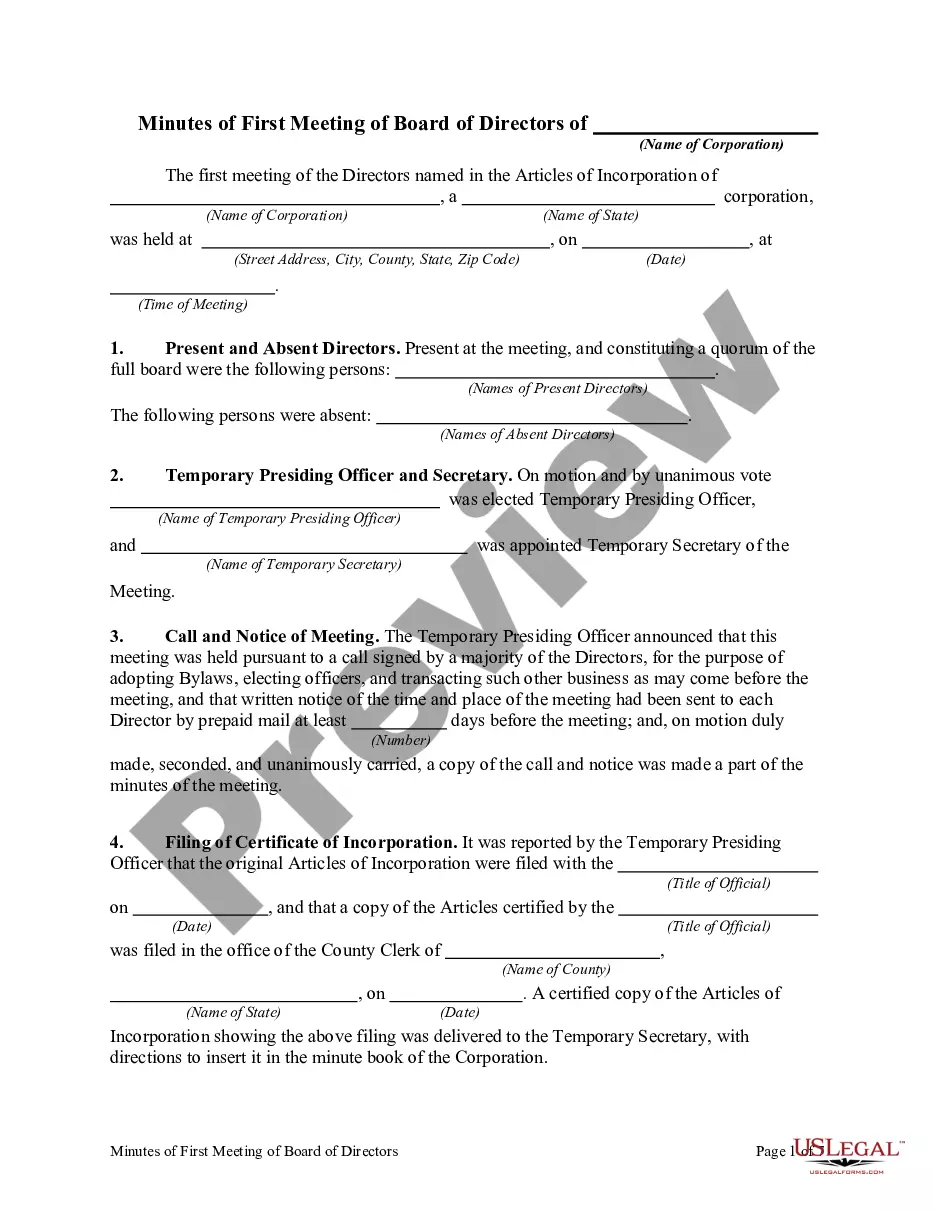
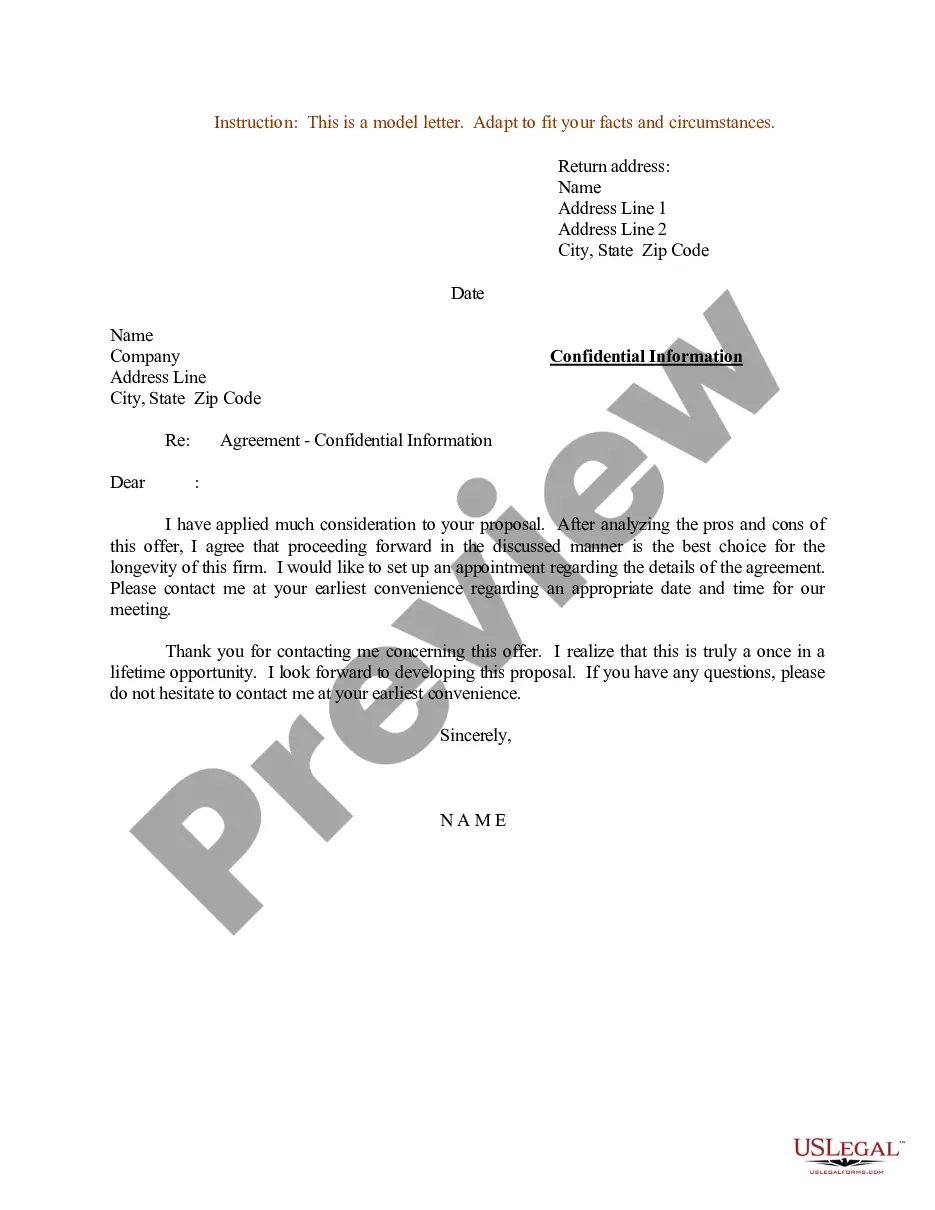
Board Meeting Corporate Form Of Organization In Chicago
Description



Get your form ready online
Our built-in tools help you complete, sign, share, and store your documents in one place.
Make edits, fill in missing information, and update formatting in US Legal Forms—just like you would in MS Word.
Download a copy, print it, send it by email, or mail it via USPS—whatever works best for your next step.
Sign and collect signatures with our SignNow integration. Send to multiple recipients, set reminders, and more. Go Premium to unlock E-Sign.
If this form requires notarization, complete it online through a secure video call—no need to meet a notary in person or wait for an appointment.
We protect your documents and personal data by following strict security and privacy standards.

Make edits, fill in missing information, and update formatting in US Legal Forms—just like you would in MS Word.

Download a copy, print it, send it by email, or mail it via USPS—whatever works best for your next step.

Sign and collect signatures with our SignNow integration. Send to multiple recipients, set reminders, and more. Go Premium to unlock E-Sign.

If this form requires notarization, complete it online through a secure video call—no need to meet a notary in person or wait for an appointment.

We protect your documents and personal data by following strict security and privacy standards.
Looking for another form?


Form popularity
FAQ
Annual Meeting Attendance of 20% of the voting power constitutes a quorum. Notice of association meetings must be given at least 10 days before a meeting but no more than 30 days, and at least 48 hours' notice must be given for meetings of the board of directors.
A Board Meeting is a formal meeting of the board of directors of an organization and any invited guests, held at definite intervals and as needed to review performance, consider policy issues, address major problems and perform the legal business of the board.
As per Robert's Rules, a second must follow a motion. If no one seconds a motion, the motion effectively dies. The chair should not permit any side discussions to take place to avoid straying from the topic at hand. Following the discussion, the chair can then call for a vote.
The Board members and the HOA management company should ensure the meeting runs smoothly, such as setting an agenda, preparing materials, sending out notices, making sure the meeting is legal, setting up the meeting space, having a quorum, and appointing a meeting chair.
The job of a board of directors is to provide oversight for the company, which means they need to be regularly updated on the company's status and recent developments. For this reason, most boards meet at least once a quarter.
Section 4900 of the Act says that all HOA board meetings must be open to all association members, with a few exceptions for private sessions. In California, executive sessions are closed-door talks that only board members, and certain other people can attend.
Your governing documents will usually tell you who qualifies as a member. For a majority of HOAs, members are those who own lots or units within the association. This means that only those whose names appear on the unit or property title can attend.
Can the board make decisions in an HOA without consulting homeowners? In a word, yes. There are certain decisions the board can make unilaterally. On the flip side, there are also some decisions that must go through a membership vote.
Essentially, the meeting protocol is a template workflow from calling the meeting to signing off the minutes from the previous meeting. The technical details that must be met to ensure the board can make its decisions. This could be the minimum number of members required for a quorum or the type of majority needed.
What should corporate resolutions include? Your corporation's name. Date, time and location of meeting. Statement of unanimous approval of resolution. Confirmation that the resolution was adopted at a regularly called meeting. Resolution. Statement authorizing officers to carry out the resolution.
