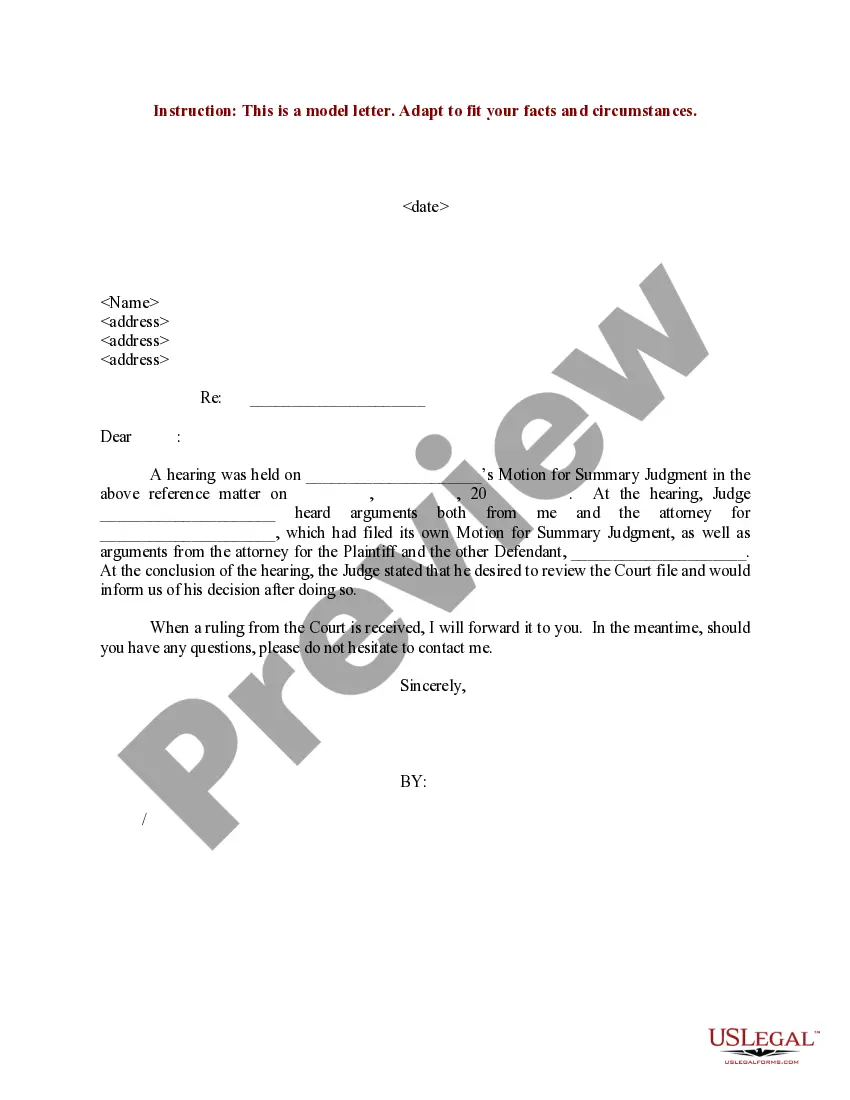
Letter Concerning Hearing Without Consent In Utah
Description
Form popularity
FAQ
The public is able to attend most court hearings, even if it is being held remotely.
As long as the Hearing is held in an open court room, then anyone can attend to observe. Usually, the only time court rooms are closed are if there are sensitive matters pertaining to a minor child, such as allegations of sexual abuse. So, yes, you should be able to bring a friend for support.
A person who wishes to observe a court in session may check the court calendar online or at the courthouse and watch a proceeding. The U.S. Constitution and court tradition give citizens right of access to court proceedings.
The public is able to attend most court hearings, even if it is being held remotely.
A Notice of Appeal in a justice court criminal case or small claims case must be filed with the justice court within 28 days of the entry of a justice court order or judgment.
The goal of trial is to determine a defendant's guilt. The goal of a preliminary hearing is to screen cases—weeding out weak cases and protecting defendants from unfounded prosecutions. Unofficially, however, each side uses the preliminary hearing to check out the other side's evidence.
One may feel one has a dispute with a business person or a family member-but once the summons is issued it is the full power of the law and the courts that is brought to bear in the dispute and it is absolutely vital to treat it seriously, file a response within the time limits…or face the consequences.
If you sue someone, you must serve them with a summons. This gives them notice of the lawsuit. “Service of process” is the formal name for giving a defendant a summons to come to court.
But while a summons marks the beginning of a court case, a subpoena comes after a case has begun and requires the person who receives it to provide evidence that is considered important to the outcome of the case. You can still receive a subpoena even if you aren't directly involved in the case.
Summary. A summons is a notice served on a person to let them know that a complaint or petition has been filed against them. The summons requires the person to answer the complaint or petition within a certain amount of time, or attend a court hearing on a certain day and time.