Arbitration Agreement Format India In Oakland
Description

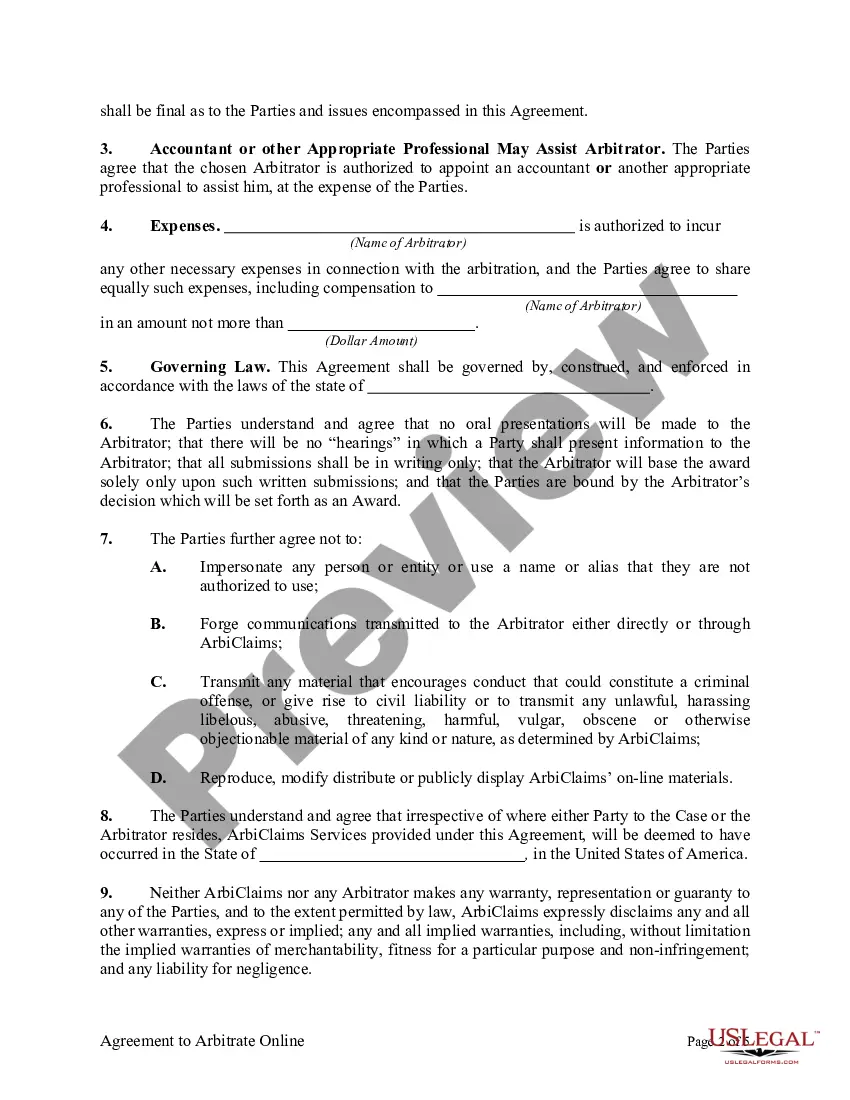
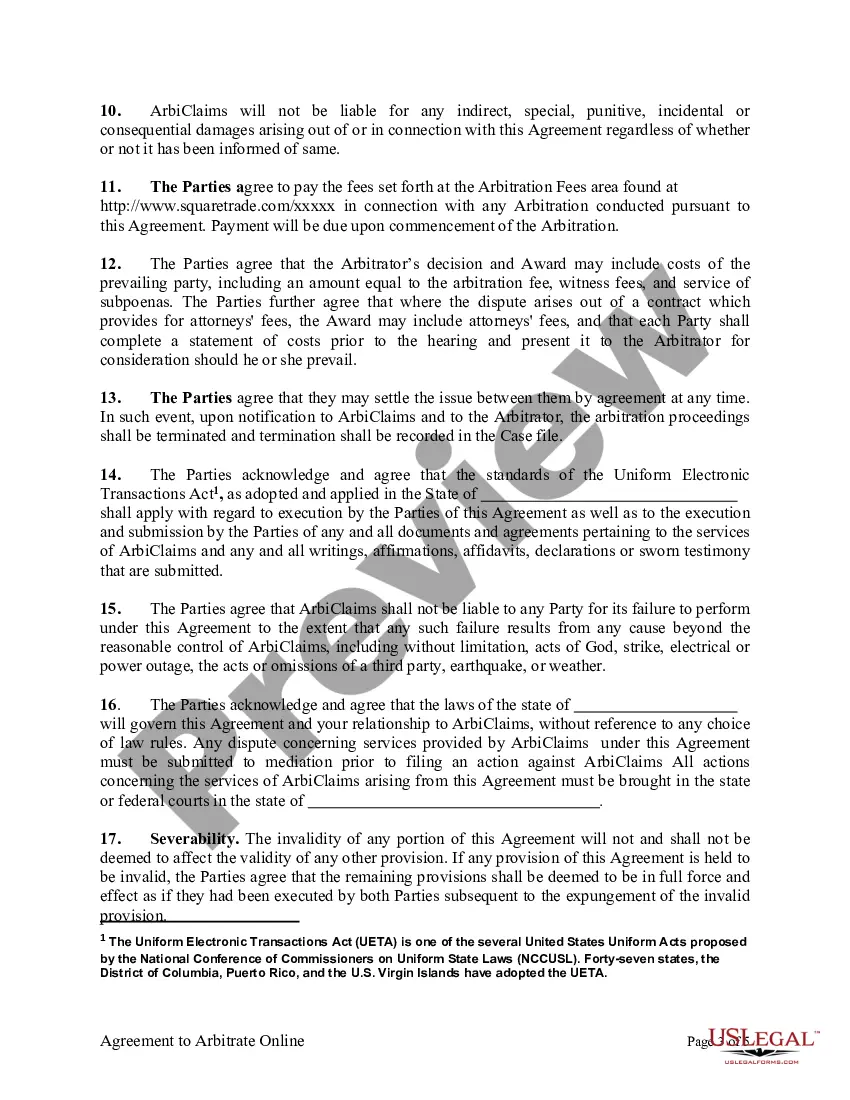




Form popularity
FAQ
Arguments should flow easily from the relevant facts and applicable law. Avoid exaggerating the strengths of your case as well as disparaging the opposing side. Remember that professionalism and credibility are critical to persuasiveness.
The Scope of the Clause. This section of the clause is critical; it sets the boundaries for which disputes the tribunal is authorised to determine. Choice of Rules. The Number of Arbitrators. Appointing Authority. Choice of Venue. The language of the proceedings. Finality. Exclusion of the right of appeal.
Always get straight to the merits without berating the other side or whining about how badly it has treated you. Another threat to your credibility is the “kitchen sink” arbitration demand or a response that includes numerous claims or defenses that have little chance of succeeding.
Arbitration notice: in case of dispute between the parties arise, the party will send a notice to the defaulting party for initiating the procedure of arbitration known as arbitration notice. 3. Appointment of Arbitrator: party appoint arbitrator as they think fit to resolve the dispute.
Disadvantages Questionable Fairness. Mandatory arbitration. Finality: No appeals. While this may be a positive if you find the arbitration decision favorable, you should be aware that if arbitration is binding, both sides give up their right to an appeal. Can be more expensive. Unpredictability: Unconventional outcomes.
Because of limited discovery, lack of a jury, and limited appeal rights, arbitration outcomes are riskier and more final than court litigation. It is hard to see why arbitration would be fairer than court litigation. Arbitration is litigation, just not in court.
Even if there were no pre-hearing briefs, keep your open- ing short, providing an executive sum- mary of your case in chronological order without getting into the weeds. Try to sum up some key points in phraseology the arbitrator will remember. If you have compelling evidence, mention it.
"Any dispute or difference whatsoever arising between the parties out of or relating to the construction, meaning, scope, operation or effect of this contract or the validity or the breach thereof shall be settled by arbitration in ance with the Rules of Arbitration of the Indian Council of Arbitration and the ...
Arbitration notice: in case of dispute between the parties arise, the party will send a notice to the defaulting party for initiating the procedure of arbitration known as arbitration notice. 3. Appointment of Arbitrator: party appoint arbitrator as they think fit to resolve the dispute.
There must be an arbitration agreement or an arbitration clause between the parties; A party to the arbitration agreement files a case against the other party before the judicial authority; The subject matter of the case so filed must be the same as the subject matter of the arbitration agreement;
