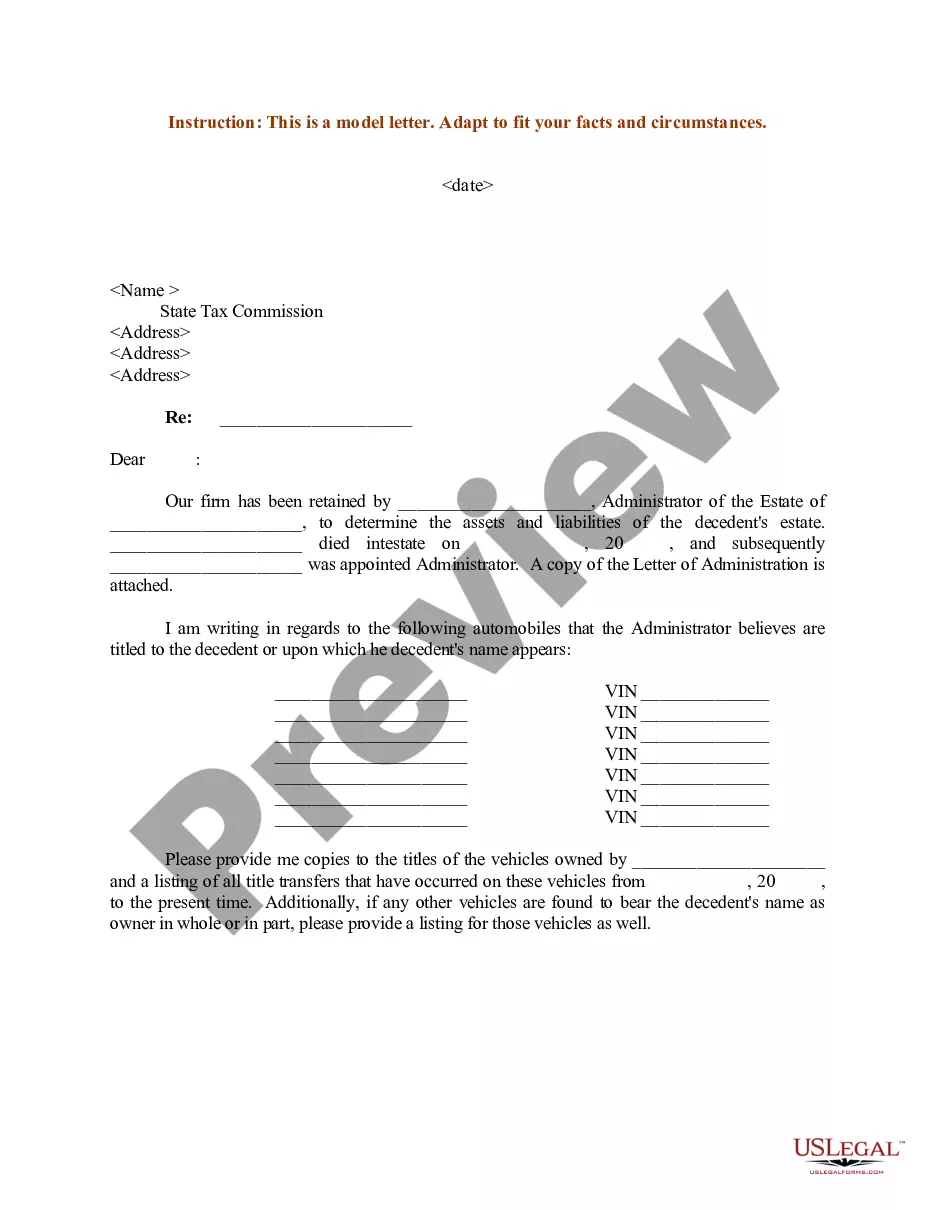
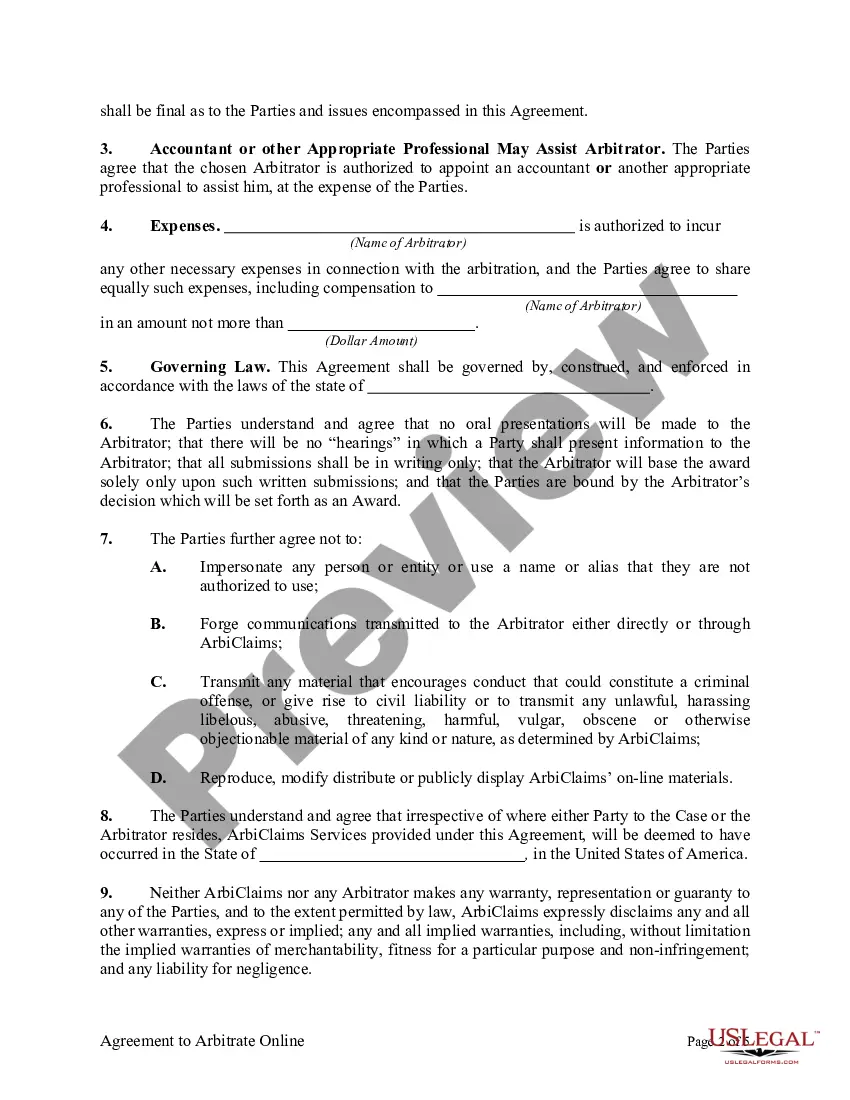
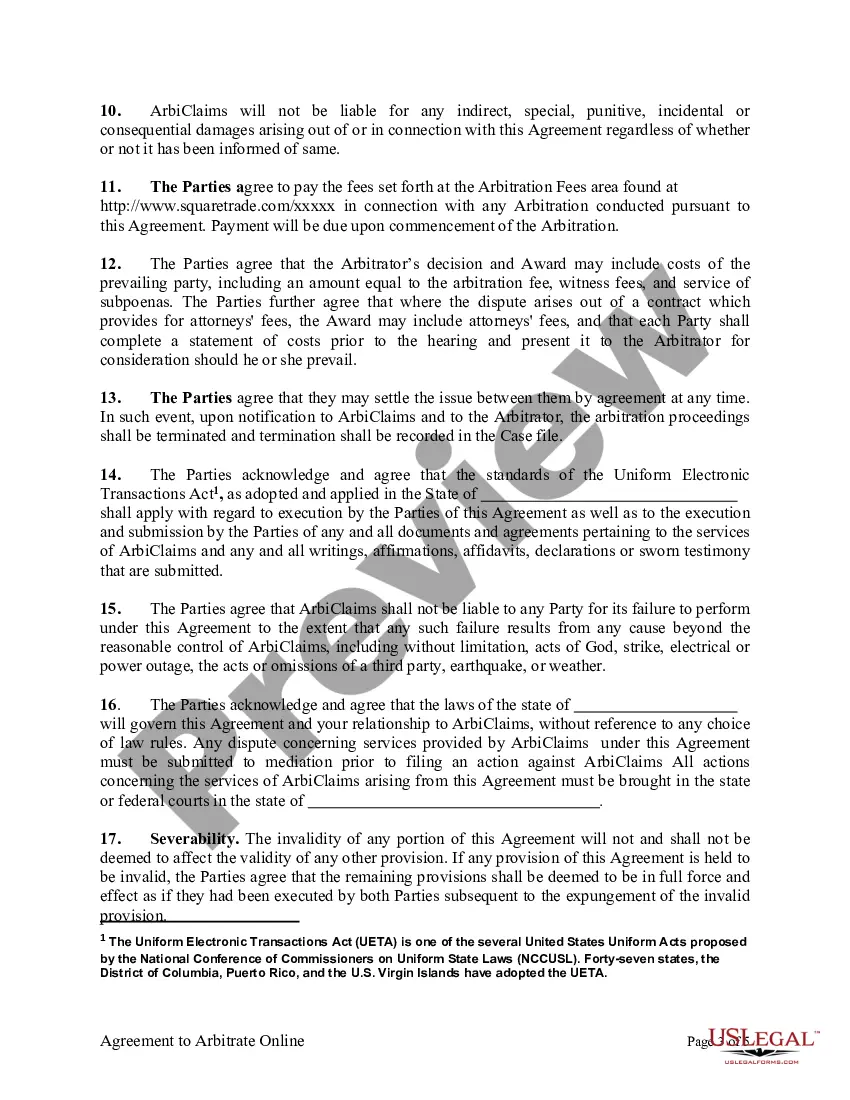
Arbitration Agreement For Car Purchase In Orange
Description





Get your form ready online
Our built-in tools help you complete, sign, share, and store your documents in one place.
Make edits, fill in missing information, and update formatting in US Legal Forms—just like you would in MS Word.
Download a copy, print it, send it by email, or mail it via USPS—whatever works best for your next step.
Sign and collect signatures with our SignNow integration. Send to multiple recipients, set reminders, and more. Go Premium to unlock E-Sign.
If this form requires notarization, complete it online through a secure video call—no need to meet a notary in person or wait for an appointment.
We protect your documents and personal data by following strict security and privacy standards.

Make edits, fill in missing information, and update formatting in US Legal Forms—just like you would in MS Word.

Download a copy, print it, send it by email, or mail it via USPS—whatever works best for your next step.

Sign and collect signatures with our SignNow integration. Send to multiple recipients, set reminders, and more. Go Premium to unlock E-Sign.

If this form requires notarization, complete it online through a secure video call—no need to meet a notary in person or wait for an appointment.

We protect your documents and personal data by following strict security and privacy standards.
Looking for another form?







Form popularity
FAQ
Opting out of arbitration agreements allows you to retain the right to take legal disputes to court, rather than being forced into private arbitration. Arbitration often limits rights such as participating in class-action lawsuits, appealing decisions, and having a public trial with a judge or jury.
Usually such agreements provide that you have no right to go outside the arbitration system and present your claims to the public courts. In forced arbitration situations, your job may depend on accepting such a provision: your only other choice is to not take the job.
Should you sign an arbitration agreement? If you agree to engage in a possible future arbitration voluntarily, mutually determine the ground rules of arbitration and agree to choose an impartial arbitrator together, you are likely to find arbitration to be not only inexpensive and fast but also fair.
Opting out of the arbitration agreement isn't damaging to you. You can always do arbitration if you would prefer that, although if you'd like to join class actions or sue the judge will throw out your case if you are still in this agreement.
The arbitrator's decision can give parties a realistic idea of the outcome of their case. If neither party appeals the decision, it will be binding, like an order by a judge. However, a party unhappy with the arbitrator's decision can request a new trial before a judge.
A claimant will typically start arbitration by sending a document known as a “request for arbitration” or a “notice to arbitrate” to its opponent.
Either Party to a contract in which there is an Arbitration clause can either himself or through an authorised agent may invoke Arbitration so as to refer the dispute to arbitration, as per provisions of the arbitration clause.
An arbitration should only be commenced when a dispute(s) has arisen between the parties.
If the arbitration is mandatory and binding, the parties waive their rights to use the court system and have a judge or jury decide the case. If the arbitrator's award is unfair or illogical, a consumer may well be stuck with it without a chance for recourse.