Principles Of Law Enforcement In Massachusetts

State:
Multi-State
Control #:
US-00105BG
Format:
Word
Instant download

Description

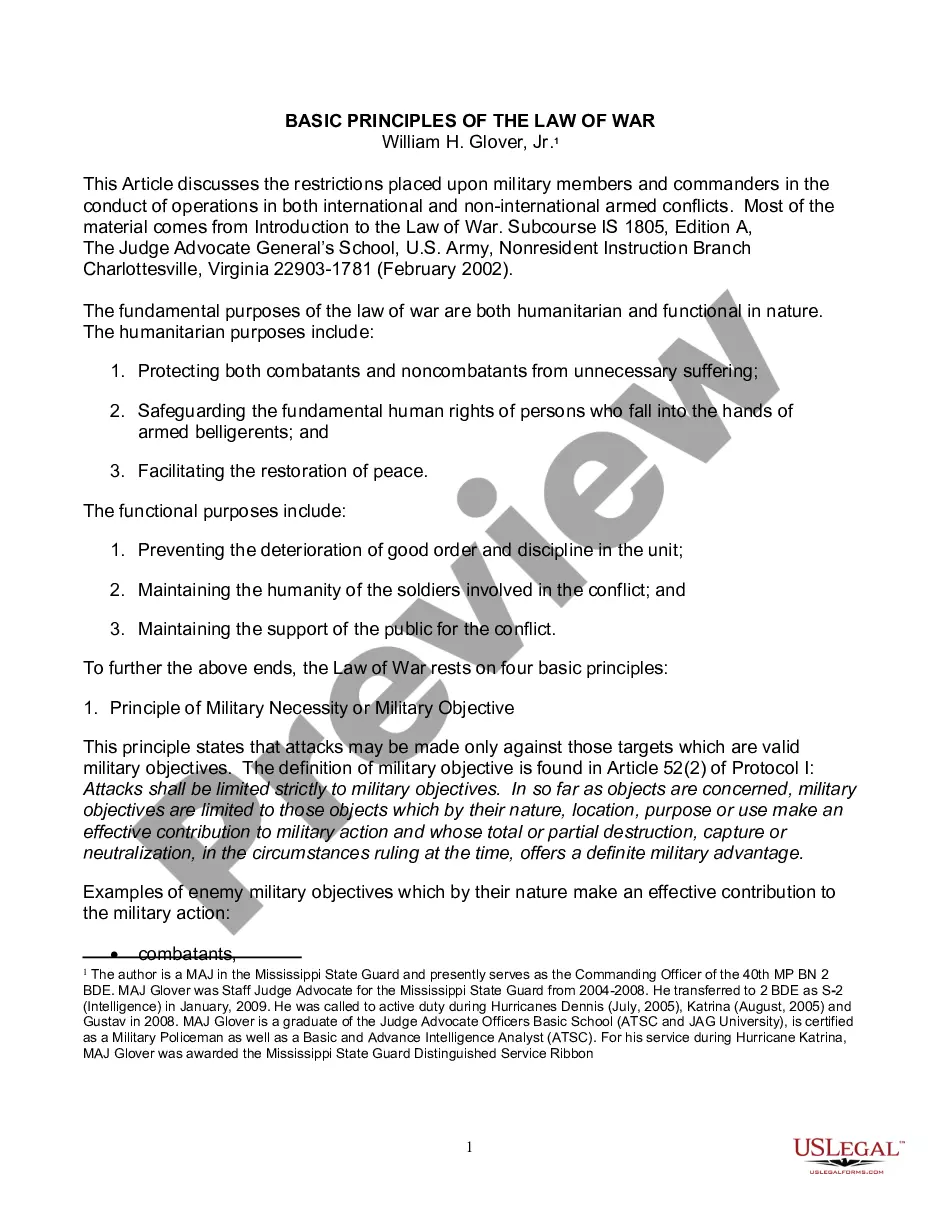
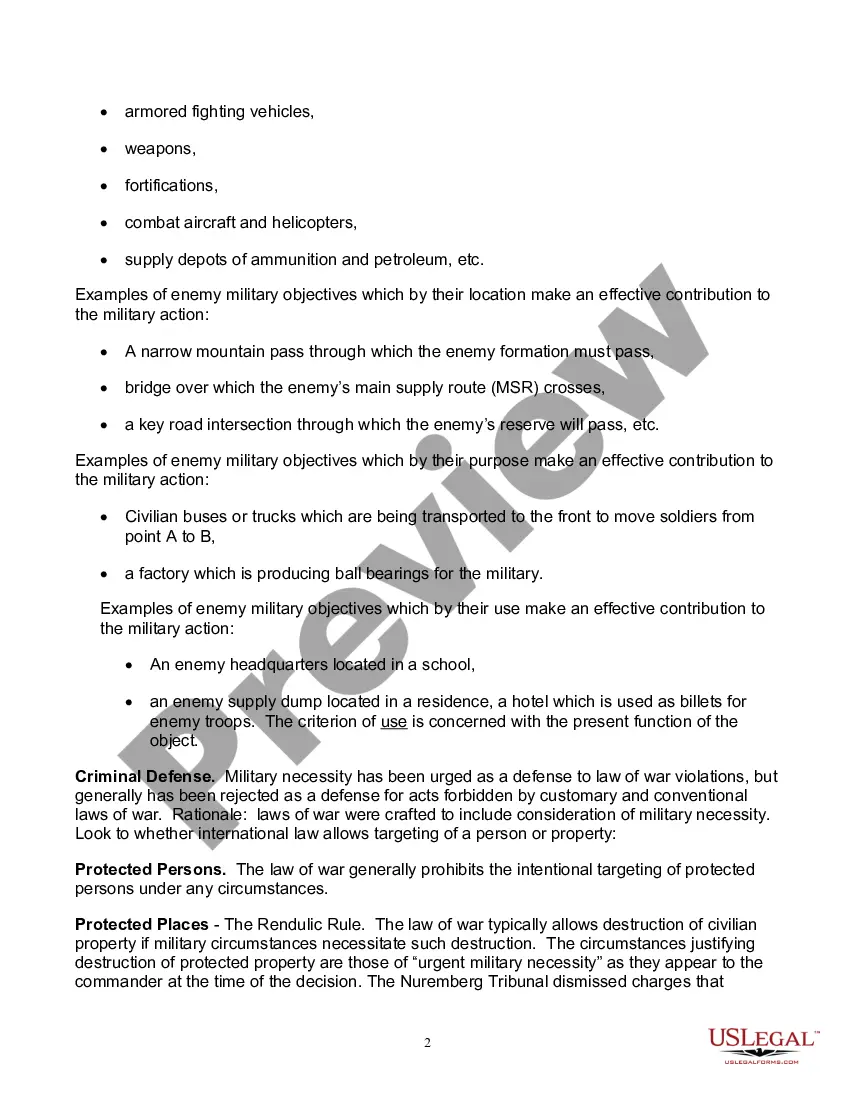
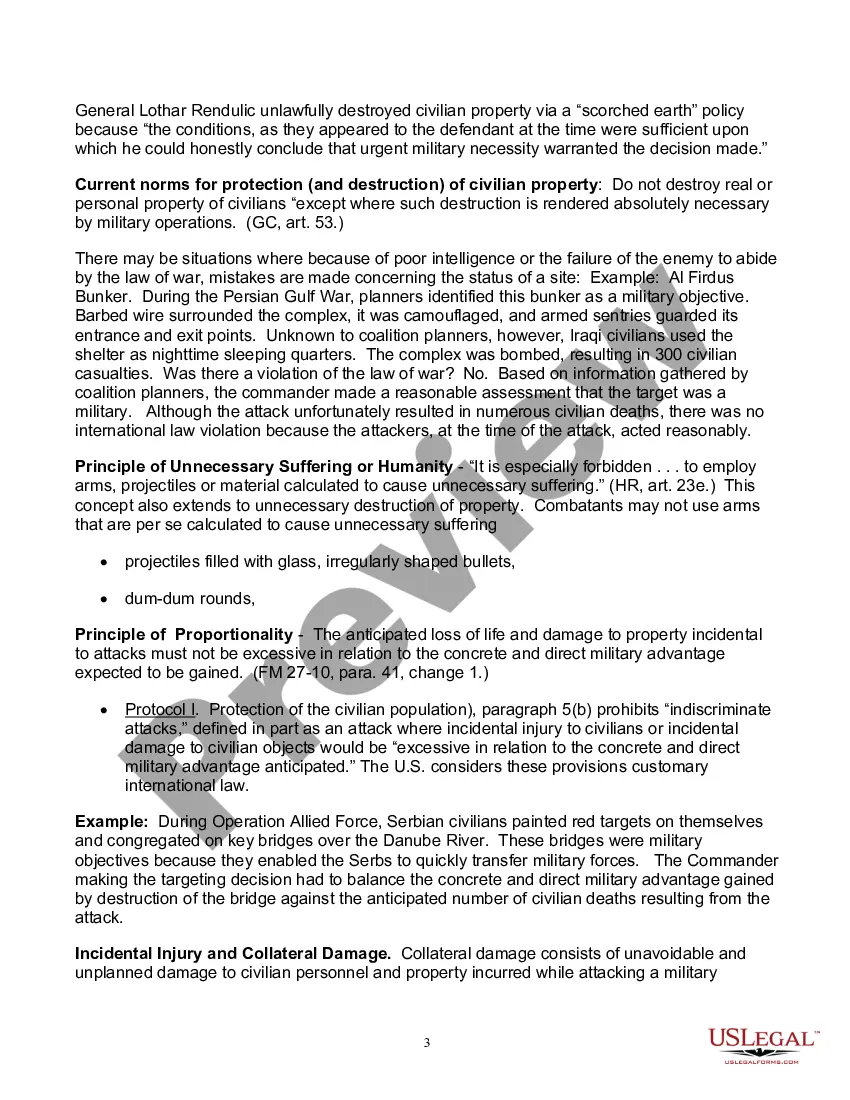
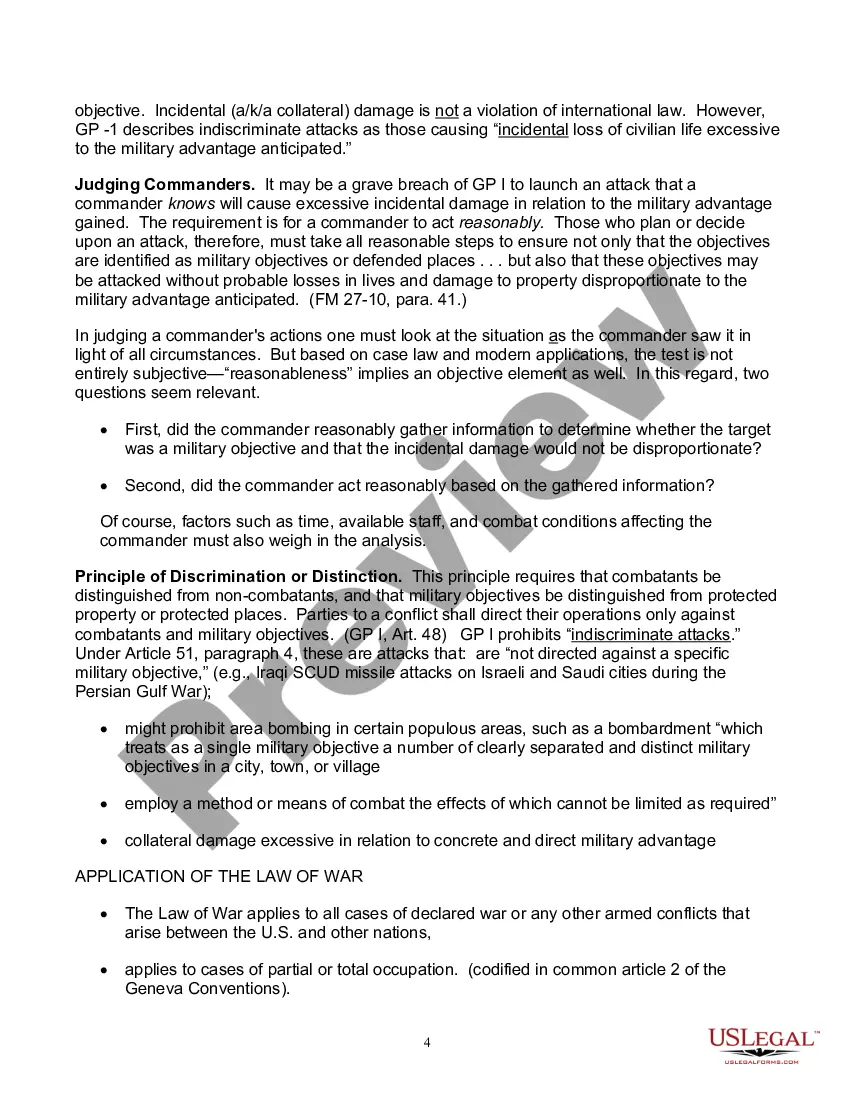
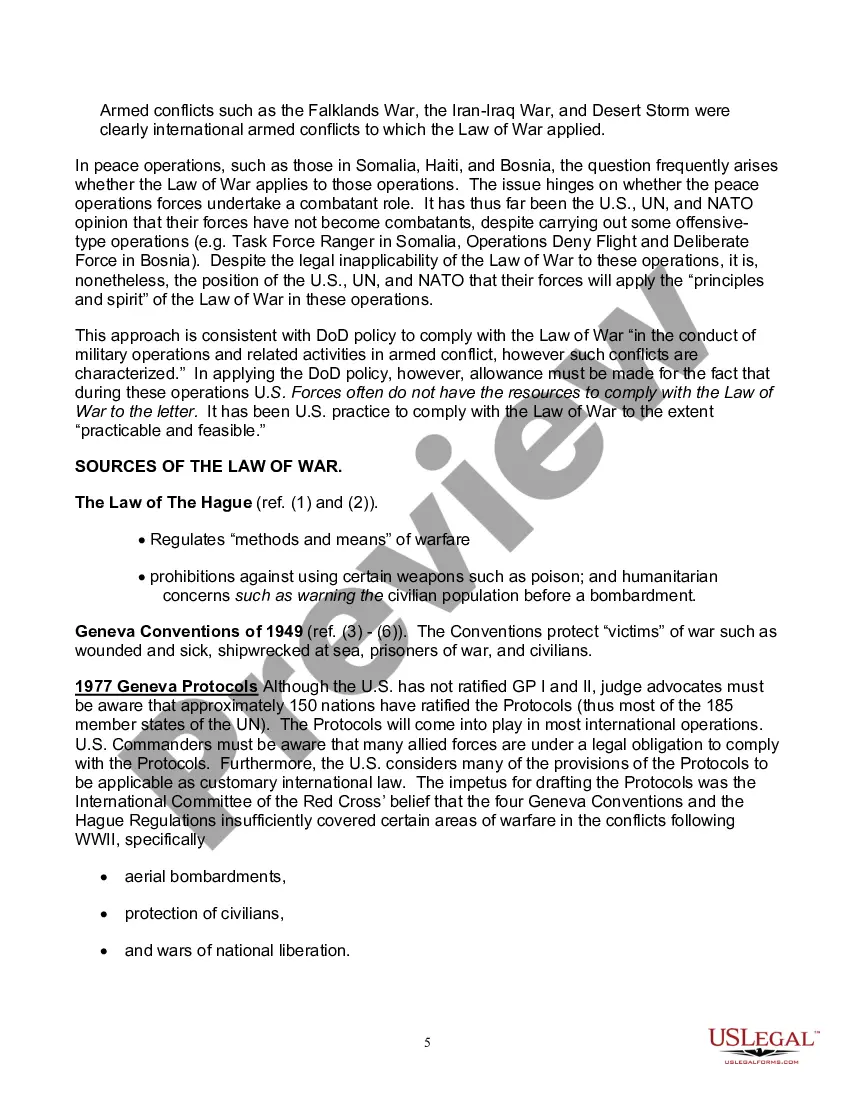
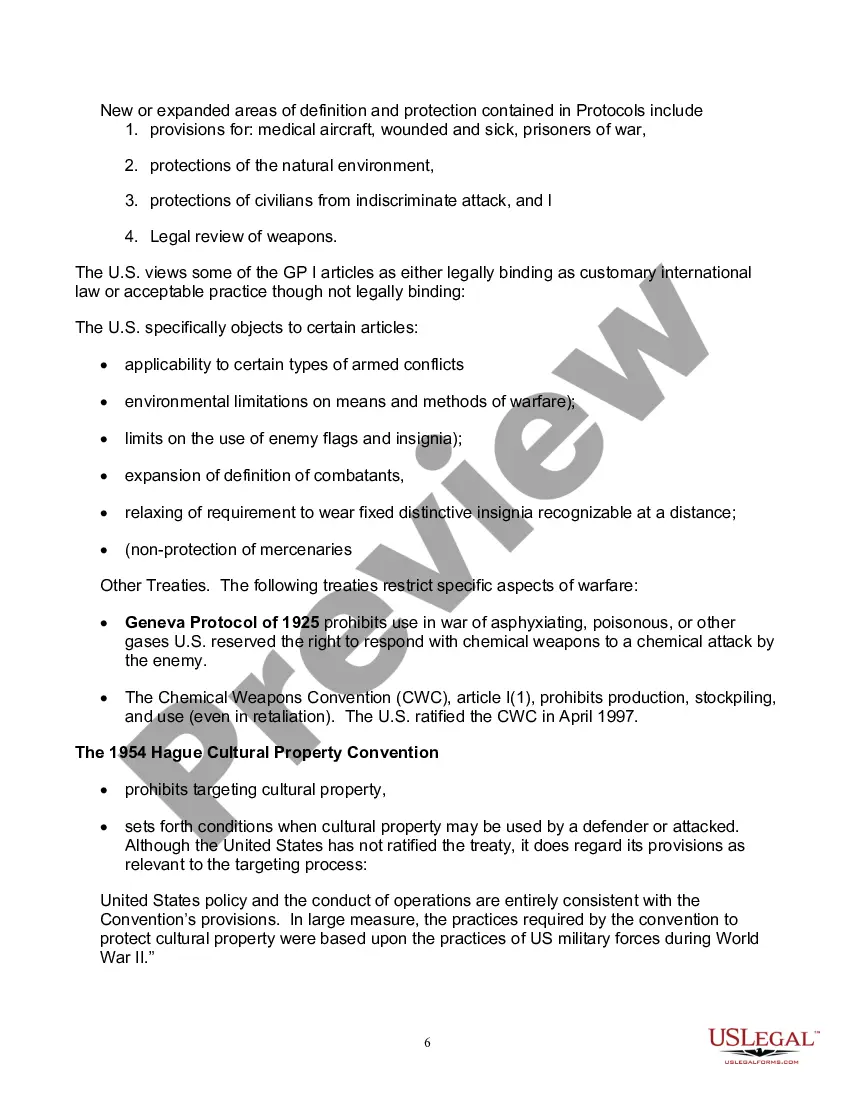
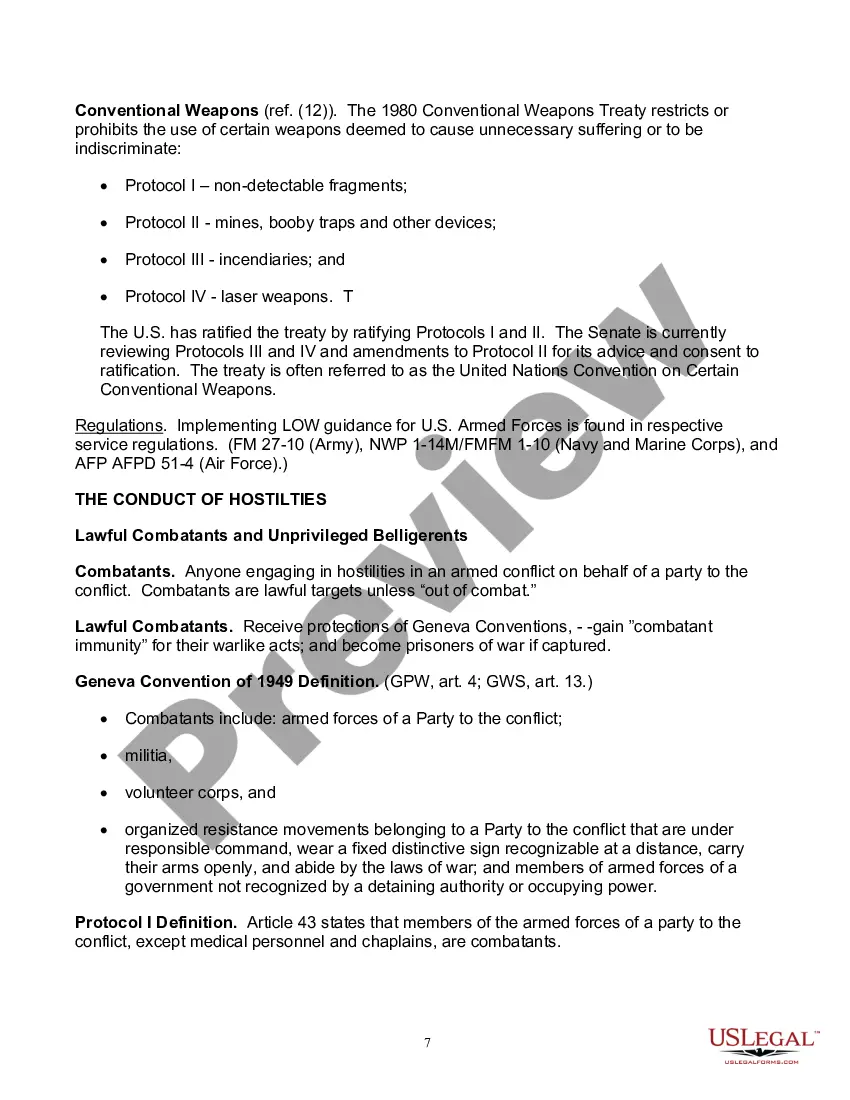
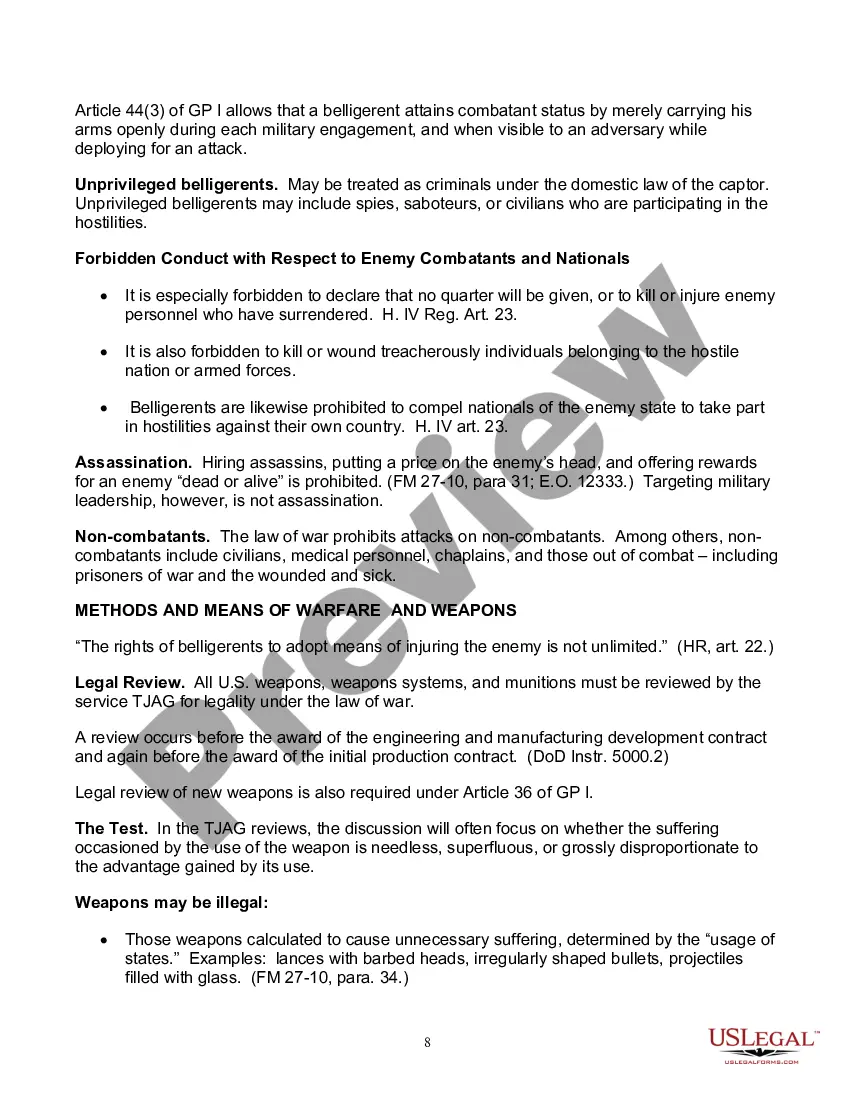
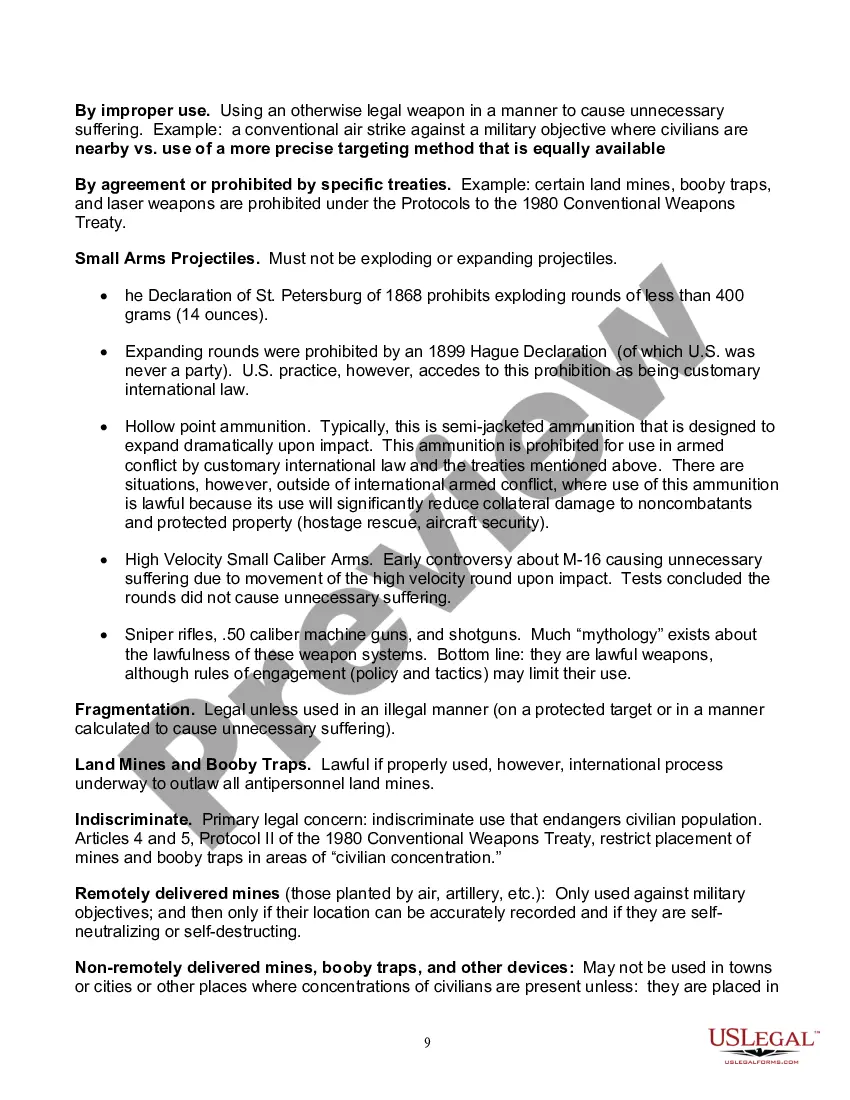
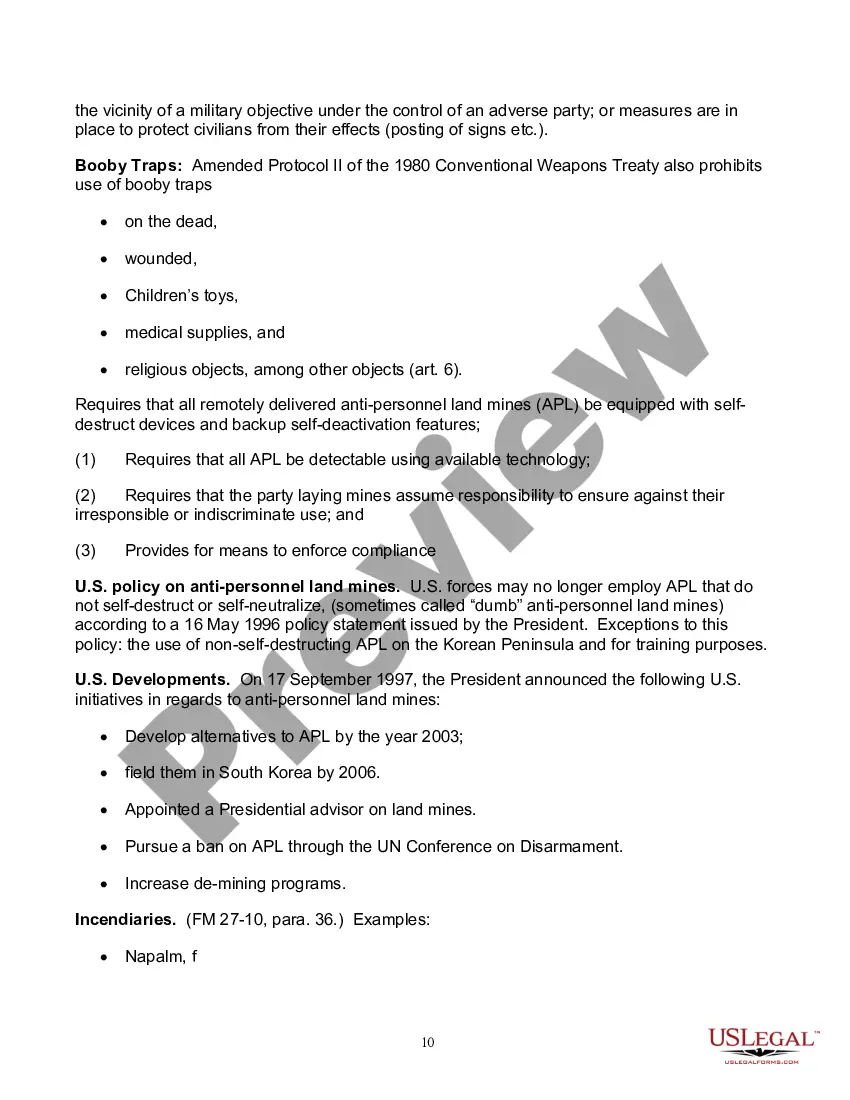
The document discusses the principles of law enforcement in Massachusetts, emphasizing the restrictions on military conduct during international and non-international conflicts. It highlights key humanitarian and functional purposes of the law of war, such as protecting combatants and non-combatants and maintaining public support for military actions. The document outlines four basic principles: military necessity, unnecessary suffering, proportionality, and discrimination. Each principle specifies guidelines for lawful military engagement and the treatment of both combatants and non-combatants. The principles are critical for ensuring compliance with international law during military operations. For legal professionals like attorneys, partners, owners, associates, paralegals, and legal assistants, this document serves as a valuable resource for understanding the legal frameworks that govern military conduct, aiding in case preparations and compliance assessments. It provides insights on legal responsibilities, reporting requirements, and methods for preventing violations, which are essential for effective legal practice within this context.
Free preview
  • Preview Basic Principles of The Law of War
  • Preview Basic Principles of The Law of War
  • Preview Basic Principles of The Law of War
  • Preview Basic Principles of The Law of War
  • Preview Basic Principles of The Law of War
  • Preview Basic Principles of The Law of War
  • Preview Basic Principles of The Law of War
  • Preview Basic Principles of The Law of War
  • Preview Basic Principles of The Law of War
  • Preview Basic Principles of The Law of War
  • Preview Basic Principles of The Law of War

Form popularity

FAQ

Basics of Brady prosecution to disclose to the defense any evidence that is “favorable to the accused” and “material” on the issue of guilt or punishment. Brady, 373 U.S. at 87.

It says officers should “prevent crime and disorder, as an alternative to their repression by military force and severity of legal punishment.”7 Although this principle was shaped within the context of history at the time it was written, it remains relevant.

The Brady decision ruled that the defense has the right to examine all evidence that may be of an exculpatory nature. The prosecution will not only release evidence that the defendant might be guilty of a crime but also release all evidence that might show that the defendant is innocent as well.

YOU Sign up to let us know you are with us! Share news of this effort online and through email. Send a text message and call your friends. Wear attire that "Backs the Badge!" Go out of your way to thank the Officers when you see them around town. SPEAK UP when people slam Law Enforcement.

How To Write a Law Enforcement Cover Letter Contact information and salutation. Introduction. Body paragraphs. Law enforcement skills and qualifications. Closing section. Highlight community engagement. Mention the department's reputation and core values. Quantify your law enforcement experience.

Trusted and secure by over 3 million people of the world’s leading companies

Principles Of Law Enforcement In Massachusetts