Email Resignation Letter Format To Hr In Philadelphia
Description

Get your form ready online
Our built-in tools help you complete, sign, share, and store your documents in one place.
Make edits, fill in missing information, and update formatting in US Legal Forms—just like you would in MS Word.
Download a copy, print it, send it by email, or mail it via USPS—whatever works best for your next step.
Sign and collect signatures with our SignNow integration. Send to multiple recipients, set reminders, and more. Go Premium to unlock E-Sign.
If this form requires notarization, complete it online through a secure video call—no need to meet a notary in person or wait for an appointment.
We protect your documents and personal data by following strict security and privacy standards.

Make edits, fill in missing information, and update formatting in US Legal Forms—just like you would in MS Word.

Download a copy, print it, send it by email, or mail it via USPS—whatever works best for your next step.

Sign and collect signatures with our SignNow integration. Send to multiple recipients, set reminders, and more. Go Premium to unlock E-Sign.

If this form requires notarization, complete it online through a secure video call—no need to meet a notary in person or wait for an appointment.

We protect your documents and personal data by following strict security and privacy standards.
Looking for another form?

Form popularity
FAQ
How to tell your boss you're resigning? Request an in-person meeting. Outline your reasons for leaving. Give an appropriate two weeks' notice. Offer to facilitate the transition. Express gratitude. Provide your formal letter of resignation.
Address the letter to your manager or HR representative. You can begin with their name, such as “Ms. Hernandez,” or include a polite salutation, such as “Dear” or “Hello” before addressing them.
Typically, you should submit your resignation letter to your direct manager. This allows them to acknowledge your decision and discuss the next steps. However, it's also a good practice to send a copy to HR, especially if your company has specific procedures for resignations.
Address the letter to your manager or HR representative. You can begin with their name, such as “Ms. Hernandez,” or include a polite salutation, such as “Dear” or “Hello” before addressing them.
Some essential resignation letter email content includes: Advising someone that you intend to leave and that you're starting the notice period from this date forward. Thanking the person or organization for your employment. Offering reasons why you're leaving (if you want to) Asking for a reference (if required)
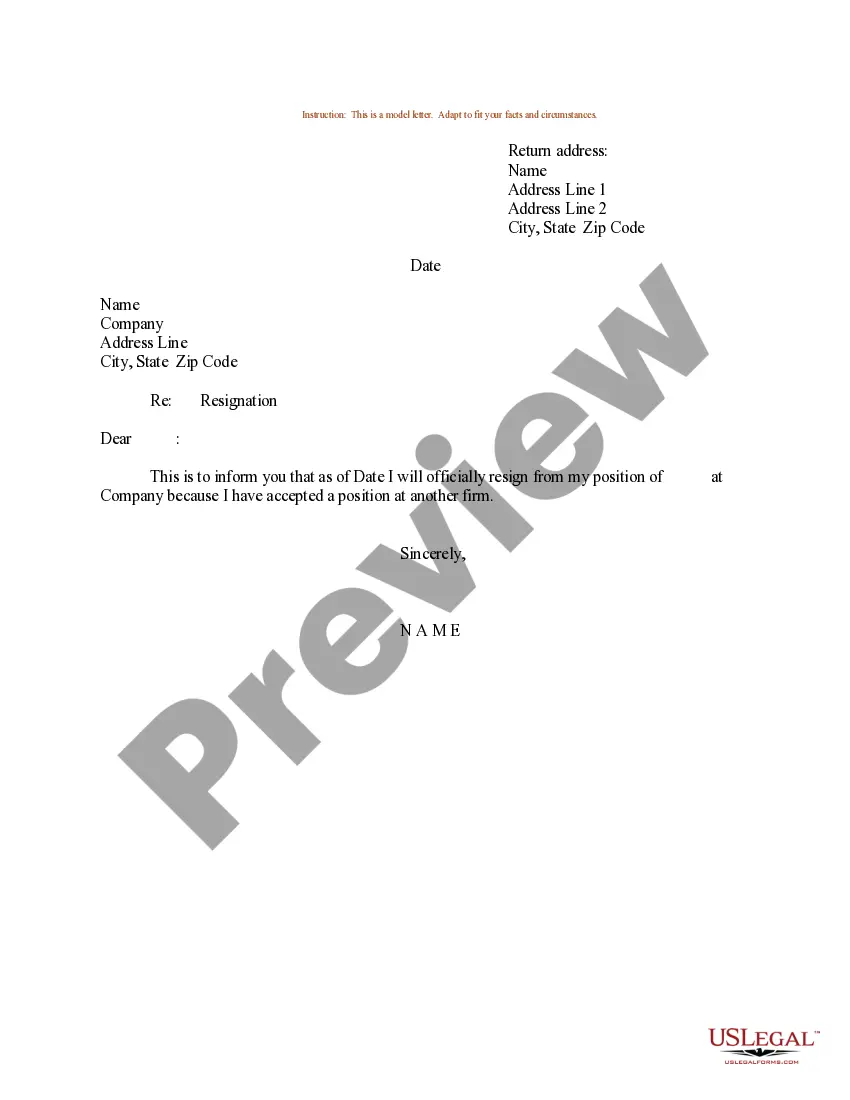
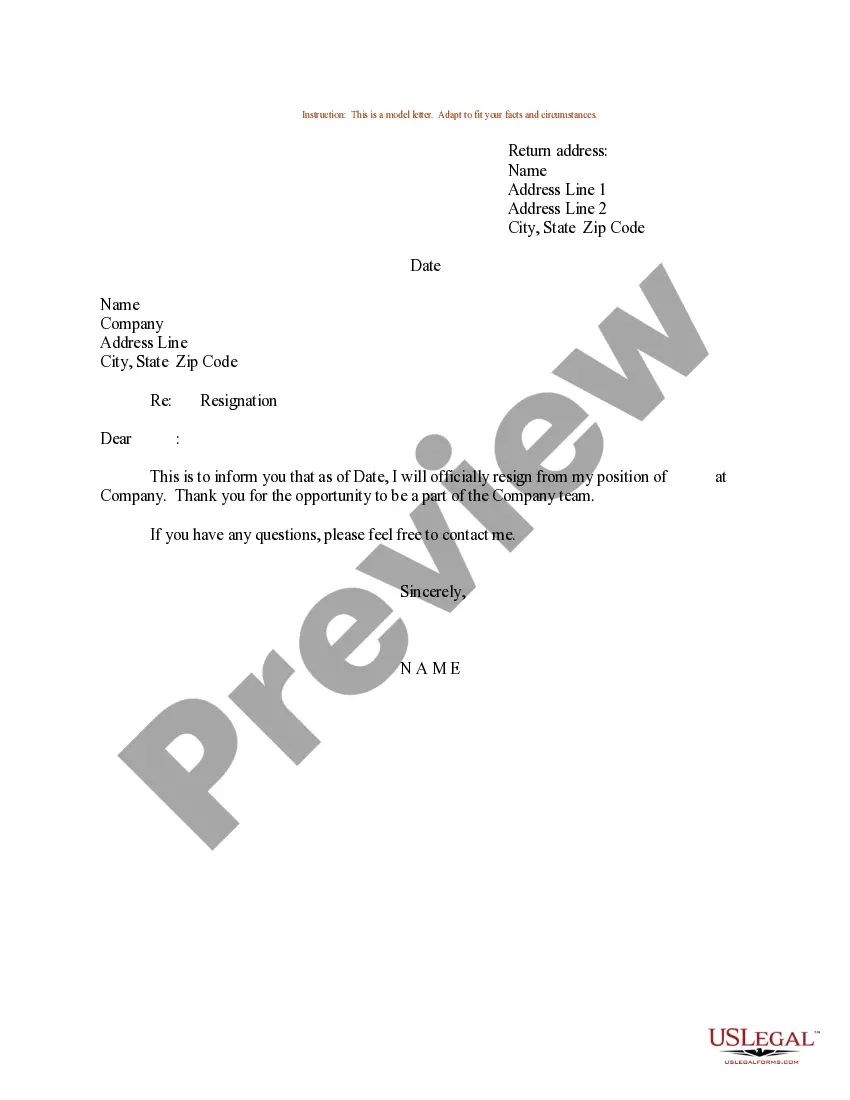
Dear (Manager's Name), I am writing to inform you of my decision to resign from (Company Name), effective (Date of Resignation). I understand that transitioning a new person to the role of (Your Position) will take some time, and I would like to provide as much notice as possible.
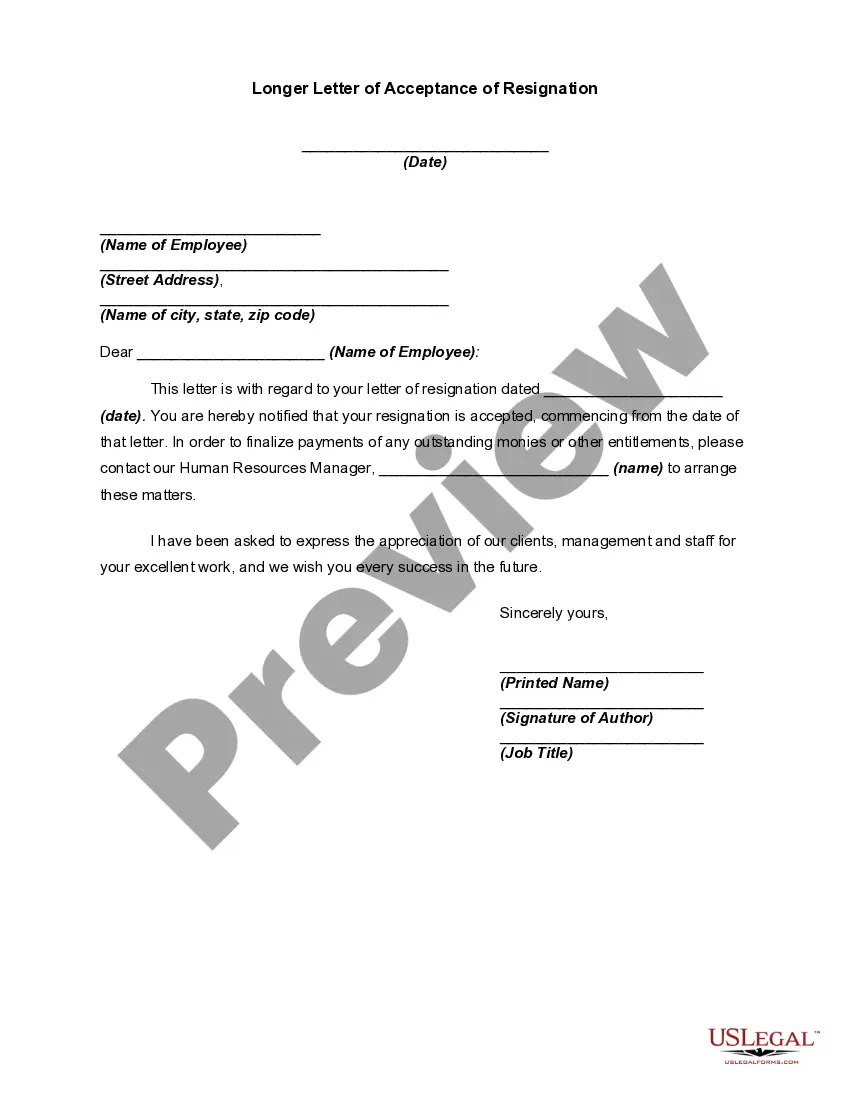
How to write a resignation acceptance letter Use the right formatting and structure. Include the date and contact information. Include a salutation. Accept the resignation. Include the final date of employment. Add other information. Express appreciation. Add a complimentary close.
How to write a resignation email Choose a direct and descriptive email subject. Address the recipient professionally. State your intention to resign clearly and concisely. Provide your last working day. Express gratitude. Offer assistance during the transition period. Close the email respectfully.
Resigning via email is generally considered less preferable than resigning in person, but it is not inherently rude in all situations. If your boss has a history of reacting aggressively or unprofessionally to resignations, resigning by email can be a reasonable choice to avoid potential confrontation or mistreatment.
What to include in a resignation email Resignation statement. In one or two sentences, state that you'll be resigning from your current position at the given company. The last day of employment. Reasoning, gratitude, or offering of help. Information that the full resignation letter is attached in a PDF format. Sign off.

