International Exclusive Distribution Agreement With Canada In Texas
Description


Form popularity
FAQ
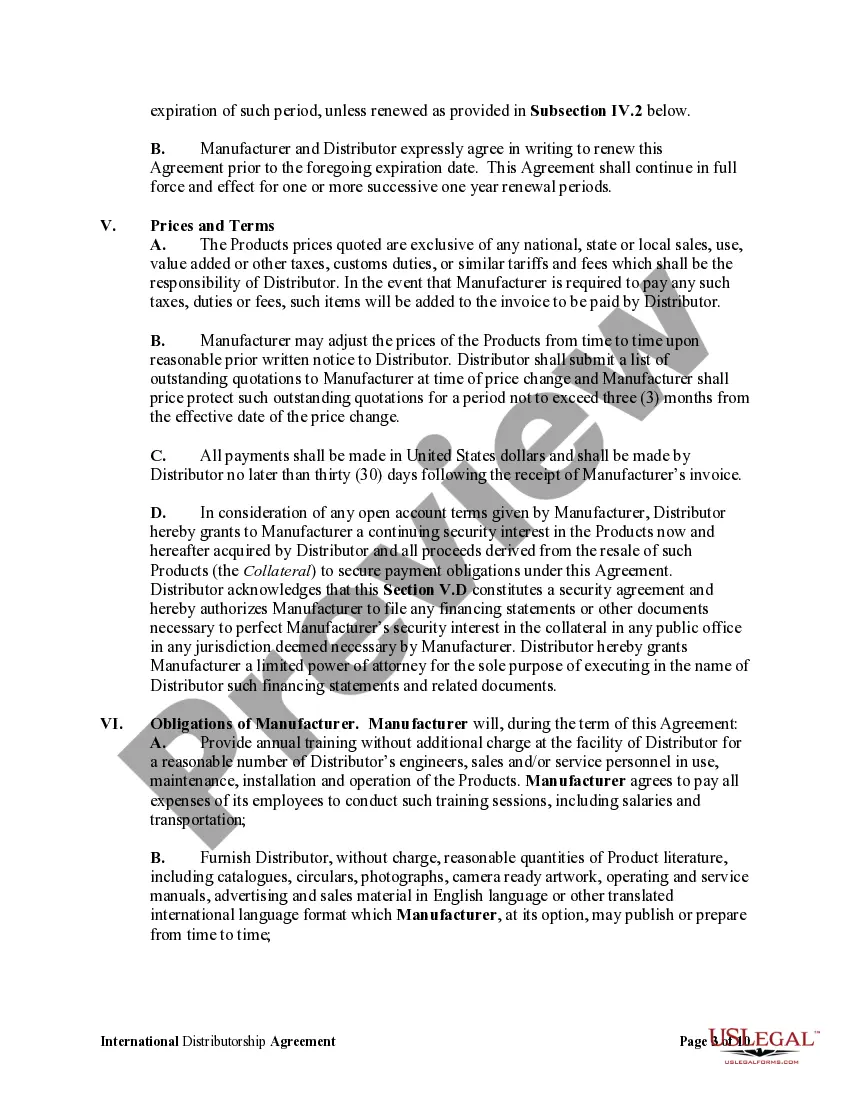
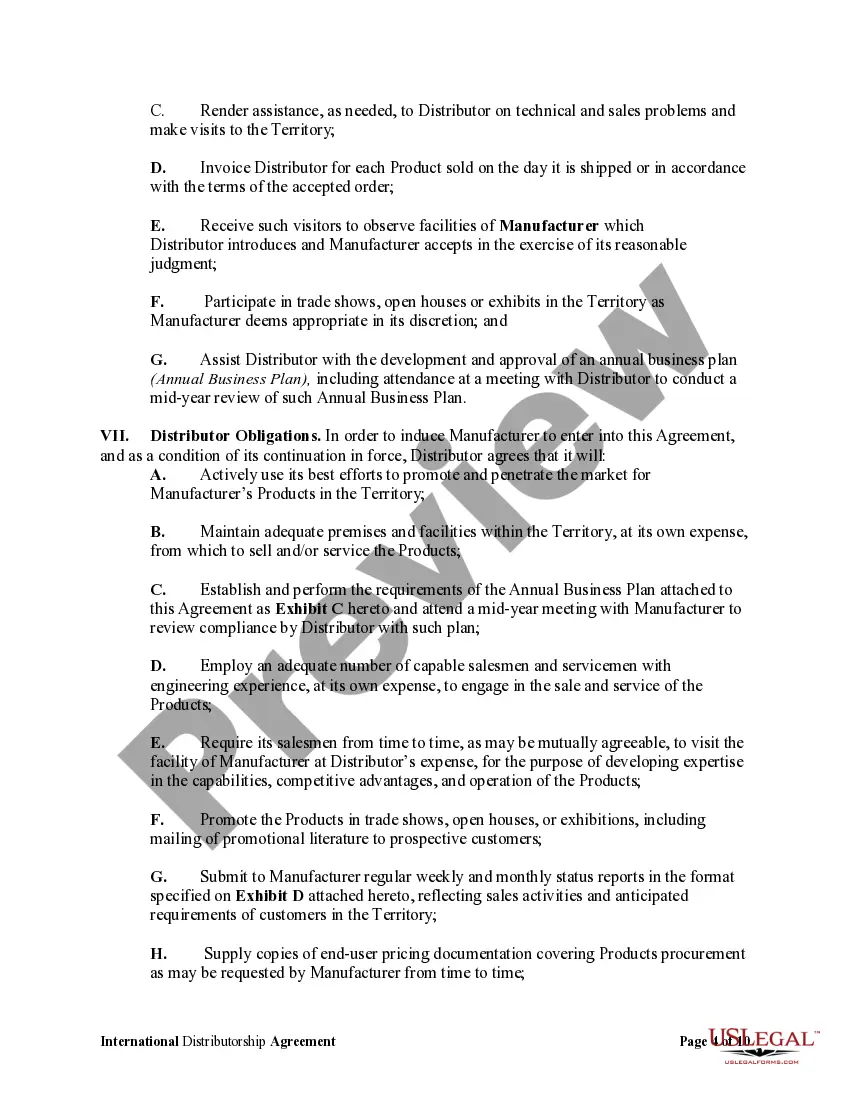
The international distribution contract is a framework agreement, which means that it establishes general obligations for each of the parties over a lengthy period and is supplemented by general conditions of sales which are often annexed to the contract in order to specify the products and/or services in question, ...
An example of a treaty that does have provisions for further binding agreements is the UN Charter. By signing and ratifying the Charter, countries agreed to be legally bound by resolutions passed by UN bodies such as the General Assembly and the Security Council.
An international distributor is not a sales representative. Instead, the international distributor purchases products and services from the US company and then resells them to customers in one or more foreign countries.
An international distribution agreement is a legal contract between two parties that authorizes one party to sell or distribute the other's products. This type of arrangement usually benefits both businesses because it makes the process more efficient and can help each company increase its customer base.
A distribution agreement is a powerful tool that defines the rules of engagement between suppliers and distributors. These agreements can not only streamline your distribution process but also shield your business from potential pitfalls.
Negotiating a Distributorship Agreement: Five Critical Steps to Success Execute a master agreement. Define the relevant goods subject to the agreement. Address all relevant intellectual property issues. Make sure renewal options and termination clauses allow the parties to adjust to changing market conditions.
The Company represents and warrants that no other person or entity has any rights to sell and promote the Company's products or services, including those products or services listed in Attachment A (the “Products”) hereto, within the Exclusive Territory in derogation of the rights granted to the Exclusive Distributor ...
The term for Distribution Agreements varies, with terms being anywhere from 5 to 15 years. I try to limit the term as much as possible—especially when there is no advance, or a meager one.
The CISG does not apply to distributorship agreements: Helen Kaminski Pty. Ltd. v. Marketing Australian Products, Inc.