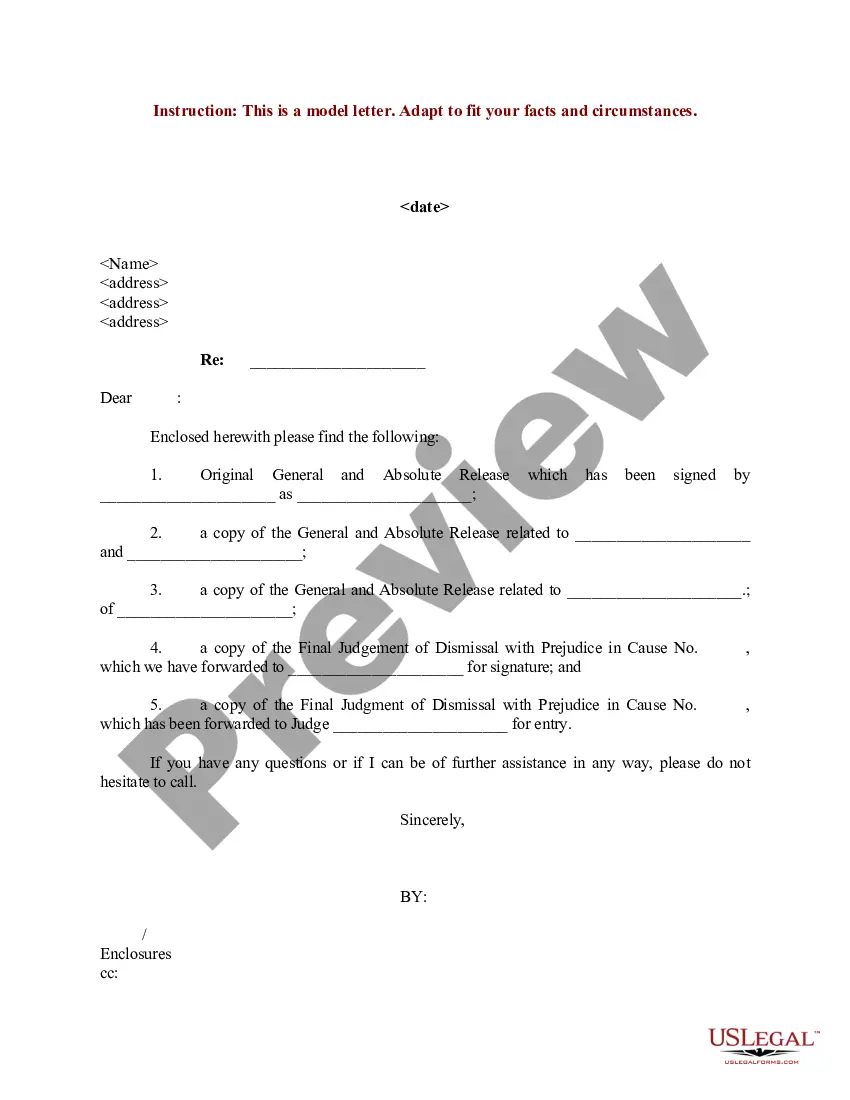
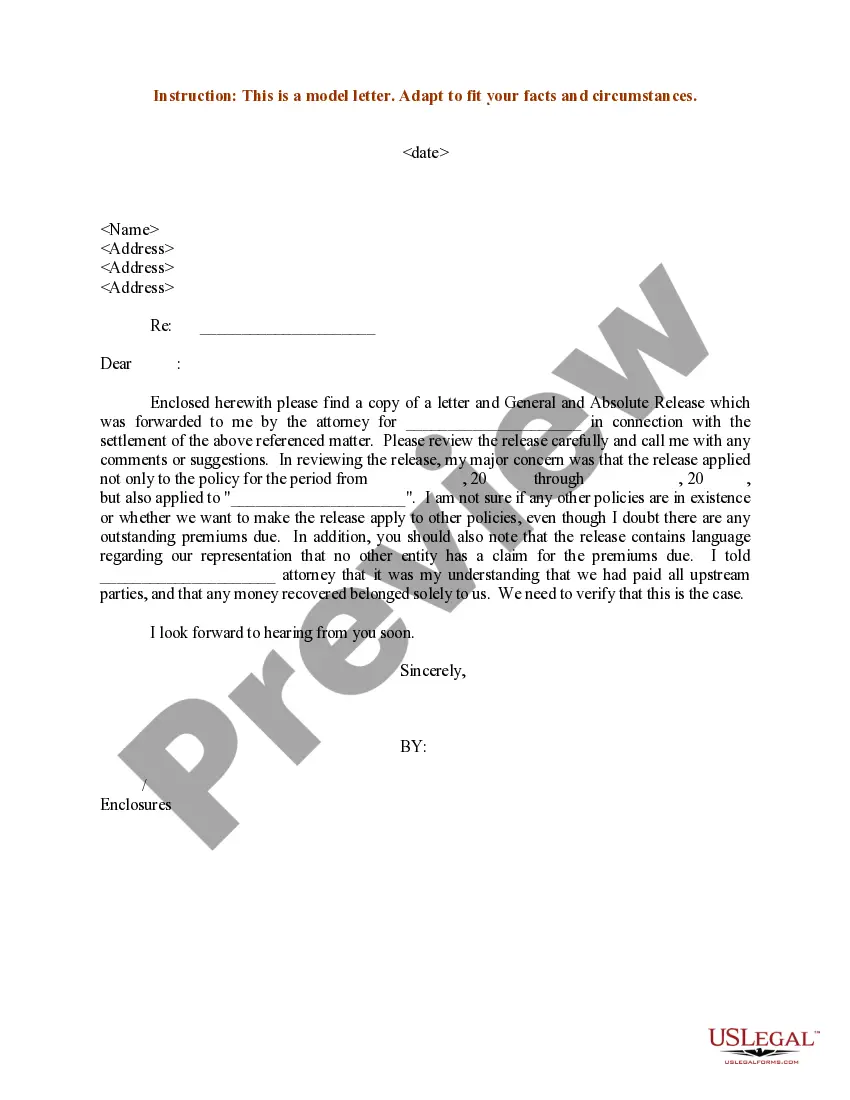
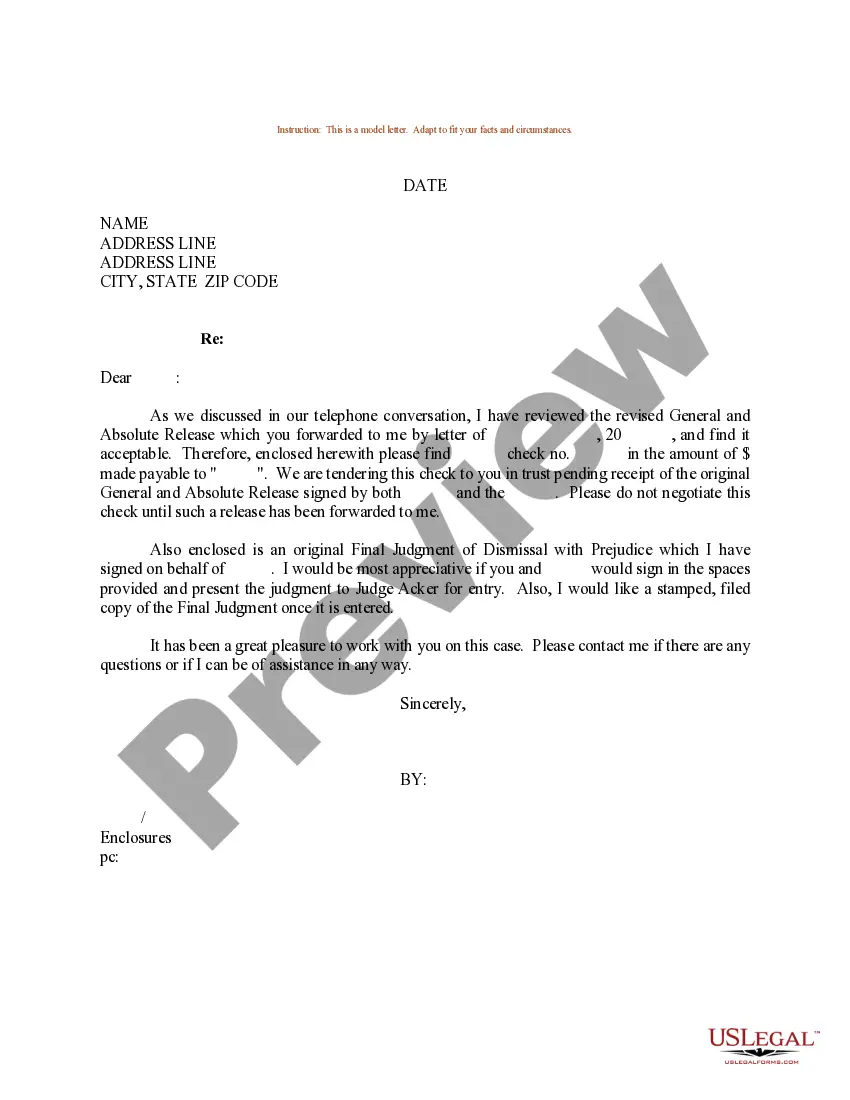
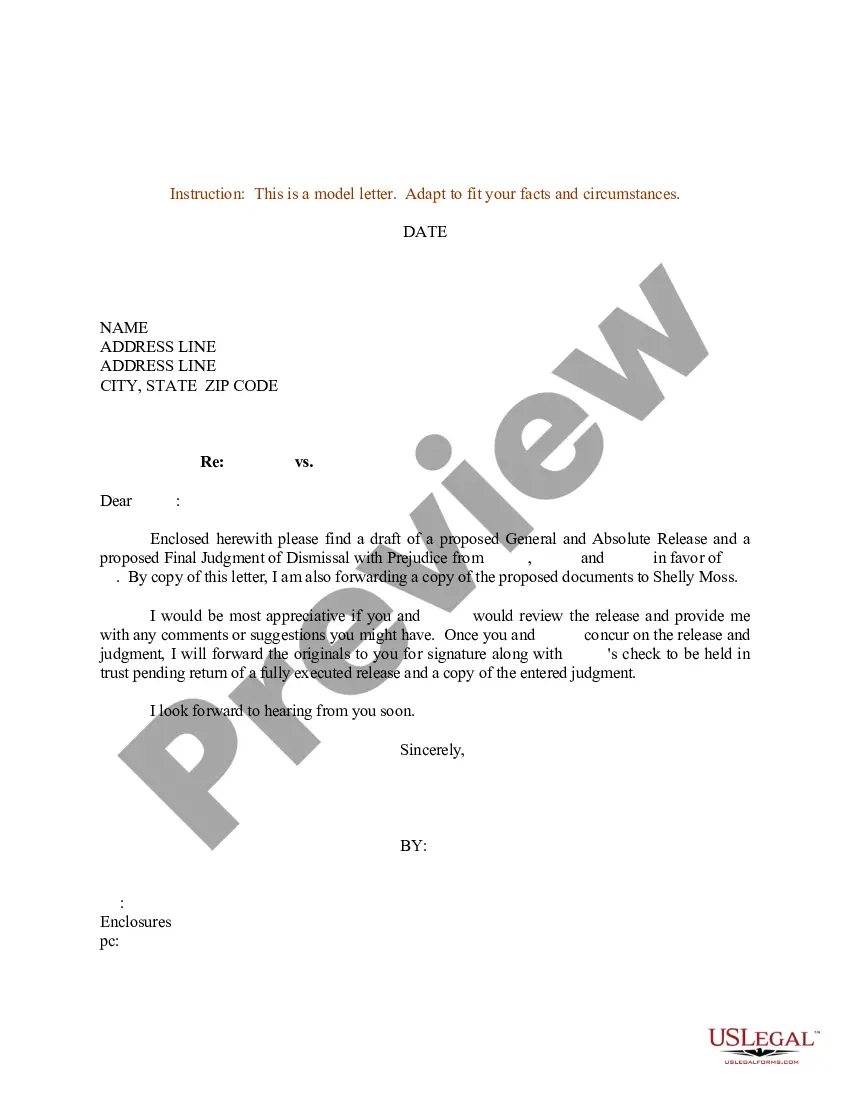
Release With Prejudice With Meaning In Cook
Description

Get your form ready online
Our built-in tools help you complete, sign, share, and store your documents in one place.
Make edits, fill in missing information, and update formatting in US Legal Forms—just like you would in MS Word.
Download a copy, print it, send it by email, or mail it via USPS—whatever works best for your next step.
Sign and collect signatures with our SignNow integration. Send to multiple recipients, set reminders, and more. Go Premium to unlock E-Sign.
If this form requires notarization, complete it online through a secure video call—no need to meet a notary in person or wait for an appointment.
We protect your documents and personal data by following strict security and privacy standards.

Make edits, fill in missing information, and update formatting in US Legal Forms—just like you would in MS Word.

Download a copy, print it, send it by email, or mail it via USPS—whatever works best for your next step.

Sign and collect signatures with our SignNow integration. Send to multiple recipients, set reminders, and more. Go Premium to unlock E-Sign.

If this form requires notarization, complete it online through a secure video call—no need to meet a notary in person or wait for an appointment.

We protect your documents and personal data by following strict security and privacy standards.
Looking for another form?


Form popularity
FAQ
You Can Appeal a Dismissal With Prejudice It is, in effect, a final judgment. However, that does not prevent you from appealing to a higher court. Indeed, a dismissal with prejudice is the time to file an appeal if you want to challenge the matter.
In the formal legal world, a court case that is dismissed with prejudice means that it is dismissed permanently. A case dismissed with prejudice is over and done with, once and for all, and can't be brought back to court.
In the formal legal world, a court case that is dismissed with prejudice means that it is dismissed permanently. A case dismissed with prejudice is over and done with, once and for all, and can't be brought back to court. A case dismissed without prejudice means the opposite.
In a court case, prejudice signals if the judge has made what's deemed to be a final decision on a case. “With prejudice” means the decision is final. “Without prejudice” means it's not final and subject to future inquiry.
Steps to File a Motion to Dismiss Review the Complaint Thoroughly. Carefully read the plaintiff's complaint to identify any legal deficiencies. Research Relevant Laws and Precedents. Draft the Motion. Include a Conclusion. File the Motion with the Court.
Without Prejudice Meaning In other words, if the party says something that might be considered an admission against their interests, they cannot be prejudiced by it if the parties later engage in litigation, arbitration, tribunal proceedings or another form of alternative dispute resolution.
. popularized in 1979 movie Apocalypse Now. Play on the term “terminate with prejudice” when an employee's employment is terminated, meaning “will not rehire employee to same position in future”… hence “terminate definitively, i.e., ”.
What does "with prejudice" or "without prejudice" mean? With prejudice means that you can't file a new civil case against this defendant about the same issues you put in the Complaint you filed. The dismissal is final. The case is over and done with.
The traditional meaning of 'without prejudice' it is to allow communications between parties without worrying that those communications, like letters or emails, will be used in court against the writer. However, it's a term often misused by lawyers. It should be used to preface settlement discussions.