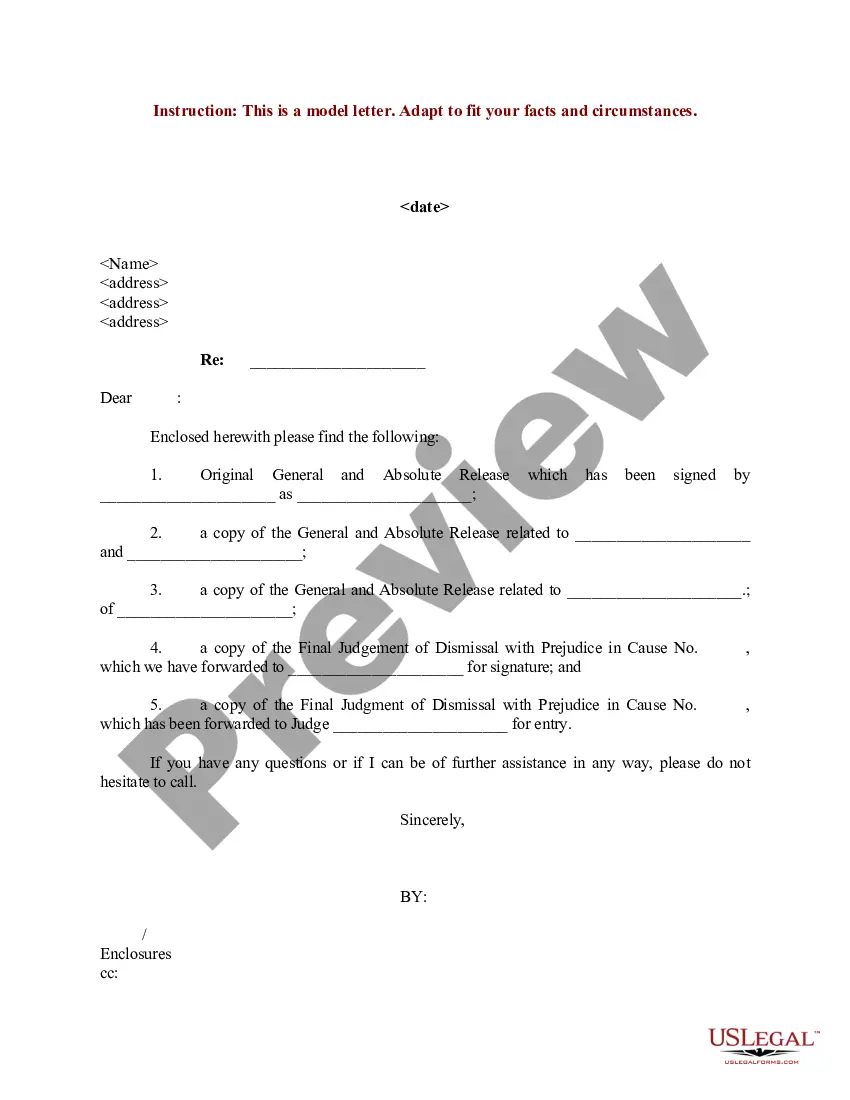
Release With Prejudice Without A Lawyer In Dallas
Description
Form popularity
FAQ
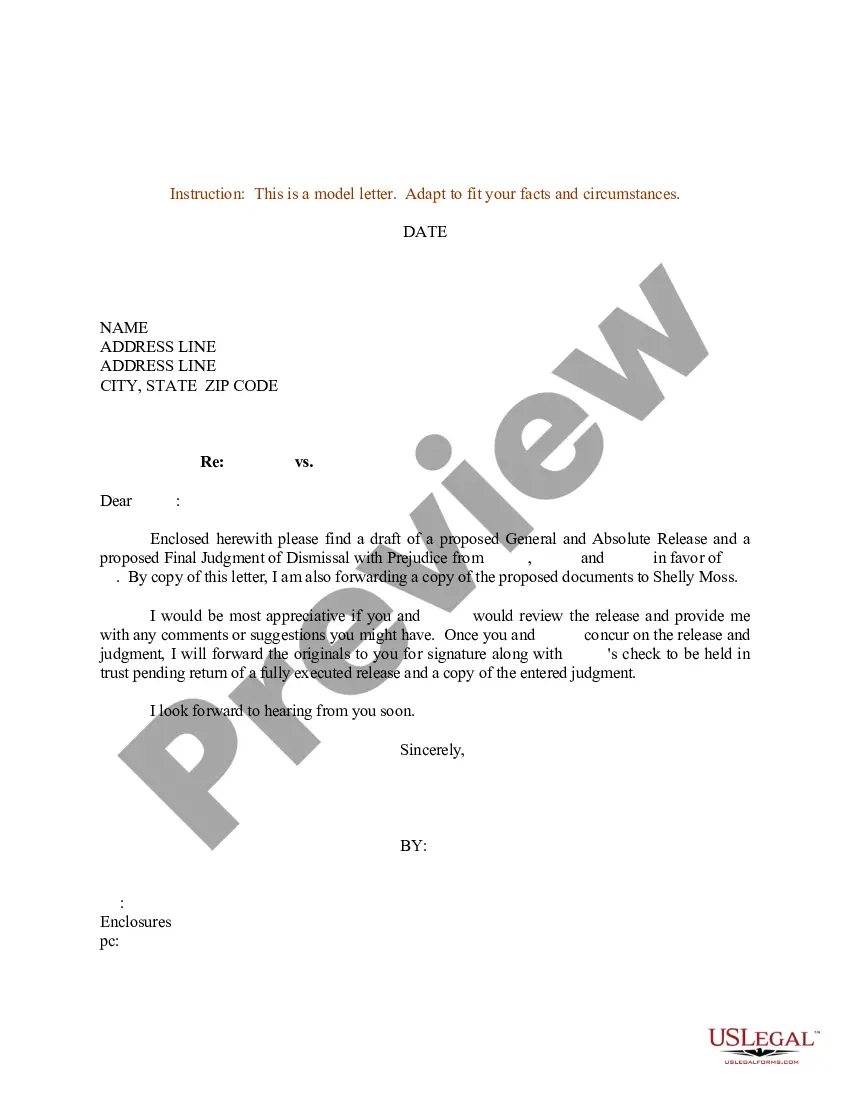
Whereas a case that is dismissed “with prejudice” is dismissed permanently, a case that is dismissed “without prejudice” is only dismissed temporarily. This temporary dismissal means that the plaintiff is allowed to re-file charges, alter the claim, or bring the case to another court.
Common Grounds for Filing a Motion to Dismiss. Lack of Subject Matter Jurisdiction. Lack of Personal Jurisdiction. Improper Venue. Insufficient Service of Process.
If you see a potential for a motion to dismiss, this is an opportunity to inform the client how much legal expertise is necessary for such a filing. In other words, they will be facing a daunting challenge trying to represent themselves and will likely need an attorney more than ever.
Steps to File a Motion to Dismiss Review the Complaint Thoroughly. Carefully read the plaintiff's complaint to identify any legal deficiencies. Research Relevant Laws and Precedents. Draft the Motion. Include a Conclusion. File the Motion with the Court.
If you want to file a motion, the process is generally something like this: You write your motion. You file your motion with the court clerk. The court clerk inserts the date and time your motion will be heard by the judge. You “serve” (mail) your motion to the other side.
Defendants may move to dismiss on the following grounds: Lack of subject matter jurisdiction (FRCP 12(b)(1)Opens in a new window). Lack of personal jurisdiction (FRCP 12(b)(2)Opens in a new window). Improper venue (FRCP 12(b)(3)Opens in a new window).
District Courts may dismiss with prejudice where the plaintiff acted irresponsibly or in bad faith, or where rehearing the claim would burden the court system.
Dismissal With Prejudice: This is a final judgment that prevents the plaintiff from bringing the same claim or cause of action against the same defendant in the future. It effectively closes the matter permanently.
Don't lie about anything, not even white small lies. If you are discovered to be lying, the judge may find it hard to believe you when you are telling the truth. Don't argue with the questioner. Don't ask questions back: “What would you do if…”