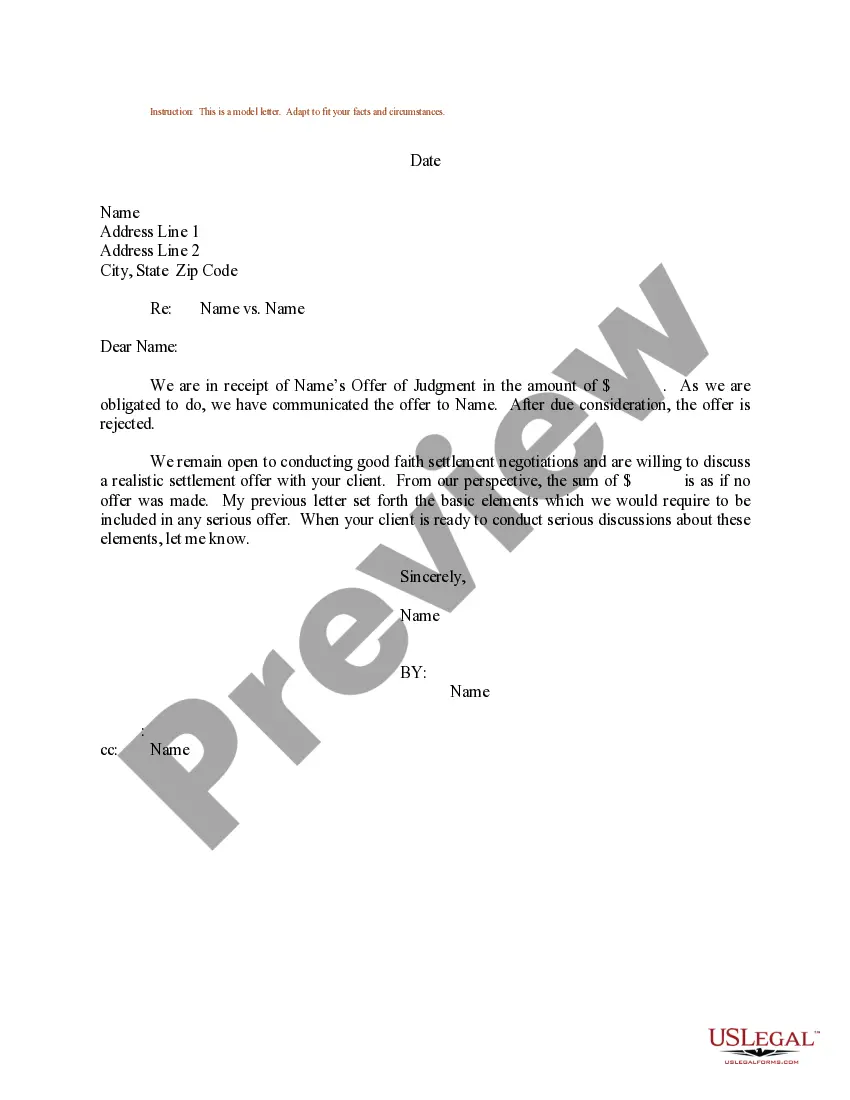
Settlement Offer Rejection Letter Sample For Attorney In Fairfax
Description



Form popularity
FAQ
For example, if a company offers you a low salary, you can say, "Thank you so much for the offer. If possible, I would like a week to read through the details before giving you my final answer."
Possible Legal Action: If negotiations don't yield a satisfactory offer, a lawsuit may become necessary, requiring additional time and resources. Risk of Lower Final Settlement: In some cases, litigation may lead to a settlement lower than the initial offer, depending on the court's decision.
Always respond to a low settlement offer in writing rather than over the phone or in person. Submitting a counteroffer in writing gives you a chance to provide more evidence to support your claim. If you haven't already hired a lawyer, do so before you respond to the low offer you received.
How Should I Respond to a Low Settlement Offer? Try to remain calm and examine the offer. After receiving a low settlement offer, the most important thing to do is to stay calm. Provide a formal, written response. Formulate your counteroffer. Settle after you've recovered.
Start by saying that you're very interested in the job, so your hesitancy isn't interpreted as lack of interest. Then politely mention that there's a gap between what they offered and what you were hoping for, and you'd like to understand how the employer arrived at their number.
Rather, ask why the adjuster has provided this extremely low figure. You should then write a formal letter of response in which you state that you don't find the initial low settlement offer acceptable, listing the reasons why and concluding with a demand for a higher settlement offer.
Provide specific reasons for your rejection, highlighting the damages and losses not covered by the proposed settlement. These reasons could include medical expenses, lost wages, property damage, pain and suffering, and other relevant costs.
If you are not happy with the settlement agreement, then there are a number of routes you can take. You can reject the agreement outright and make a claim to the employment tribunal. Such a claim would need to be made within 3 months (less one day) from the last day of your employment.
This letter should clearly state the reasons for rejecting the offer, such as it not providing maximum compensation for the damages incurred. Provide specific reasons for your rejection, highlighting the damages and losses not covered by the proposed settlement.

