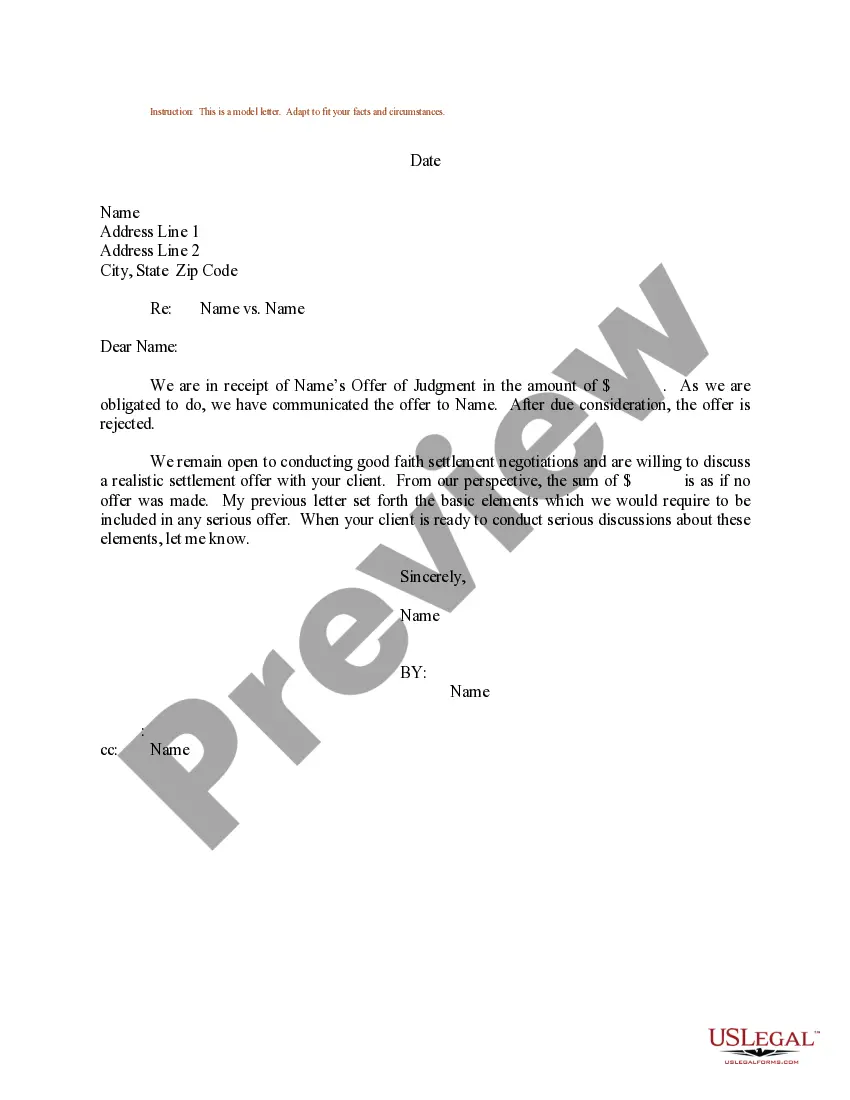
Settlement Offer Rejection Letter Sample With Notice Period In Oakland
Description


Get your form ready online
Our built-in tools help you complete, sign, share, and store your documents in one place.
Make edits, fill in missing information, and update formatting in US Legal Forms—just like you would in MS Word.
Download a copy, print it, send it by email, or mail it via USPS—whatever works best for your next step.
Sign and collect signatures with our SignNow integration. Send to multiple recipients, set reminders, and more. Go Premium to unlock E-Sign.
If this form requires notarization, complete it online through a secure video call—no need to meet a notary in person or wait for an appointment.
We protect your documents and personal data by following strict security and privacy standards.

Make edits, fill in missing information, and update formatting in US Legal Forms—just like you would in MS Word.

Download a copy, print it, send it by email, or mail it via USPS—whatever works best for your next step.

Sign and collect signatures with our SignNow integration. Send to multiple recipients, set reminders, and more. Go Premium to unlock E-Sign.

If this form requires notarization, complete it online through a secure video call—no need to meet a notary in person or wait for an appointment.

We protect your documents and personal data by following strict security and privacy standards.
Looking for another form?
Form popularity
FAQ
Treat the following as a set of general guidelines: Gather complete information before you start writing. Describe your injuries and medical treatment. List your medical expenses, lost wages, and non-economic damages. Make a settlement demand. Include a deadline for legal action if you want to, but don't bluff.
This letter should state: That you will not accept the initial settlement offer; The reasons why you feel you deserve a higher settlement amount; Each of their low-offer reasons, and your responses; The higher settlement amount that you will accept.
If, after you have thought about reasonableness and the policy limit, you still think the offer you have is too low, you can reject it. Always reject a settlement offer in writing. Type a letter to your contact at the insurance company listing the reasons you think that their offer is too low.
You can reject the first settlement offer to set the ground for settlement negotiations. A personal injury attorney can compile various sources of evidence to convince the insurer to a higher valuation of your losses. Your attorney can propose a counteroffer, a value likely to cover your losses.
If you find the offer unacceptable, your attorney can draft a formal letter and propose a counteroffer. This letter should clearly state that the initial offer is unacceptable and refute any inaccuracies in the insurance adjuster's statements.
I am writing in response to the settlement offer you presented on Settlement Offer Date, related to claim number Claim Number for the incident that occurred on Incident Date. After careful consideration, I must reject this offer as it does not meet my needs based on the severity and ongoing nature of my injuries.
Be sure you send your letter to the appropriate person, whether that be an insurance adjuster or an attorney. Make it clear that you are rejecting their initial offer and include your reasons for doing so. If they provided written reasons for their low initial figure, you should also respond to those in writing.
Your counter offer Clearly state the terms you would like to negotiate. Be specific about your desired changes and provide a persuasive justification for your counter offer. Use market research, industry standards, or your qualifications to support your request.
If you decide to reject the settlement offer, you'll need to do so in writing. Provide a clear explanation of why you are rejecting the offer and include any supporting evidence that backs up your position. Your written response should be professional and concise; any inflammatory language could weaken your case.

