Meeting Annual Consider For S Corp In Texas
Description


Get your form ready online
Our built-in tools help you complete, sign, share, and store your documents in one place.
Make edits, fill in missing information, and update formatting in US Legal Forms—just like you would in MS Word.
Download a copy, print it, send it by email, or mail it via USPS—whatever works best for your next step.
Sign and collect signatures with our SignNow integration. Send to multiple recipients, set reminders, and more. Go Premium to unlock E-Sign.
If this form requires notarization, complete it online through a secure video call—no need to meet a notary in person or wait for an appointment.
We protect your documents and personal data by following strict security and privacy standards.

Make edits, fill in missing information, and update formatting in US Legal Forms—just like you would in MS Word.

Download a copy, print it, send it by email, or mail it via USPS—whatever works best for your next step.

Sign and collect signatures with our SignNow integration. Send to multiple recipients, set reminders, and more. Go Premium to unlock E-Sign.

If this form requires notarization, complete it online through a secure video call—no need to meet a notary in person or wait for an appointment.

We protect your documents and personal data by following strict security and privacy standards.
Looking for another form?



Form popularity
FAQ
An S-corp annual report details an S-corporation's activities during the previous year. S-corporations and other companies must file an annual report each year on the state level, typically through the Secretary of State's office in their state.
S Corps are legally required to keep accurate and up-to-date meeting minutes to document their business activities. This is a legal requirement for all C corporations and S corporations in California. Several states don't require meeting minutes for corporations.
A corporation or LLC must file an S-Corp election within two months and 15 days (~75 days total) of the date of formation for the election to take effect in the first tax year. Example: Your articles of formation was filed on August 21st. Two months later is counted to the numerically corresponding day of October 21st.
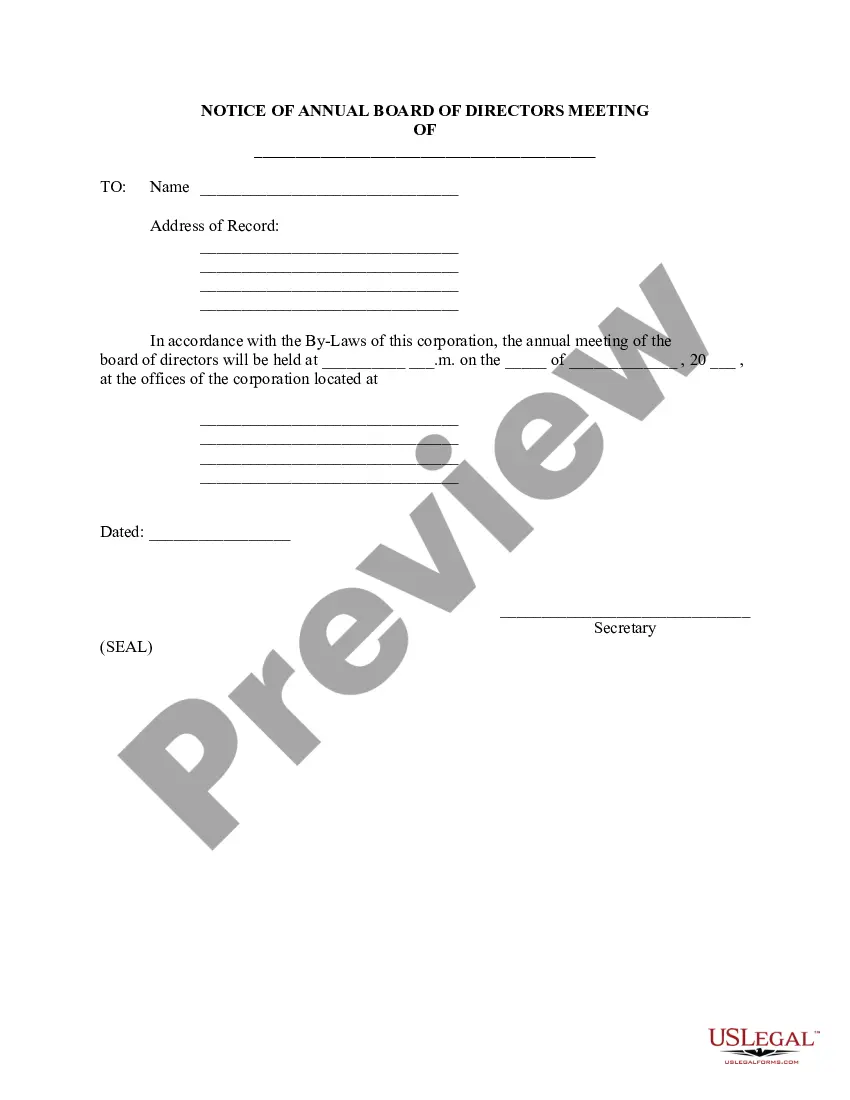
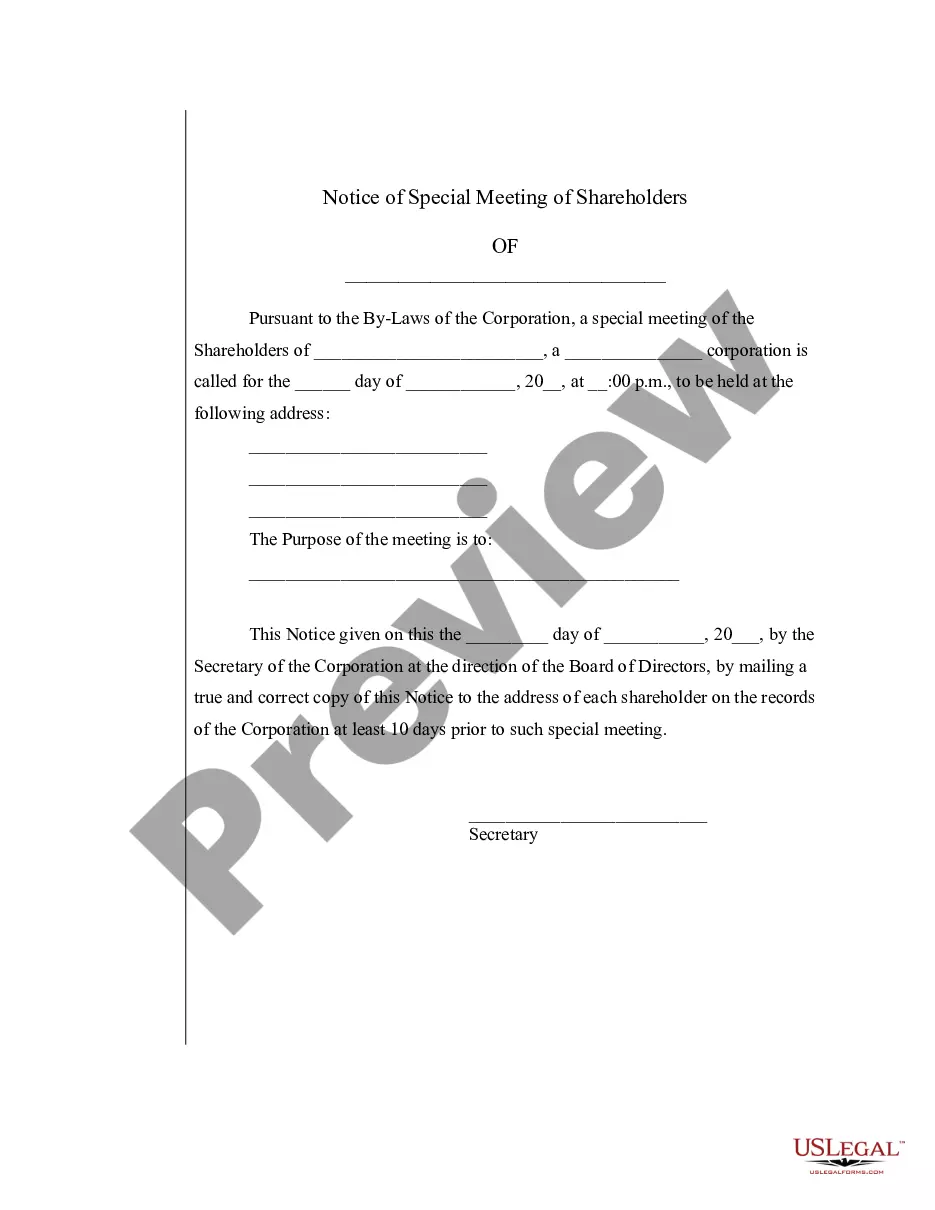
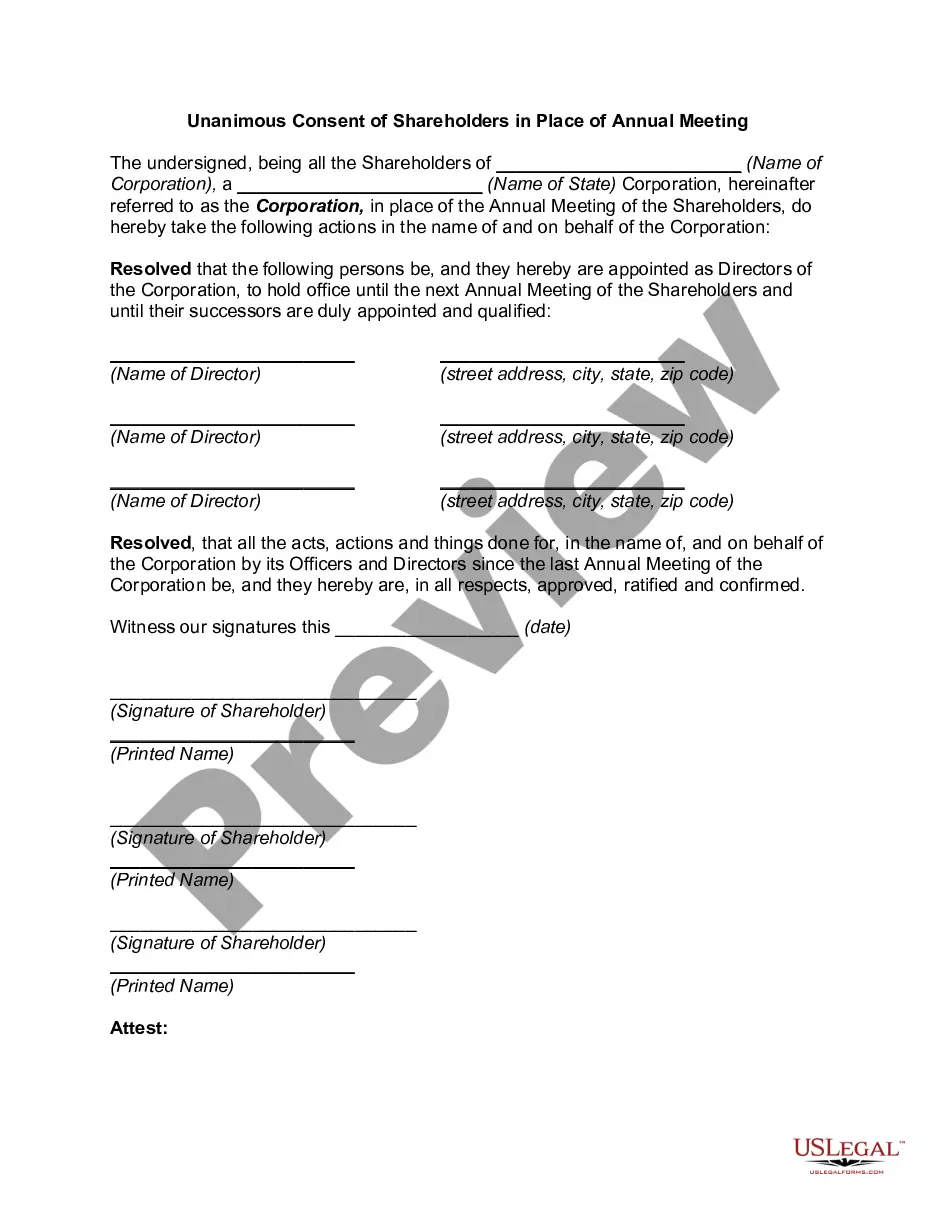
Both California Corporations and California S-Corps are required to hold an annual meeting for shareholders. These meetings are pivotal for fostering transparency, discussing business strategy, and making essential corporate decisions.
Both California Corporations and California S-Corps are required to hold an annual meeting for shareholders. These meetings are pivotal for fostering transparency, discussing business strategy, and making essential corporate decisions.
To qualify for S corp status, you'll need to meet these IRS requirements: Be a domestic corporation. Have only allowable shareholders (like individuals, certain trusts, and estates) Stay under the 100 shareholder limit.
Here is Your 'To-Do-List' of 7 things to be Aware of if You Want to PROPERLY Maintain Your S-Corporation: Corporate Documents. Annual Minutes and Board Meetings. Annual State Secretary of State Filings. Regular Operations and 'Using the Name' ... Quarterly Payroll. Tax Return Filing. State Tax Filing Requirements.
An S-corp annual report details an S-corporation's activities during the previous year. S-corporations and other companies must file an annual report each year on the state level, typically through the Secretary of State's office in their state.
S Corps that lose their “S” status must typically wait five years before being able to re-elect it.
Both California Corporations and California S-Corps are required to hold an annual meeting for shareholders. These meetings are pivotal for fostering transparency, discussing business strategy, and making essential corporate decisions.

