Corporation First Meeting For Friend In Bexar
Description
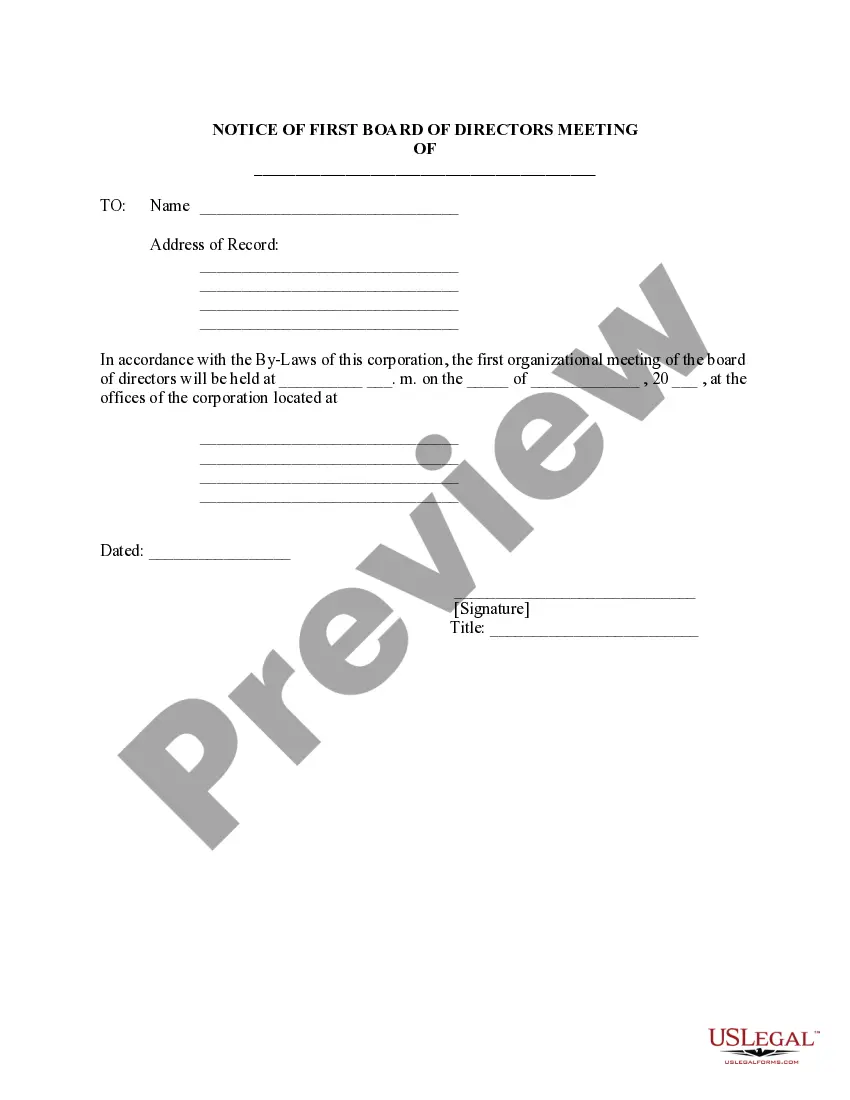


Get your form ready online
Our built-in tools help you complete, sign, share, and store your documents in one place.
Make edits, fill in missing information, and update formatting in US Legal Forms—just like you would in MS Word.
Download a copy, print it, send it by email, or mail it via USPS—whatever works best for your next step.
Sign and collect signatures with our SignNow integration. Send to multiple recipients, set reminders, and more. Go Premium to unlock E-Sign.
If this form requires notarization, complete it online through a secure video call—no need to meet a notary in person or wait for an appointment.
We protect your documents and personal data by following strict security and privacy standards.

Make edits, fill in missing information, and update formatting in US Legal Forms—just like you would in MS Word.

Download a copy, print it, send it by email, or mail it via USPS—whatever works best for your next step.

Sign and collect signatures with our SignNow integration. Send to multiple recipients, set reminders, and more. Go Premium to unlock E-Sign.

If this form requires notarization, complete it online through a secure video call—no need to meet a notary in person or wait for an appointment.

We protect your documents and personal data by following strict security and privacy standards.
Looking for another form?
Form popularity
FAQ
What to Include in the Minutes of Board Meetings Name of all directors present and absent. Time, date, and venue of the meeting. Name of other personalities present. Name of the Chairman of the meeting. Agenda of the meetings. Matters discussed and each director's suggestions.
What should board of directors first meeting minutes include? Your corporation's first directors meeting typically focuses on initial organizational tasks, including electing officers, setting their salaries, resolving to open a bank account, and ratifying bylaws and actions of the incorporators.
How Great Meeting Participants Show Up – The Do's & Don'ts of Effective Participant Etiquette Come Prepared. Be Punctual. Active Listening. Effective Communication. Engage in the Discussion. Respect Others' Perspectives. Stay on Topic. Take Responsibility:
Meeting Participation Category #1: Prepare Understand the Official Agenda. First, understand the official agenda. Understand Your Agenda. Listen. Ask Questions. Disagree. Be a Connector. Be a Communicator. Be a Closer.
Here are six steps to prepare yourself for a business meeting: Know the type of meeting you are going to attend. Understand your objectives and meeting attendees. Review and study the agenda. Know the meeting location. Consider potential obstacles. Determine desirable outcomes and actionable follow-up tasks.
A member of a governing body commits a crime if he or she participates in a closed meeting if they know that a certified agenda or tape recording of the closed meeting is not being made. This is a Class C misdemeanor punishable by a fine up to $500.
Participating in meetings. Basic expectations are: A clearly defined purpose to your meeting. Ask questions such as; why are we meeting? ... Advise people of the meeting in time for them to be able to attend. Lack of planning and sufficient notice can mean important people are missed out of meetings. Set an agenda.
Greeting: Start with a friendly welcome. - ``Good morning/afternoon, everyone!'' Introductions: If there are new participants, introduce them. - ``Let's go around the room and introduce ourselves.'' Purpose of the Meeting: Briefly state why you're meeting. Agenda Overview: Outline the agenda to set expectations.
How To Set Up A Texas C-Corporation Filing In Texas Choose a name for your Texas corporation. Hire a registered agent service for privacy purposes or you can be your own (not advised) File a document called the Certificate of Formation (Form 201) Choose your directors and list with their addresses.
The Texas Business Organizations Code does not impose any age requirements on who can be an owner, officer, or director in a business entity. An entity may impose requirements in its certificate of formation or other governing documents, if desired.

