Corporation First Meeting For Project In Middlesex
Description
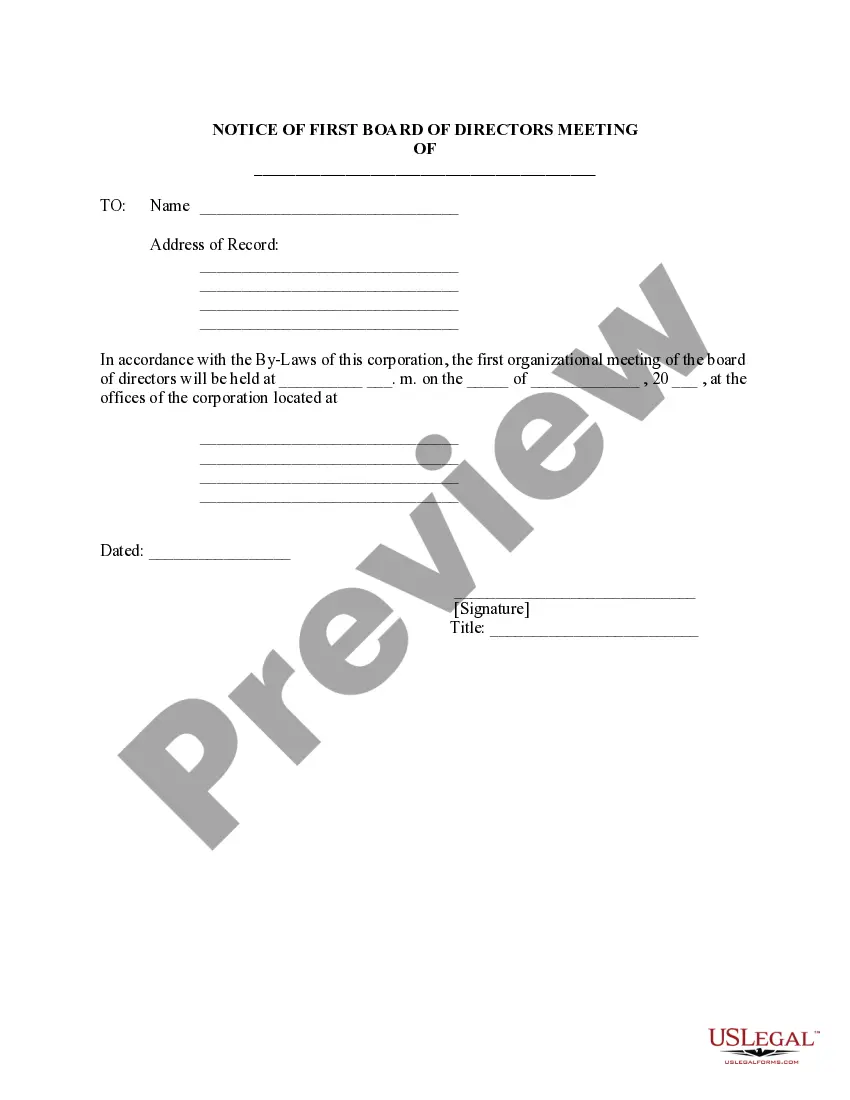


Get your form ready online
Our built-in tools help you complete, sign, share, and store your documents in one place.
Make edits, fill in missing information, and update formatting in US Legal Forms—just like you would in MS Word.
Download a copy, print it, send it by email, or mail it via USPS—whatever works best for your next step.
Sign and collect signatures with our SignNow integration. Send to multiple recipients, set reminders, and more. Go Premium to unlock E-Sign.
If this form requires notarization, complete it online through a secure video call—no need to meet a notary in person or wait for an appointment.
We protect your documents and personal data by following strict security and privacy standards.

Make edits, fill in missing information, and update formatting in US Legal Forms—just like you would in MS Word.

Download a copy, print it, send it by email, or mail it via USPS—whatever works best for your next step.

Sign and collect signatures with our SignNow integration. Send to multiple recipients, set reminders, and more. Go Premium to unlock E-Sign.

If this form requires notarization, complete it online through a secure video call—no need to meet a notary in person or wait for an appointment.

We protect your documents and personal data by following strict security and privacy standards.
Looking for another form?




Form popularity
FAQ
The Initiation Phase is that time in the project lifecycle when the project idea is defined, evaluated and then authorized to proceed by the Project Sponsor and the Vice Chancellor/Chief Information Officer.
Summary. Project initiation ensures that you lay a strong foundation for a new project. It's the first of five project management phases, when you outline why you're doing the project and what business value it will deliver. Then, you can use that information to secure buy-in from key stakeholders.
A project kick-off meeting is the first meeting with the project team and the client of the project where applicable. This meeting is the time to establish common goals and the purpose of the project.
The project kickoff meeting is the first meeting between the stakeholders–the project manager, the client, and the team. The kickoff meeting orients the team about the project's objectives and the clients' requirements. The project manager usually hosts the meeting.
The kickoff meeting marks the official start of a construction project, bringing together the project team, the client, and contractors to establish the scope of the project and plan execution.
The beginning of a meeting sets the stage. It helps participants understand the purpose of the meeting, the objectives that will be accomplished, the plan for achieving those objectives, and what's personally expected of them. It also mentally prepares them for action.
In this project meeting, project managers explain common goals to keep in mind as the team executes their tasks. It sets up project success. The kickoff meeting also lets the project manager introduce the project team. Everyone must know who they're working with and what their roles and responsibilities are.
A kickoff meeting is essential for getting everyone involved in a project on the same page from the outset. It's a chance to: Communicate key project information: Discuss project goals, timelines, and expectations. Answer questions and address concerns: Ensure everyone is clear on their roles and responsibilities.
Although actual requirements can vary depending on the state, they typically involve the following: Select a state of incorporation. Choose a business name. File incorporation paperwork. Appoint a registered agent. Prepare corporate bylaws. Draft a shareholders' agreement. Hold the first board meeting. Get an EIN.
How do you start a corporation? Select a business name. Ensure the corporate name you plan to register is not already in use. Designate a board of directors. File articles of incorporation. Draft corporate bylaws. Obtain an Employer Identification Number (EIN). Issue stock.

