First Stockholders Meeting For The Year In Queens
Description
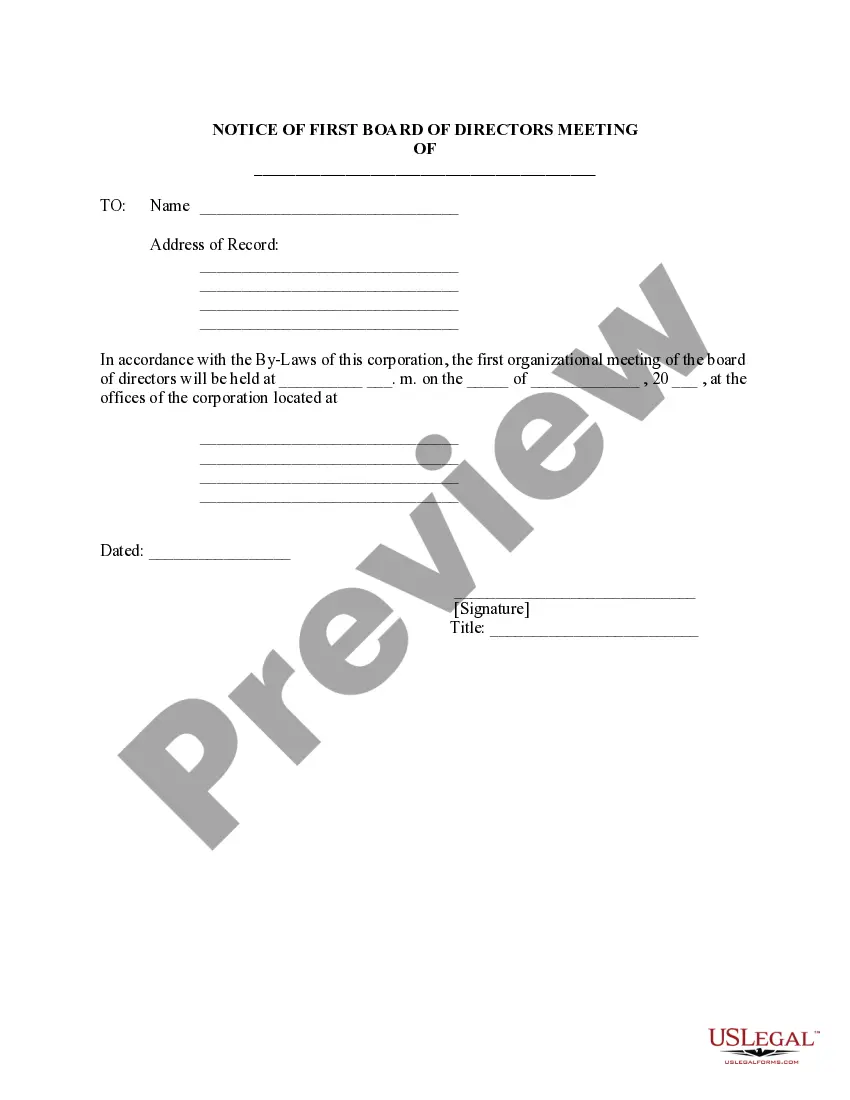


Get your form ready online
Our built-in tools help you complete, sign, share, and store your documents in one place.
Make edits, fill in missing information, and update formatting in US Legal Forms—just like you would in MS Word.
Download a copy, print it, send it by email, or mail it via USPS—whatever works best for your next step.
Sign and collect signatures with our SignNow integration. Send to multiple recipients, set reminders, and more. Go Premium to unlock E-Sign.
If this form requires notarization, complete it online through a secure video call—no need to meet a notary in person or wait for an appointment.
We protect your documents and personal data by following strict security and privacy standards.

Make edits, fill in missing information, and update formatting in US Legal Forms—just like you would in MS Word.

Download a copy, print it, send it by email, or mail it via USPS—whatever works best for your next step.

Sign and collect signatures with our SignNow integration. Send to multiple recipients, set reminders, and more. Go Premium to unlock E-Sign.

If this form requires notarization, complete it online through a secure video call—no need to meet a notary in person or wait for an appointment.

We protect your documents and personal data by following strict security and privacy standards.
Looking for another form?
Form popularity
FAQ
Prepare copies of the meeting agenda and any relevant reports (financial statements, proxy statements, etc.) for attendees, either in physical form or through a secure online portal. Determine the voting method (electronic voting platform, paper ballots, etc.) and ensure everyone understands the process.
Notification of the meeting's date and time will include a copy of the meeting's agenda, which is often centered around the election of members to the board of directors, approval of an accounting firm to review the company's financial records, and an opportunity to vote on any proposals that are put before the board, ...
Prepare copies of the meeting agenda and any relevant reports (financial statements, proxy statements, etc.) for attendees, either in physical form or through a secure online portal. Determine the voting method (electronic voting platform, paper ballots, etc.) and ensure everyone understands the process.
Be familiar with your financials, including revenue, expenses, and projections. Be prepared to discuss key metrics relevant to your business. Be prepared to listen and respond thoughtfully to the investor's questions and feedback. This can foster a more engaging conversation. Have a plan for follow-up after the call.
At an annual general meeting (AGM), directors of the company present the company's financial performance and shareholders vote on the issues at hand. Shareholders who do not attend the meeting in person may usually vote by proxy, which can be done online or by mail.
The first shareholder meeting is an organizational meeting where shareholders ratify and approve the actions of the incorporators. Shareholders also approve shares values, appoint directors and officers if needed, and wrap up other initial tasks.
A shareholders' meeting is a meeting held by the shareholders of a company to discuss the arrangements of the company or to vote in the election of board members.
As the name implies, an annual general meeting (AGM) is a yearly meeting where shareholders and board members converge to discuss business matters, review financial reports, and vote on the election or removal of company directors. AGMs are mandatory for both public and private companies.
If your business is set up and registered as a Corporation, you're required by law to hold an annual shareholder meeting and to document the meeting with minutes.
When should I hold a shareholder meeting? An annual shareholder meeting is typically scheduled just after the end of the fiscal year. This allows for the previous year's financial performance to be fully assessed and discussed.

