Special Meeting Sample For Hoa In Riverside
Description







Form popularity
FAQ
Occasionally, special meetings need to be called because of an urgent or special matter. ing to Robert's Rules of Order, special meetings always require previous notice. Here are a few valid reasons for calling a special meeting: An urgent matter needs to be dealt with before the next regular meeting.
However, when you're organizing a typical HOA meeting, you should follow this agenda: Call to Order. Review of Last Meeting's Minutes. Committee Reports. Discussion About Any Unresolved Issues. Discussion About Any New Issues or Projects. Open Forum (Optional) ... Adjournment.
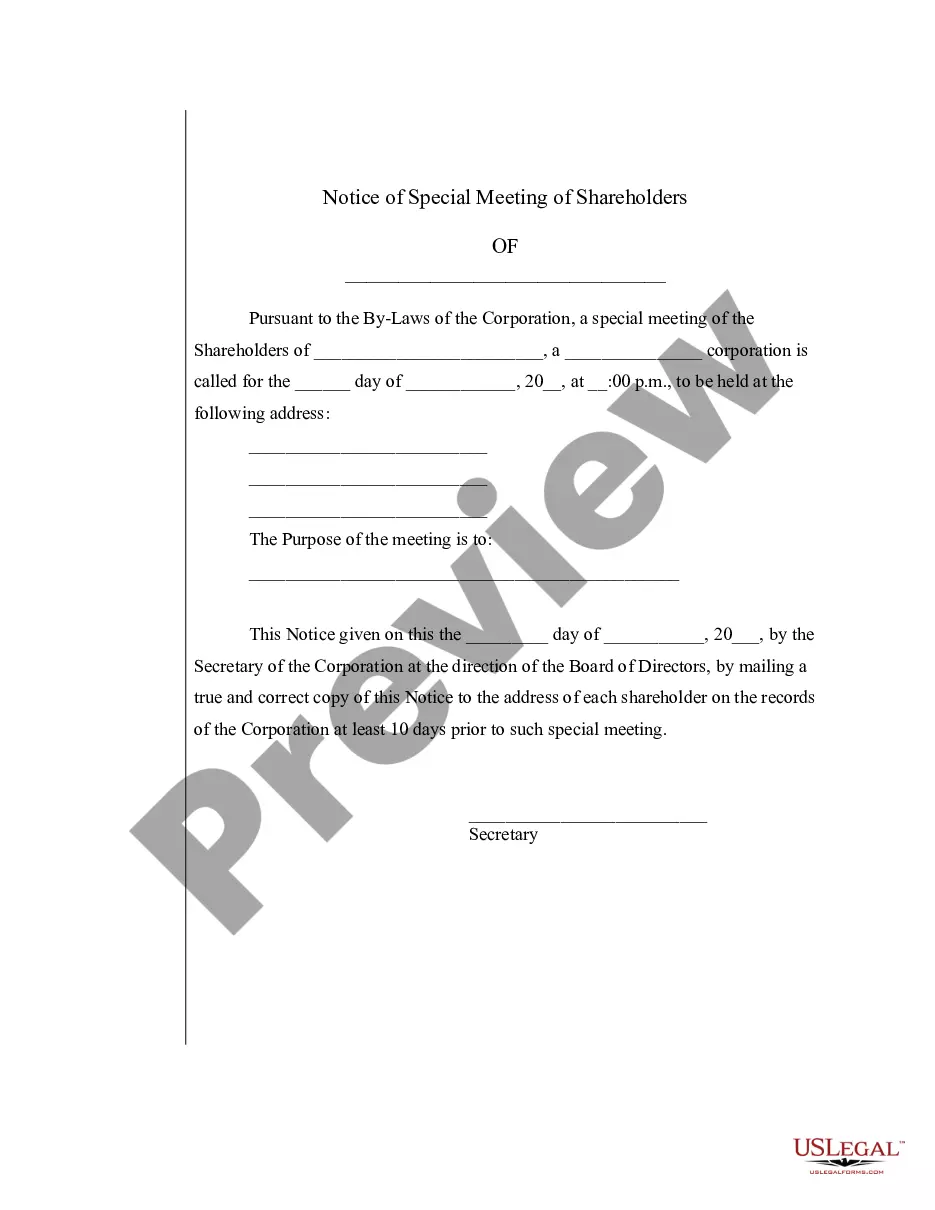
In addition to specifying the date, time and location of the meeting, special meeting notices should make note of all agenda items. Unless the bylaws indicate something different, board members should only be discussing the business that was stated in the notice for the special meeting.
If a meeting of the members is called by a petition signed by the required minimum number of members (at least 5%), the purpose of the special meeting must be set forth in the petition in order to indicate the basis for the requested special meeting (i.e., if the special meeting is to reverse a recent change to the ...
For example, a company may call a special meeting to discuss a major decision, such as a merger or acquisition. A school board may call a special meeting to address a specific issue, such as a budget shortfall.
In contrast, a special board meeting is a meeting that is not scheduled well in advance and is called by someone – authorized either under the law or the organization's bylaws – for a special purpose.
Second, association members—not just the board—can call for a special meeting, if they get a minimum number of signatures on a petition that states exactly what issue or problem they want to address. Homeowners give the petition, with its stated purpose, to a board member who schedules the special meeting.
Unless the governing documents require a longer notice period, members must be notified of the time and place of board meetings at least four (4) days before the meeting. (Civ. Code § 4920(a).)
The chair owns the agenda Who prepares the first draft? Usually the company secretary, the CEO or the board secretary. This then needs to be approved or amended by the chair. The agenda and the board papers need to be sent to all directors at least 5 days plus a weekend, prior to the board meeting.

