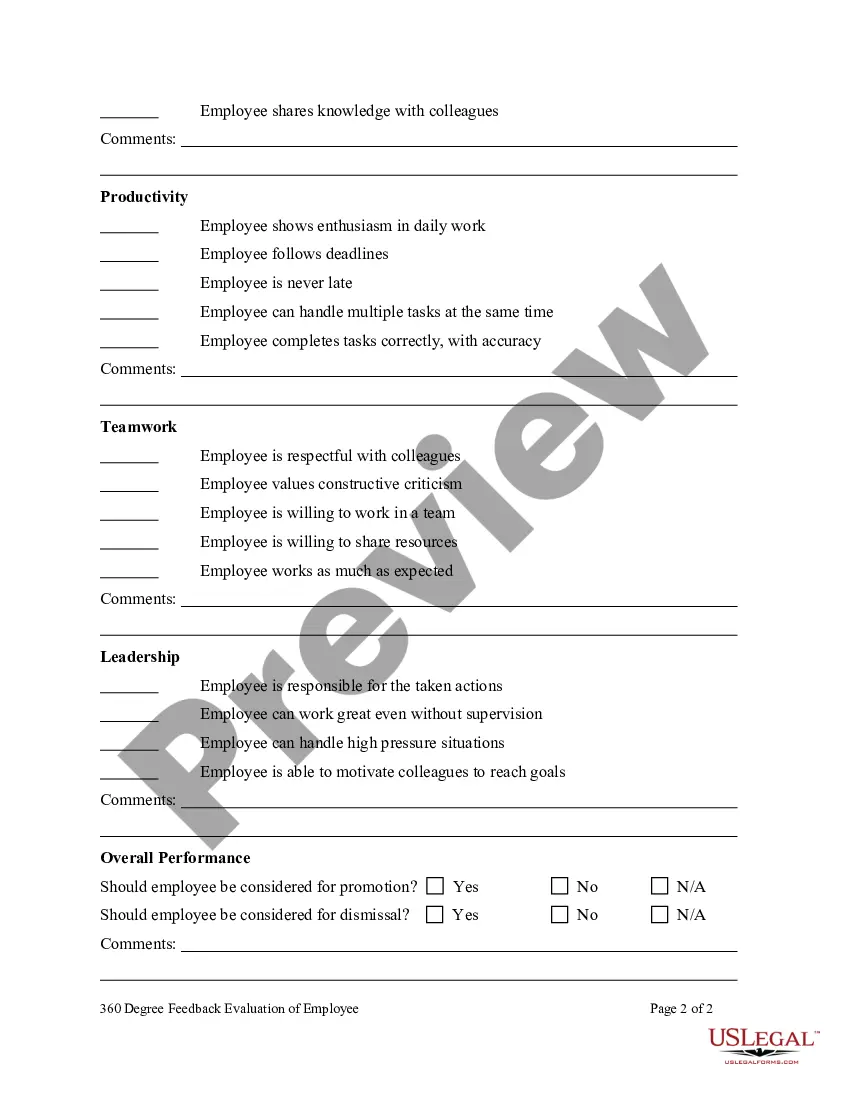
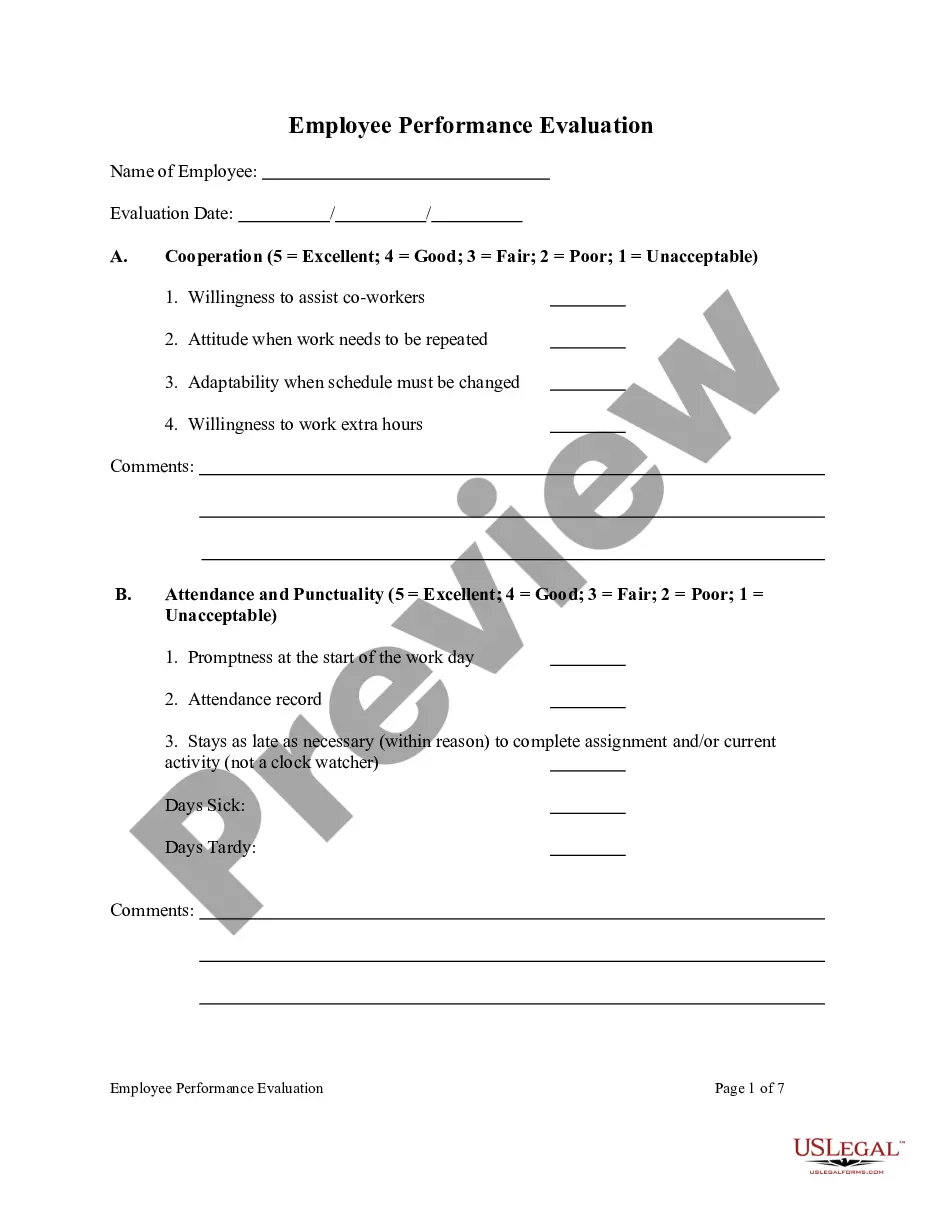
360 Degree Feedback Form For Doctors In Ohio
Description

Get your form ready online
Our built-in tools help you complete, sign, share, and store your documents in one place.
Make edits, fill in missing information, and update formatting in US Legal Forms—just like you would in MS Word.
Download a copy, print it, send it by email, or mail it via USPS—whatever works best for your next step.
Sign and collect signatures with our SignNow integration. Send to multiple recipients, set reminders, and more. Go Premium to unlock E-Sign.
If this form requires notarization, complete it online through a secure video call—no need to meet a notary in person or wait for an appointment.
We protect your documents and personal data by following strict security and privacy standards.

Make edits, fill in missing information, and update formatting in US Legal Forms—just like you would in MS Word.

Download a copy, print it, send it by email, or mail it via USPS—whatever works best for your next step.

Sign and collect signatures with our SignNow integration. Send to multiple recipients, set reminders, and more. Go Premium to unlock E-Sign.

If this form requires notarization, complete it online through a secure video call—no need to meet a notary in person or wait for an appointment.

We protect your documents and personal data by following strict security and privacy standards.
Looking for another form?
Form popularity
FAQ
How to design an effective 360 degree feedback questionnaire Identify the themes you want to measure. Create specific 360 questions based on your themes. Example 360 degree feedback questionnaire questions. Define your 360 degree feedback questionnaire rating scale. In conclusion.
A 360 review typically consists of managers receiving and analyzing employee feedback to look for notable patterns of behavior and positive/negative feedback and then creating a report. This can provide employees with constructive criticism without overwhelming them.
The components of 360-degree feedback encompass various sources of input, each serving a unique purpose. Typically, the feedback process includes self-assessment, where employees evaluate their performance. It also involves peer feedback, where colleagues provide insights based on their interactions.
Communication of the goals and objectives of the 360 assessment is part of the process. This includes obtaining various perspectives on identifying an individual's strengths, areas of opportunity, and “blind spots.” All of these can help promote more self-awareness and result in performance improvement and development.
A 360-degree evaluation, also known as multi-rater feedback assessment, is a process and tool used to provide employees comprehensive performance and culture feedback from self-evaluation as well as from those who work around them.
360 Degree Feedback is an assessment system or process in which employees receive confidential, anonymous evaluations from the people who work around them. This typically includes manager, peers, and direct reports.
It involves self-appraisal, supervisor appraisal, subordinate appraisal, and peer appraisal.
The Leadership 360 is a personalized reflection tool created through self-assessment and survey feedback from your colleagues and partners, for a multifaceted perspective of your Leadership Competencies.
You now need to consider which of your team, peers and colleagues is also asked. There may also be external suppliers, customers or partners who can comment meaningfully on your work. To ensure balanced and useful feedback, you should avoid inviting just those people with whom you get on best.
How to design an effective 360 degree feedback questionnaire Identify the themes you want to measure. Create specific 360 questions based on your themes. Example 360 degree feedback questionnaire questions. Define your 360 degree feedback questionnaire rating scale. In conclusion.