Deed Of Trust Records For A Domain In Alameda
Description








Get your form ready online
Our built-in tools help you complete, sign, share, and store your documents in one place.
Make edits, fill in missing information, and update formatting in US Legal Forms—just like you would in MS Word.
Download a copy, print it, send it by email, or mail it via USPS—whatever works best for your next step.
Sign and collect signatures with our SignNow integration. Send to multiple recipients, set reminders, and more. Go Premium to unlock E-Sign.
If this form requires notarization, complete it online through a secure video call—no need to meet a notary in person or wait for an appointment.
We protect your documents and personal data by following strict security and privacy standards.

Make edits, fill in missing information, and update formatting in US Legal Forms—just like you would in MS Word.

Download a copy, print it, send it by email, or mail it via USPS—whatever works best for your next step.

Sign and collect signatures with our SignNow integration. Send to multiple recipients, set reminders, and more. Go Premium to unlock E-Sign.

If this form requires notarization, complete it online through a secure video call—no need to meet a notary in person or wait for an appointment.

We protect your documents and personal data by following strict security and privacy standards.
Looking for another form?
Form popularity
FAQ
Yes, deeds are public record in California.
Record the Signed Documents at the County Recorder's Office Take the original signed and notarized Deed of Trust and Promissory Note to the County Recorder's Office for the county where the property is located. In Sacramento, this is at 3636 American River Drive, Ste. 110, Sacramento CA 95864.
Records may be requested in the following ways: By submitting a request online via NextRequest. By telephone or visiting a department. By submitting a request in writing via email or US Mail.
If you need a copy of the current deed, contact or visit the Alameda County Recorder's Office. Copies of deeds are not available off the internet. There is an online name index. Copies of the document itself must be obtained from the Recorder's Office Public Records Room.
For real estate documents like deeds and mortgages, request them online, by mail, or in person at the clerk-recorder's office. To request a public record at the clerk-recorder's Office, one will need an instrument number, book and page number, or reel and image number.
You can search online through the county website or a third-party tool or visit your local county recorder's office to find owner information on a specific property. You may see the owner's name, address, phone, and other details about them.
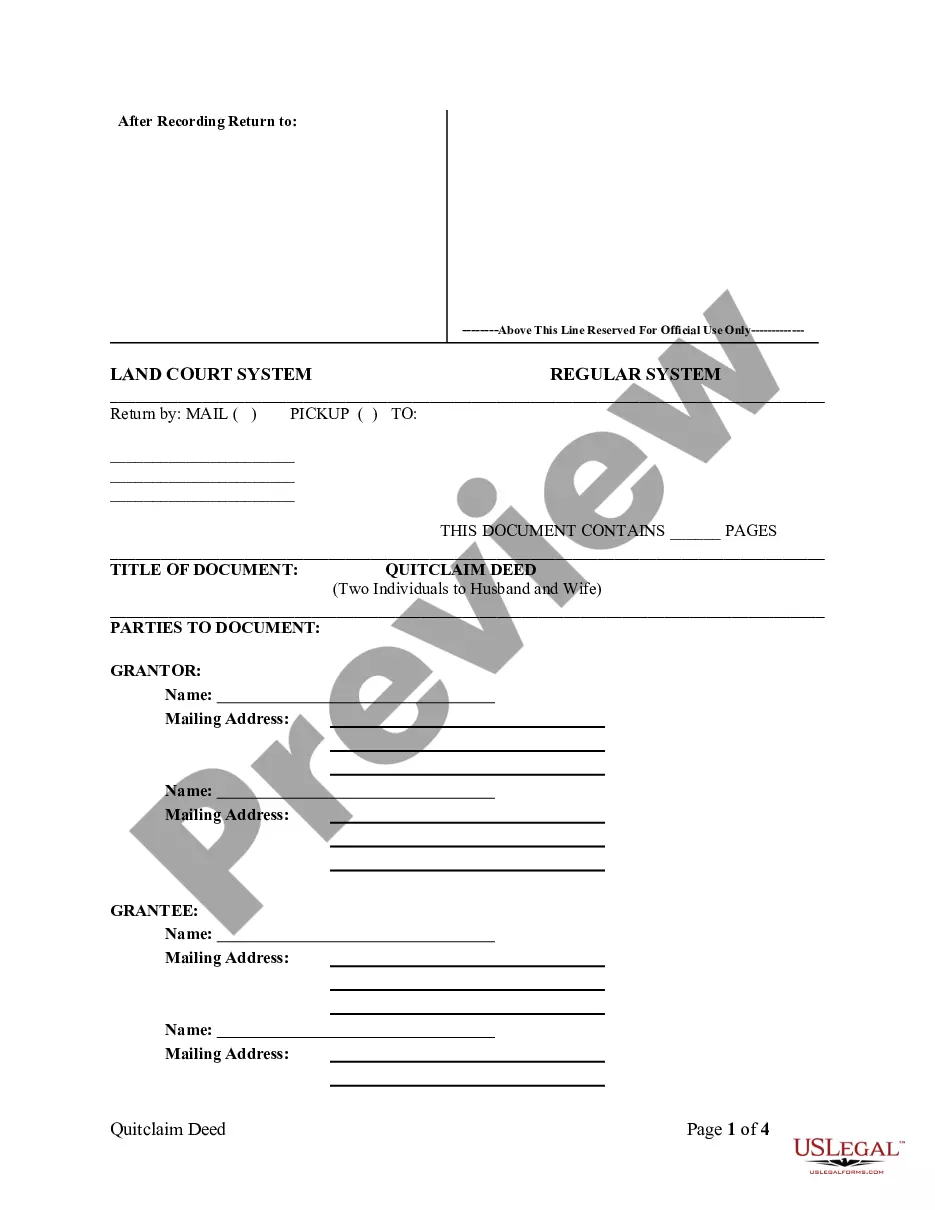
For a deed to be legal, it must state the name of the buyer and the seller, describe the property being transferred, and include the signature of the party transferring the property. In addition to being either official or private, deeds are classified as general warranty, special warranty, or quitclaim.
Record the Signed Documents at the County Recorder's Office Take the original signed and notarized Deed of Trust and Promissory Note to the County Recorder's Office for the county where the property is located. In Sacramento, this is at 3636 American River Drive, Ste. 110, Sacramento CA 95864.
In California, there are several ways to record real estate documents: In-person submission. Under this option, a person or his messenger service may visit the county recorder's office to submit the recording over the counter. Mail-in recording. Use of a title company or attorney courier service.
