Deed Of Trust Records For A Domain In Chicago
Description








Get your form ready online
Our built-in tools help you complete, sign, share, and store your documents in one place.
Make edits, fill in missing information, and update formatting in US Legal Forms—just like you would in MS Word.
Download a copy, print it, send it by email, or mail it via USPS—whatever works best for your next step.
Sign and collect signatures with our SignNow integration. Send to multiple recipients, set reminders, and more. Go Premium to unlock E-Sign.
If this form requires notarization, complete it online through a secure video call—no need to meet a notary in person or wait for an appointment.
We protect your documents and personal data by following strict security and privacy standards.
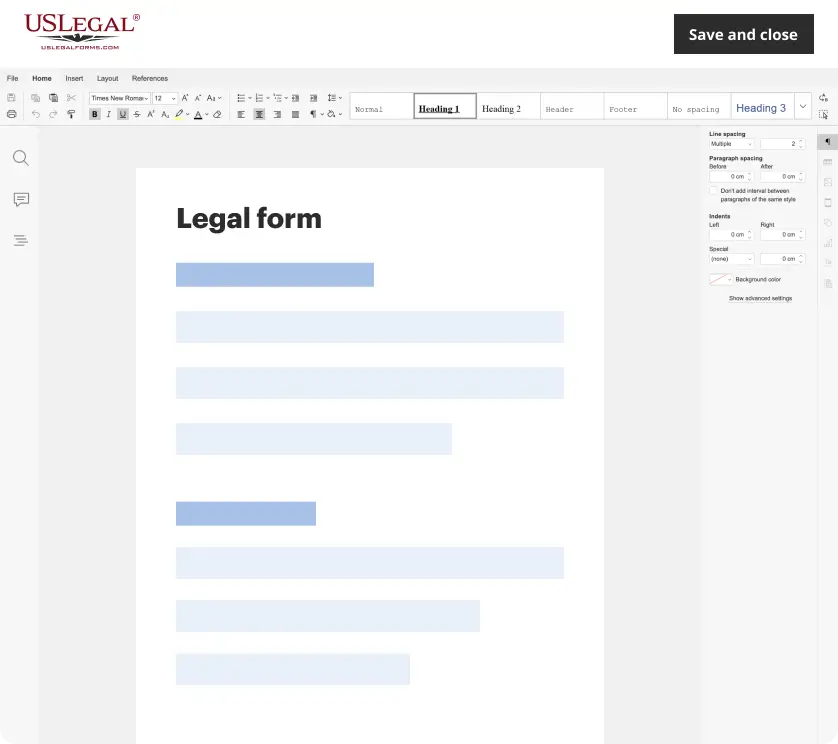
Make edits, fill in missing information, and update formatting in US Legal Forms—just like you would in MS Word.
Download a copy, print it, send it by email, or mail it via USPS—whatever works best for your next step.
Sign and collect signatures with our SignNow integration. Send to multiple recipients, set reminders, and more. Go Premium to unlock E-Sign.

If this form requires notarization, complete it online through a secure video call—no need to meet a notary in person or wait for an appointment.
We protect your documents and personal data by following strict security and privacy standards.
Looking for another form?
Form popularity
FAQ
Deeds are not like the certificate of title to a vehicle, which must be an original. While it is good practice to keep your original deed, it is not required to sell your property, as long as it has been properly recorded.
Illinois deeds must meet the following content requirements: Current owner (grantor) and new owner (grantee) name and address. An Illinois deed that transfers title to real estate must include on the face of the document the names and addresses of the current owner and the new owner. Granting clause.
notice recording statute provides that an unrecorded conveyance is invalid against a subsequent purchaser for value who first records without knowledge of any prior unrecorded instruments.
You can eRecord in Cook County, Illinois. If you have a PC, high-speed internet access, and a scanner, you have what you need to start eRecording in Cook County.
For a deed to be valid, it must contain several essential elements, including the operative words of conveyance, description of the property, signatures, delivery, proper formatting and execution, absence of defects and encumbrances, legal capacity of parties, proper recording, and voluntary execution.
The first common requirement is that the deed must be in writing and signed by the grantor(s). 765 ILCS 5/1. Generally, deeds conveying a homestead estate must also be signed by the grantor's spouse, except where one spouse conveys to the other. A few other exceptions to this rule are set forth at 735 ILCS 5/12-904.
Yes you can complete and record your own deed. It must b properly signed, witnessed, and notarized.
Illinois allows the use of both a deed of trust and a mortgage. Illinois is a lien-theory state.
This Deed of Trust (the “Trust Deed”) sets out the terms and conditions upon which: Settlor Name (the “Settlor”), of Settlor Address, settles that property set out in Schedule A (the “Property”) upon Trustee Name (the “Trustee”), being a Company duly registered under the laws of state with registered number ...
In order to file a deed in Cook County, the necessary documents are as follows: (1) Tax Declaration (MyDec); (2) Tax Stamps (or “Zero Stamps” if an exempt transfer); (3) A Grantor/Grantee Affidavit (exempt transfers); (4) The Deed to be Filed (which must contain PIN number, complete legal description, commonly known ...
