Pleading No Contest Vs Guilty In Salt Lake
Description
Get your form ready online
Our built-in tools help you complete, sign, share, and store your documents in one place.
Make edits, fill in missing information, and update formatting in US Legal Forms—just like you would in MS Word.
Download a copy, print it, send it by email, or mail it via USPS—whatever works best for your next step.
Sign and collect signatures with our SignNow integration. Send to multiple recipients, set reminders, and more. Go Premium to unlock E-Sign.
If this form requires notarization, complete it online through a secure video call—no need to meet a notary in person or wait for an appointment.
We protect your documents and personal data by following strict security and privacy standards.
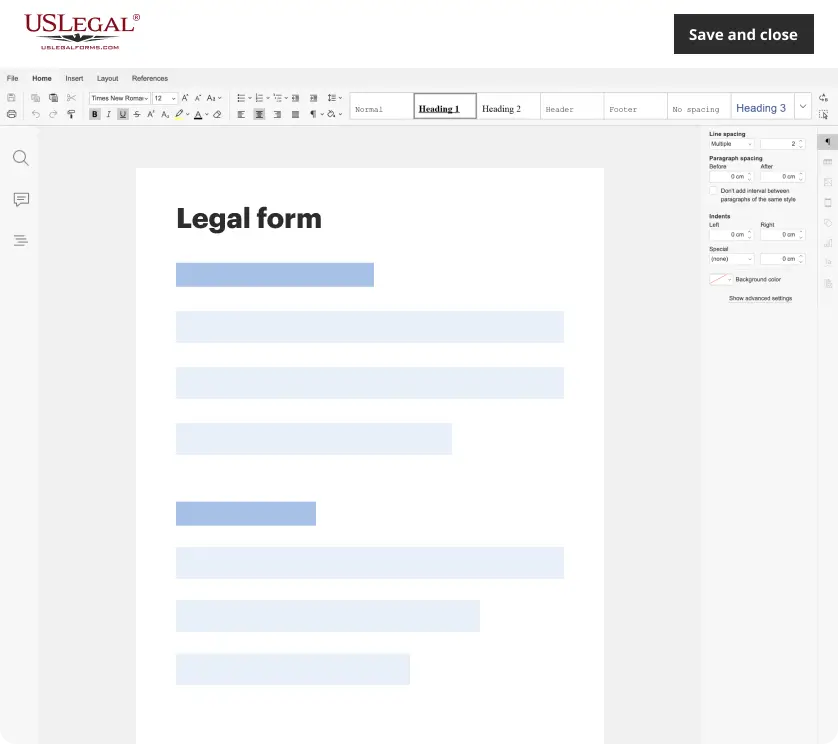
Make edits, fill in missing information, and update formatting in US Legal Forms—just like you would in MS Word.
Download a copy, print it, send it by email, or mail it via USPS—whatever works best for your next step.
Sign and collect signatures with our SignNow integration. Send to multiple recipients, set reminders, and more. Go Premium to unlock E-Sign.

If this form requires notarization, complete it online through a secure video call—no need to meet a notary in person or wait for an appointment.
We protect your documents and personal data by following strict security and privacy standards.
Looking for another form?


Form popularity
FAQ
If you plead not guilty or alternatively indicate no plea to an either way case before the Magistrates, following representations from the prosecution and the Defence, the Magistrates will decide upon the venue after considering the seriousness of the case against you. This procedure is known as Allocation.
Any statements you make at the podium if pleading guilty may and will be used against you in any subsequent personal injury action. Therefore, it is generally best to plead “no contest,” which means that you are guilty, but your plea cannot be used against you in other court proceedings.
A no contest plea prevents the court from eliciting a defendant's admission of guilt, but the result of the defendant's plea not to contest the charges against him or her is the same as if the defendant had admitted guilt.
A plea bargain or plea deal finds a defendant pleading guilty in exchange for either a lighter sentence or the dropping of some charges. Perhaps a combination of both. A plea deal might seem a good choice at first. A plea deal has certainty compared to the unknown outcome of a trial.
Pleading guilty means you admit that you committed the crime. Pleading no contest (“nolo contendere”) means accepting the conviction but avoiding a factual admission of guilt.
(3) A plea of no contest indicates the accused does not challenge the charges in the information or indictment and if accepted by the court shall have the same effect as a plea of guilty and imposition of sentence may be rendered in the same manner as if a plea of guilty had been entered.
Morgan, 426 U.S. 637, 645 (1976); see also, e.g., Bradshaw v. Stumpf, 545 U.S. 175, 183 (2005) (“A guilty plea . . . is valid only if done voluntarily, knowingly, and intelligently.”); United States v.
With approval of the court and the consent of the prosecution, a defendant may enter a conditional plea of guilty, guilty and mentally ill, or no contest, reserving in the record the right, on appeal from the judgment, to a review of the adverse determination of any specified pre-trial motion.