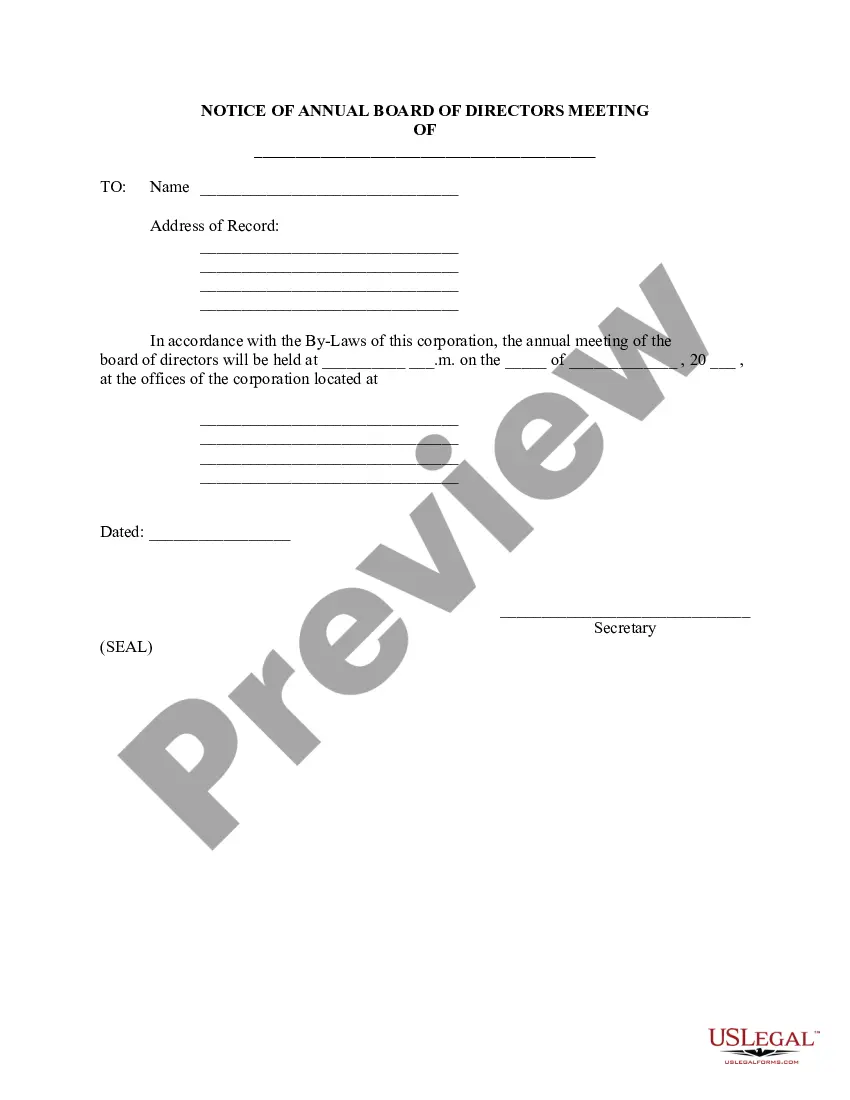
Meeting Do Board Within 10 Minutes In Virginia
Description



Get your form ready online
Our built-in tools help you complete, sign, share, and store your documents in one place.
Make edits, fill in missing information, and update formatting in US Legal Forms—just like you would in MS Word.
Download a copy, print it, send it by email, or mail it via USPS—whatever works best for your next step.
Sign and collect signatures with our SignNow integration. Send to multiple recipients, set reminders, and more. Go Premium to unlock E-Sign.
If this form requires notarization, complete it online through a secure video call—no need to meet a notary in person or wait for an appointment.
We protect your documents and personal data by following strict security and privacy standards.

Make edits, fill in missing information, and update formatting in US Legal Forms—just like you would in MS Word.

Download a copy, print it, send it by email, or mail it via USPS—whatever works best for your next step.

Sign and collect signatures with our SignNow integration. Send to multiple recipients, set reminders, and more. Go Premium to unlock E-Sign.

If this form requires notarization, complete it online through a secure video call—no need to meet a notary in person or wait for an appointment.

We protect your documents and personal data by following strict security and privacy standards.
Looking for another form?
Form popularity
FAQ
A board meeting is a formal gathering of a company's board of directors, which is when crucial agenda items will be discussed and actioned. Because of its importance, board meeting minutes are an absolute necessity, not just from a practical standpoint, but also from a legal one.
Board meeting minutes are important because they're a record of the conversations, reports and decisions the board engaged in during each meeting. This is a helpful tool for those who miss a meeting, but it's also a legal requirement.
Board meeting minutes are not only essential for effective governance; they are also legally required in many jurisdictions around the world. These records serve as a vital resource for audits, legal disputes, and shareholder oversight.
Any board member can take board meeting minutes, although it is typically the responsibility of the board secretary.
Robert's Rules (Section -16) state that “the minutes should contain mainly a record of what was done at the meeting, not what was said by the members.” Minutes are not transcripts of meetings; rather, the document contains a record of actions taken by the body, organized by the meeting's order of business (agenda).
Bowie recommends that the minutes of the previous meeting be distributed electronically, or by mail, as soon after the meeting as possible so that members have plenty of time to review and make corrections if necessary.
The Virginia Freedom of Information Act, known as Virginia FOIA, provides the public with a right of access to the meetings of a large number of government bodies at the state and local level in Virginia. The law entitles you to notice of these meetings and gives you the ability to inspect and copy meeting minutes.
For motions, include the exact wording of the statement, and the name of the person making the motion. Some organizations might require the name of the person seconding the motion, as well. Bowie adds that if the motion is not worded properly, it's up to the chair to help the member modify the wording.
Board meeting minutes should be prepared and distributed in a timely manner after each board meeting. Ideally, minutes should be circulated to board members for review and approval within a reasonable timeframe, such as before the next scheduled meeting.
Virginia is considered a “single-party consent” jurisdiction. Va. Code § 19.2-62. That generally means that as long as a participant in a conversation consents to the communication being recorded, it is not illegal to record the conversation.

