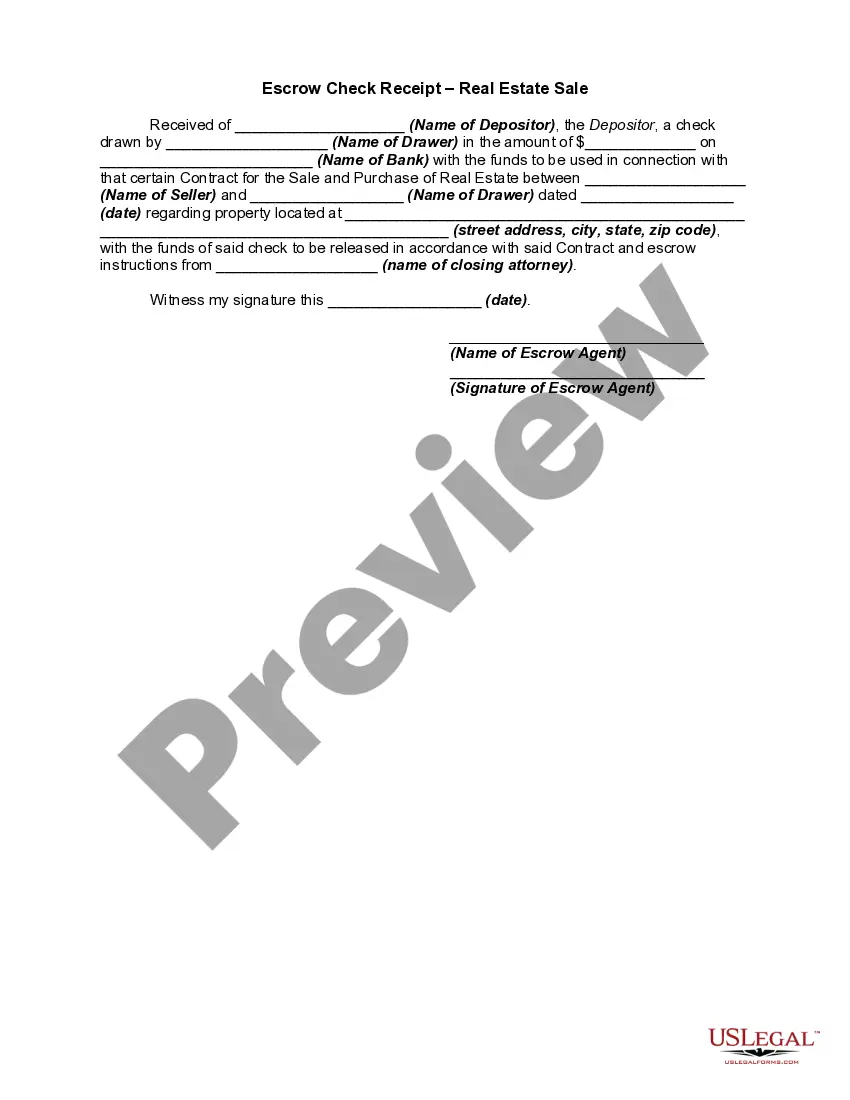
Escrow Agreement For Repairs In Los Angeles
Description





Form popularity
FAQ
The Escrow Holder: prepares escrow instructions. requests a preliminary title search to determine the present condition of title to the property.
In conclusion, escrow holdbacks for repairs can be a valuable solution in real estate transactions, providing a structured way to address necessary repairs while keeping the sale on track.
Example: Estimated closing costs on a $400,000 home Total adjusted orgination charges$5,100 Initial escrow account deposit $708 Prepaid interest $750 Homeowner's insurance $1,000 Total estimated closing costs $9,15813 more rows
An escrow holdback for repairs is a financial arrangement where a portion of the homebuyer's funds is withheld by the lender or escrow agent until specific repairs or improvements are completed. This arrangement is typically used when there are issues with the property that need attention before the sale can close.
A repair escrow is the most common escrow that is requested at a closing. Many times, a repair escrow is attached as part of the Inspection Resolution. Sometimes, due to unforeseen problems or the scope of the work to be completed, funds need to be held after the closing to ensure the completion of these items.
An escrow holdback for repairs is a financial arrangement where a portion of the homebuyer's funds is withheld by the lender or escrow agent until specific repairs or improvements are completed. This arrangement is typically used when there are issues with the property that need attention before the sale can close.
How Holding Funds in Escrow Works Buyer and seller agree to terms. Either the buyer or seller initiates a transaction. Buyer pays the escrow company. Seller ships merchandise to buyer. Buyer accepts merchandise. The escrow company releases its funds and pays the seller.

