E Commerce Agreement For Dummies In Georgia
Description


Get your form ready online
Our built-in tools help you complete, sign, share, and store your documents in one place.
Make edits, fill in missing information, and update formatting in US Legal Forms—just like you would in MS Word.
Download a copy, print it, send it by email, or mail it via USPS—whatever works best for your next step.
Sign and collect signatures with our SignNow integration. Send to multiple recipients, set reminders, and more. Go Premium to unlock E-Sign.
If this form requires notarization, complete it online through a secure video call—no need to meet a notary in person or wait for an appointment.
We protect your documents and personal data by following strict security and privacy standards.
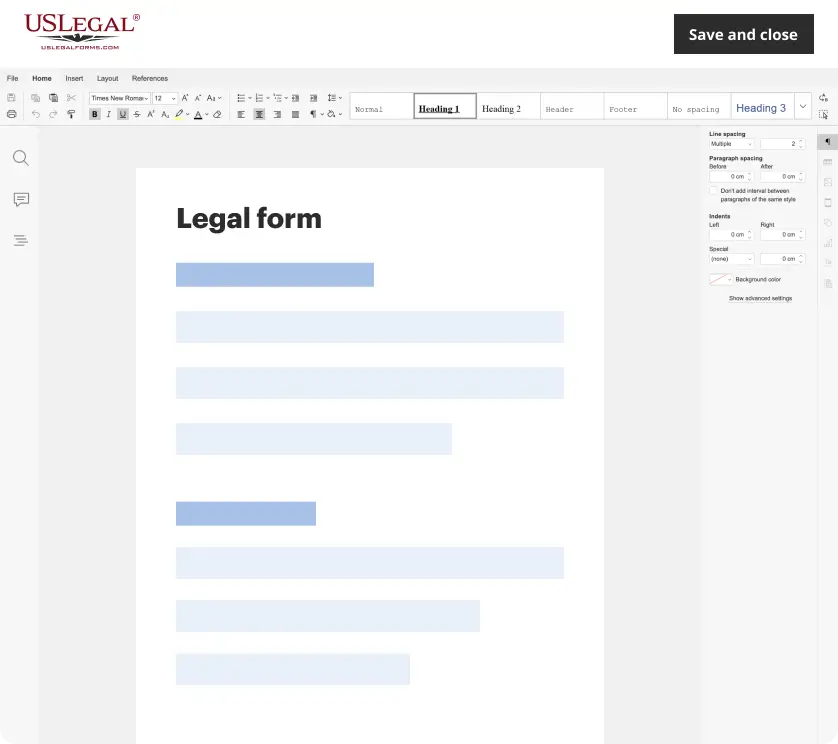
Make edits, fill in missing information, and update formatting in US Legal Forms—just like you would in MS Word.
Download a copy, print it, send it by email, or mail it via USPS—whatever works best for your next step.
Sign and collect signatures with our SignNow integration. Send to multiple recipients, set reminders, and more. Go Premium to unlock E-Sign.

If this form requires notarization, complete it online through a secure video call—no need to meet a notary in person or wait for an appointment.
We protect your documents and personal data by following strict security and privacy standards.
Looking for another form?






Form popularity
FAQ
Follow these steps to write your business plan: Write your executive summary. Start by succinctly articulating the essence of your e-commerce business. Perform market analysis. Craft your product and service descriptions. Build marketing and sales strategies.
Business-to-Business (B2B) Business-to-Consumer (B2C) Consumer-to-Consumer (C2C) Consumer-to-Business (C2B)
commerce is the supply of services to consumers via trading platforms. Furthermore, the primary goal of the law is to protect the rights of trading platform consumers in the process of electronic commerce, as well as to define the rights and duties of intermediary service providers (trading platforms), etc.
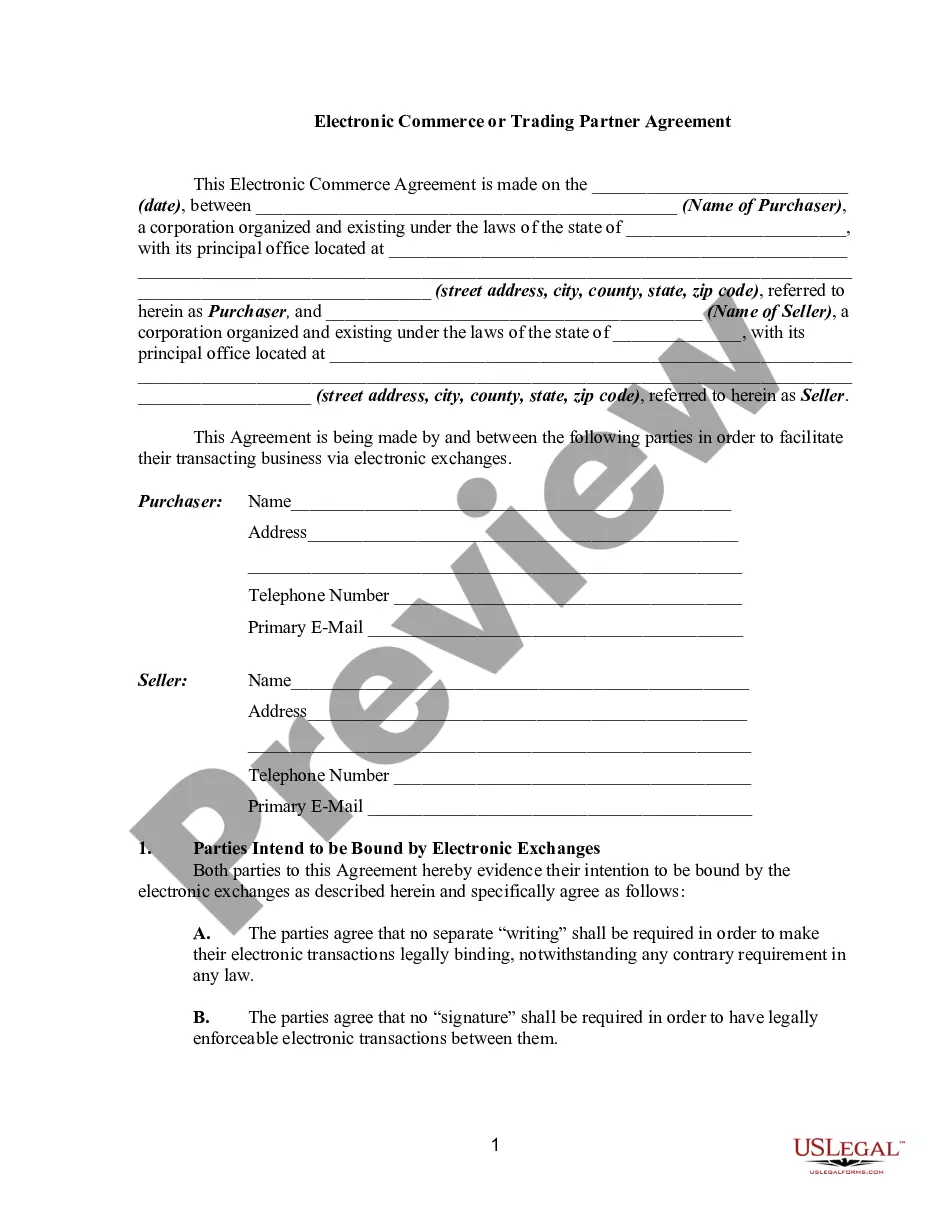
ECommerce agreements disclose the contractual relationship and obligations between a website owner and its commercial users.
commerce (electronic commerce) is the buying and selling of goods and services, or the transmitting of funds or data, over an electronic network, primarily the internet.
A website that allows people to buy and sell physical goods, services, and digital products over the internet rather than at a brick-and-mortar location. Through an e-commerce website, a business can process orders, accept payments, manage shipping and logistics, and provide customer service.
Even though we have been using ecommerce since its inception, we might be a bit lazy trying to find the hyphen key on our keyboards. The correct way to write ecommerce spelling is e-commerce with a hyphen.
The Federal Trade Commission Act (FTCA) prohibits certain unfair or deceptive acts or practices in or affecting commerce. Other state and federal regulations govern the shipment of goods and the issuance of, or notices concerning, refunds.
The UETA and E-SIGN Act have now legitimized the ability of parties to form contracts electronically both at the federal and state levels.
ECommerce agreements disclose the contractual relationship and obligations between a website owner and its commercial users.