Payoff Letter Template With Interest In Utah
Description
Form popularity
FAQ
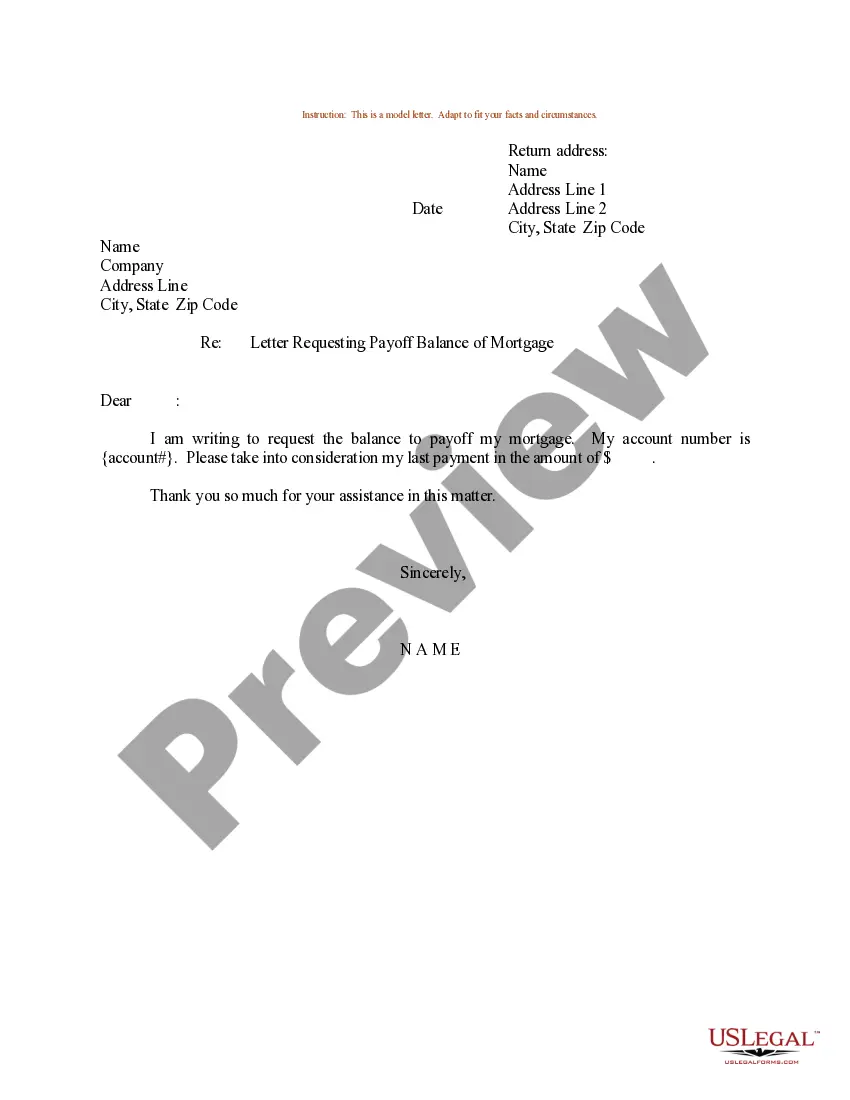
First, you'll need to contact your lender and let them know you want the information. Depending on your lender, you may have to sign in to an online account, call a helpline, or send a formal letter to start the request process.
How to Write a Payoff Letter: Step-by-Step Guide Step 1: Gather necessary information. Step 2: Format your letter. Step 3: Clearly state your intentions. Step 4: Detail the necessary information. Step 5: Request written confirmation. Step 6: Offer contact information. Step 7: Proofread and submit.
Requesting a Payoff Quote If you're curious about your payoff amount, but you don't need it in writing for any particular or urgent reason, you may be able to obtain a verbal payoff quote from your lender by phone. You should treat a verbal quote as just an estimate because it's not legally binding.
To get a payoff letter, ask your lender for an official payoff statement. Call or write to customer service or make the request online. While logged into your account, look for options to request or calculate a payoff amount, and provide details such as your desired payoff date.
First, you'll need to contact your lender and let them know you want the information. Depending on your lender, you may have to sign in to an online account, call a helpline, or send a formal letter to start the request process.
This is a standard form of mortgage payout statement provided by a lender to a borrower. This mortgage payout statement sets out the monies owed by the borrower to the lender as of the date of the statement. This Standard Document has integrated notes with important explanations and drafting and negotiating tips.
Purpose, Process, Payoff Having a purpose, process, and payoff statement prepared beforehand can enable you to immediately articulate the benefit of holding a quick conversation and/or capture the attention of everyone participating. It's also a good idea to send this information in the agenda (see point 3).
We're all familiar with the basic concept of setup and payoffs: early on in your screenplay, you set up some detail/scenario that may seem irrelevant, but later on will yield a result that hopefully your audience wasn't anticipating (the payoff).

